
South Korea Denies Sending Troops to Strait of Hormuz to Assist US Attack on Iran
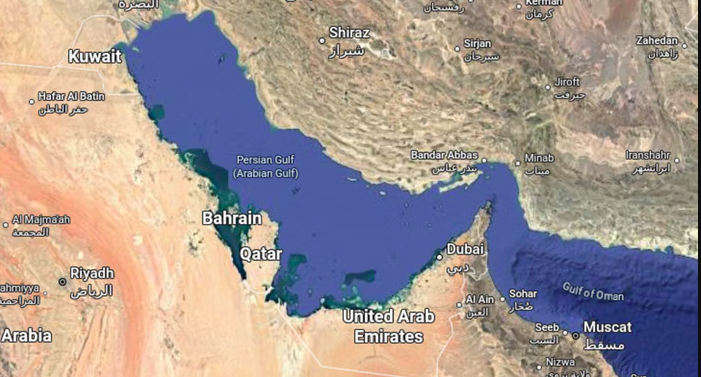
South Korea’s foreign ministry stated on Wednesday (22 July) that the United States has not requested Seoul to send either troops or military equipment to the Strait of Hormuz.
Earlier the same day, the South Korean daily newspaper Dong-A Ilbo reported that the US had asked for support from its allies, including South Korea, by inviting them to dispatch warships to the Strait of Hormuz to ensure freedom of navigation. “There has been no request from the US to send troops or specific equipment (to the Strait of Hormuz),” the statement said.
However, Seoul and Washington continue to discuss various issues, including those related to freedom of traffic through the Strait of Hormuz and South Korea’s contribution to it, according to the South Korean foreign ministry.
The ministry expressed concern over rising tensions in the Middle East, adding that it continues to monitor the situation closely.
The security of international sea lanes and freedom of navigation are in the interests of all nations and must be protected under international law, the statement said.
Earlier, on 14 March, US President Donald Trump called on China, France, Japan, South Korea, the United Kingdom and other nations to send warships to the Strait of Hormuz to secure navigation. He warned NATO allies that the alliance faced “a very bad future” if it failed to secure the strait. (Ant/P-3)
Brent crude oil prices surged by nearly 4% after US Secretary of State Marco Rubio affirmed that attacks on Iran would continue for as long as the Strait of Hormuz remained blockaded.
Following a ten-day conflict with the United States, Iran faces three strategic options regarding the Strait of Hormuz: concession, escalation, or prolonged uncertainty.
The world is confronting external challenges never before faced simultaneously.
The US military bombarded Iran for eleven consecutive nights in order to secure the Strait of Hormuz. Trump said the US was not yet finished and threatened to strike Mount Pickaxe.
Tensions between the US and Iran escalated after retaliatory attacks killed American soldiers in Jordan and Iraq. Donald Trump described the attacks as retribution.
On the evening before 18 June, Tehran and Washington signed a memorandum guaranteeing an end to the conflict that began on 28 February.
The IRGC also claimed to have damaged two US helicopters and attacked a military personnel centre, resulting in casualties.
A recent poll shows a drastic decline in support among Donald Trump’s loyalists for the war in Iran as fuel and living costs soar.
Following a ten-day conflict with the US, Iran faces three strategic options regarding the Strait of Hormuz: concession, escalation, or prolonged uncertainty.
He added that Iran and the United States are not currently holding negotiations, but the possibility of exchanges of messages between the two parties has not been ruled out.