
South Korea Courts Indonesia on Nuclear Power Development, Confident It Can Be a Key Partner
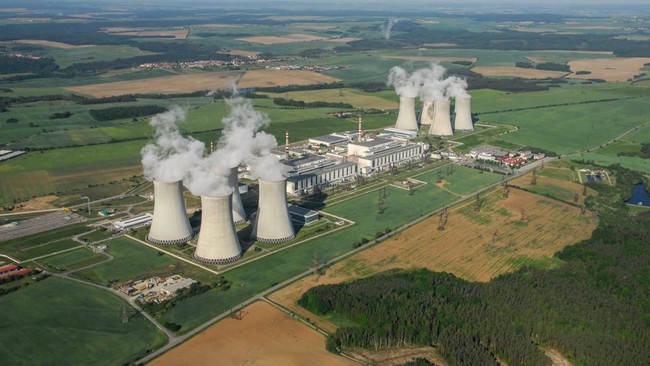
Indonesia and South Korea are opening opportunities to strengthen cooperation in the nuclear energy sector, as both countries push to expand their partnership in clean energy and strategic technology. South Korea has even stated its readiness to become one of Indonesia’s main partners if the government decides to proceed with its nuclear energy development plans.
Counsellor and Head of the Political Section at the South Korean Embassy in Indonesia, Uhm Taeho, said discussions on nuclear energy need to be placed within the framework of the green growth partnership being built by the two countries. According to him, developing nuclear energy is not a simple decision because it requires large investment and long-term commitment.
“We must realise that investment in nuclear energy is a very big decision. It is a long-term decision,” he said at the Indonesian Next Generation Journalist Network on Korea workshop in Jakarta on Wednesday (26/8/2026).
Uhm stressed that the decision on whether Indonesia will pursue the nuclear energy path rests entirely with Indonesia. According to him, the government, the public, companies and all stakeholders in Indonesia need to discuss it thoroughly before making a decision. “I am confident there will be serious and substantive internal discussions on this matter,” he said.
Nevertheless, South Korea has openly offered itself as one of the potential partners should Indonesia decide to develop nuclear power plants.
Uhm assessed that nuclear energy is a strategic energy source that requires cooperation with partners who have strong experience and track records. The choice of partner will determine the long-term sustainability of the nuclear industry. “I just want to emphasise that if and when Indonesia decides to pursue its nuclear energy development plan, I truly believe that Korea is one of the ideal partners,” Uhm said.
“Nuclear energy, first of all, is a very strategic energy source and is a field in which we need to cooperate. Who you work with will greatly affect the long-term sustainability of that industry.”
South Korea, he continued, has considerable experience to offer Indonesia. The country currently operates 26 nuclear power plants that meet about one-third of national electricity demand. Uhm also highlighted South Korea’s nuclear safety record, saying the country has never reported a major incident in the operation of those plants.
“We have never reported a major incident in the operation of those nuclear power plants. Korea has a long history and an excellent track record in operating nuclear power plants safely,” he said.
Beyond conventional nuclear power, South Korea is also developing Small Modular Reactor technology, which Uhm cited as one of Korea’s strengths in nuclear energy development. He said Korea’s experience comes not only from operating nuclear plants domestically but also from developing them abroad.
“In addition, together with the Czech Republic and the United Arab Emirates, we have a reputation for completing the construction of nuclear power plants abroad safely and on time,” he said.
With this experience, Uhm said Indonesia has reason to consider South Korea as a partner should it decide to enter the nuclear sector more deeply. “If all of these factors are combined, it is very reasonable for Indonesia to look at Korea as one of its trusted partners in future nuclear energy cooperation,” he said.
From Indonesia’s side, nuclear energy development is also placed in a broader context, namely the right of states to use nuclear technology for peaceful purposes while supporting the nuclear non-proliferation agenda. Head of the Centre for Asia Pacific and Africa Policy Strategy at the Ministry of Foreign Affairs, Vahd Nabyl Achmad Mulachela, said the nuclear issue appears in more than one context in the joint statement between Indonesia and South Korea.
“Regarding nuclear energy, if we look again at the text of the joint statement, the word ‘nuclear’ is actually mentioned more than once in different contexts,” Nabyl said. The first context is nuclear energy as an alternative energy source, while the second relates to nuclear weapons proliferation.
However, Indonesia views the two issues as inseparable. The policy of developing nuclear energy for civilian needs, according to Nabyl, goes hand in hand with Indonesia’s commitment to nuclear non-proliferation. He explained that Indonesia’s position on nuclear non-proliferation is also reflected in the strategic partnership document between the two countries.
Indonesia, Nabyl said, understands the importance of limiting nuclear weapons. At the same time, Indonesia continues to emphasise the right of all countries to access nuclear technology when used for peaceful purposes. “Because, regarding the second issue, namely nuclear non-proliferation, which is also emphasised in the strategic partnership document, Indonesia’s position is that while Indonesia understands the importance of limiting nuclear weapons, we continue to emphasise the right of all countries to obtain access to nuclear technology for peaceful purposes,” he said.
Nuclear energy for electricity generation, he continued, is one form of peaceful use of nuclear technology.