
South Kalimantan Industry Office Identifies Investment Barriers in ‘Bumi Antasari’
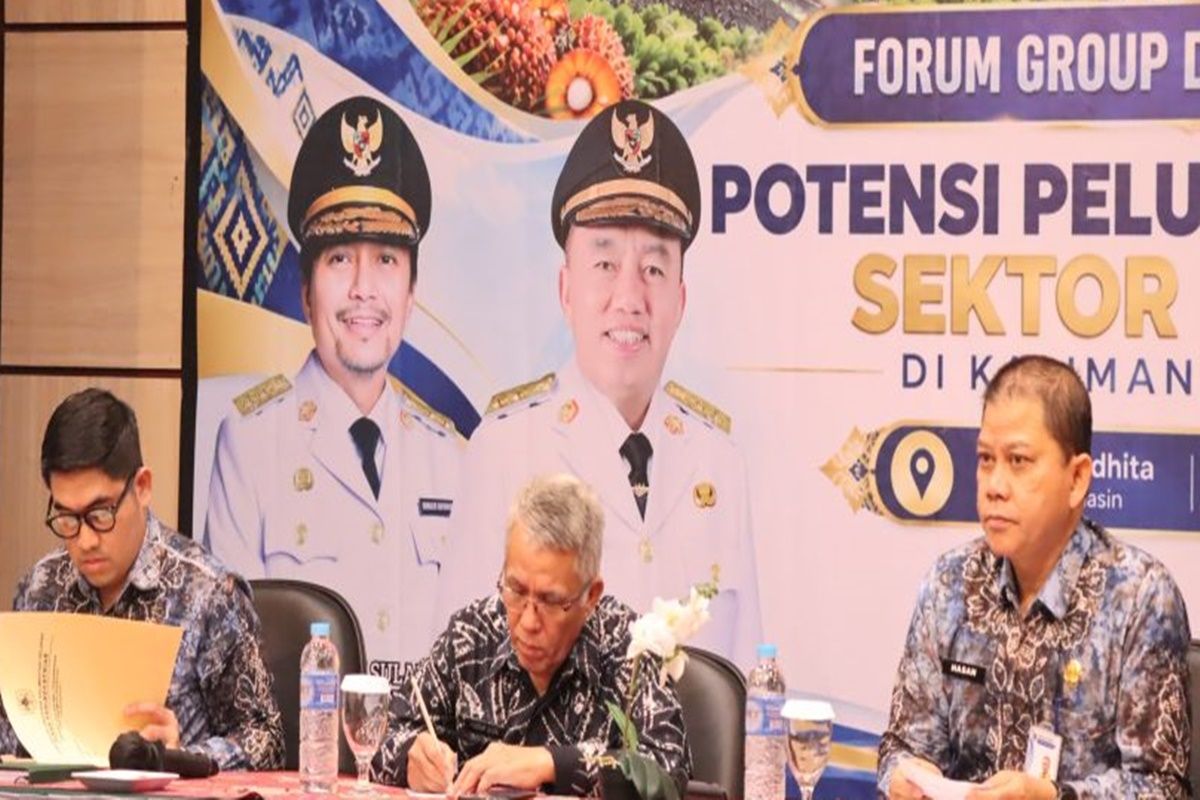
Banjarmasin (ANTARA) - The South Kalimantan Provincial Industry Office is identifying investment barriers, mapping potential projects and formulating a targeted, sustainable industrial development strategy through a Focus Group Discussion (FGD) on investment opportunities in the industrial sector in ‘Bumi Antasari’.
Hasan, head of the office’s Cooperation, Supervision, Promotion and Industrial Investment Division, said strengthening industrial investment was an important part of supporting the vision and mission of the South Kalimantan governor and deputy governor through the Kalsel Bekerja programme — Sustainable, Cultured, Religious and Prosperous — as the province works towards becoming Kalimantan’s Logistics Gateway.
“Through this FGD, we want to identify the various investment barriers faced by businesses and local governments, map effective, inclusive and sustainable investment project opportunities, and formulate a targeted and competitive industrial investment strategy for South Kalimantan,” he said in Banjarmasin on Thursday.
He said industrial development was aligned with the third mission: achieving sustainable, equitable and sharia-based economic growth. The effort focuses on downstream processing by large and small industries, developing special economic zones and industrial estates, and strengthening the halal industry.
He explained that South Kalimantan had natural resources and leading commodities that could attract investors, particularly in the processing industry.
This potential needs to be maximised through the development of downstream industries, enabling greater value-added production, more employment opportunities and increased competitiveness for regional products.
Agro-industry and palm oil are among the sectors with significant potential. Processing crude palm oil (CPO) into derivative products such as cooking oil, oleochemicals and biodiesel could strengthen the industrial base while increasing the economic value of the region’s leading commodities.
Rubber, coconut and local food commodities could also be developed to support the processing industry.
The mining and mineral products sector also offers opportunities for development through product diversification and stronger downstream processing.
Developing mineral-based industries and using more efficient processing technologies are expected to support national industrial supply chains and drive the region’s economic transformation.
Other opportunities lie in the halal industry, including halal food and beverages, cosmetics, pharmaceuticals and halal industrial estates supported by the availability of local raw materials.
Developing this sector could expand markets for regional products and strengthen South Kalimantan’s position in the sharia-based industrial ecosystem.
As a province being positioned as Kalimantan’s Logistics Gateway, South Kalimantan also has investment prospects in light manufacturing, assembly, packaging, shipbuilding and integrated logistics services.
Meanwhile, creative small and medium-sized industries based on local heritage — including Sasirangan cloth, woven crafts and traditional Banua food products — need to be strengthened so they can integrate with wider industrial supply chains.
He stressed that maximising all this potential would require cross-sector coordination and collaboration.
Attracting investment cannot be done by a single agency; it requires the involvement of multiple stakeholders, including the Industry Office, the Investment and One-Stop Integrated Services Office (DPMPTSP), the Indonesian Chamber of Commerce and Industry (KADIN), business associations such as GAPKI, and industrial estate managers.
“Industrial investment requires teamwork — a ‘superteam’. This forum is therefore expected to provide a space to align perspectives and interests, and build a shared commitment to creating a conducive investment climate in South Kalimantan,” he said.
He hoped the FGD’s findings would not stop at recommendations, but would be followed up with a concrete, measurable and results-oriented roadmap for industrial investment development.
With focused investment planning, South Kalimantan is expected to increase the value added of its leading commodities, strengthen its regional industrial base, expand employment and promote inclusive and sustainable economic growth, in line with the Kalsel Bekerja vision of becoming Kalimantan’s Logistics Gateway.
Source: jawawa.id (https://jawawa.id/newsitem/south-kalimantan-industry-office-identifies-investment-barriers-in-bumi-antasari-1793249670)
Originally published by Antara (Indonesian) (https://www.antaranews.com/berita/5818619/disperin-kalsel-identifikasi-kendala-investasi-di-bumi-antasari), translated from Indonesian