
South Kalimantan Health Office accelerates stunting reduction with policy brief
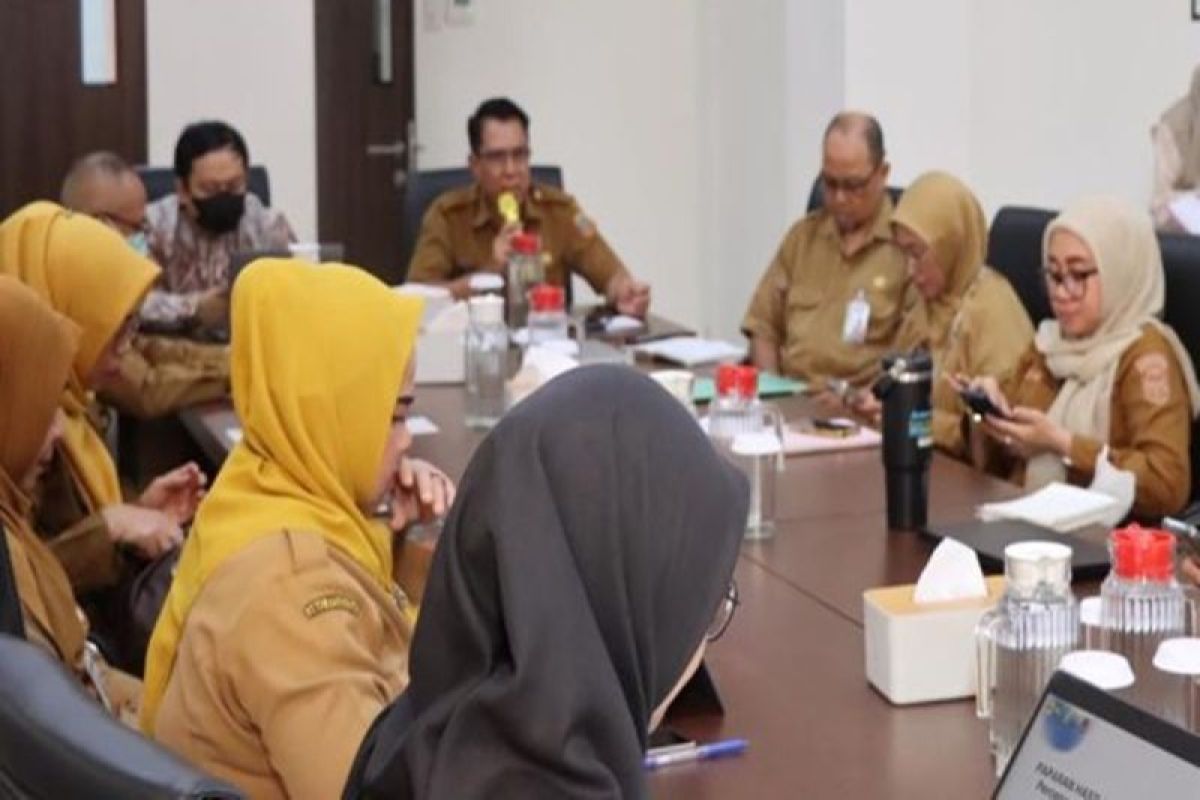
The Provincial Government of South Kalimantan, through its Health Office, is undertaking various efforts to accelerate stunting reduction, one of which involves partnering with the Faculty of Medicine and Health Sciences at Lambung Mangkurat University (ULM) to hold a Finalisation and Dissemination Meeting for the Preparation of a Policy Brief on Accelerating and Reducing Stunting.
Rahmadi, Head of the Public Health Division at the South Kalimantan Provincial Health Office, said the policy brief is expected not to remain merely a recommendation document, but to serve as a reference for strengthening stunting reduction interventions.
“We hope this policy brief will not only be a document, but can truly be translated into implementation steps. Because stunting has different determinants in each region, policies and interventions must also be based on data, conditions and the needs of each area,” Rahmadi said in Banjarbaru on Monday.
The activity is an important part of ensuring that policy recommendations, which have been prepared based on evidence and input from stakeholders, can be translated into concrete, measurable implementation steps that suit the characteristics of each region in South Kalimantan.
He explained that there are seven key findings of concern in efforts to accelerate stunting reduction in South Kalimantan.
First, governance and institutional arrangements still differ between regions and affect programme success.
Second, data synchronisation problems are a significant systemic obstacle. Third, the capacity of cadres and human resources still needs strengthening. Fourth, regional characteristics also produce different stunting determinants.
The fifth finding shows that the integrated governance and Posyandu model in Tapin Regency is a practice with potential for replication. Sixth, the potential of corporate social responsibility (CSR) and philanthropy is considered not yet optimally utilised.
Seventh, various interventions have been carried out, but their effectiveness, targeting, distribution and sustainability still vary.
Rahmadi stressed that these findings form an important basis for developing more targeted recommendations.
“We need to ensure that interventions are truly well targeted and have an impact on reducing stunting. Strengthening governance, data integration, improving human resource capacity, and utilising cross-sector potential are very important parts,” he said.
In the implementation roadmap for accelerating stunting reduction, there are four main stages.
The first stage, during months 0–3, is directed at governance consolidation, including mapping the position of the TP3S secretariat, strengthening coordination, updating the TP3S decree, and establishing working mechanisms and follow-up actions from meeting results.
The second stage, during months 4–6, focuses on data standardisation and capacity strengthening, through agreeing on operational definitions of stunting variables, mapping data sources, validating and verifying data, training cadres, and preparing service standards and mechanisms.
In the third stage, during months 7–12, implementation is directed more integratively with the use of a single stunting dataset for targeting, development of a monitoring dashboard, integration of data on prospective brides, pregnant women, toddlers and case audits, optimisation of village funds, and involvement of the private sector and CSR.
The fourth stage, in the second year, is directed at evaluation, replication and strengthening programme sustainability.
This stage includes evaluating outcome achievements, reviewing programme and budget effectiveness, replicating good practices, expanding programmes proven effective, and integrating programmes into regional planning and budgeting documents.
“What we want to achieve is strong governance, integrated data, competent human resources, well-targeted budgets, region-specific interventions, and sustainable outcome monitoring. In this way, stunting reduction efforts can be carried out more effectively and sustainably,” said Rahmadi.
The finalisation and dissemination meeting also served as a space to obtain agreement and final input from stakeholders on the policy recommendations that had been formulated.
It is hoped that the resulting Policy Brief on Accelerating and Reducing Stunting in South Kalimantan Province can become a comprehensive, evidence-based policy recommendation document that is responsive to the needs and conditions of each region, while strengthening synergy between government, academia, the community, the business world and all related parties in accelerating stunting reduction in South Kalimantan.
Meanwhile, stunting prevalence shows a fairly significant downward trend, from 30.00% in 2021 to 22.90% in 2024.
The South Kalimantan Provincial Medium-Term Development Plan (RPJMD) targets a reduction in stunting prevalence from 22.9% in 2024 to 17.63% in 2029.