
South Kalimantan Government Transforms Tourism into Banua's Economic Driver
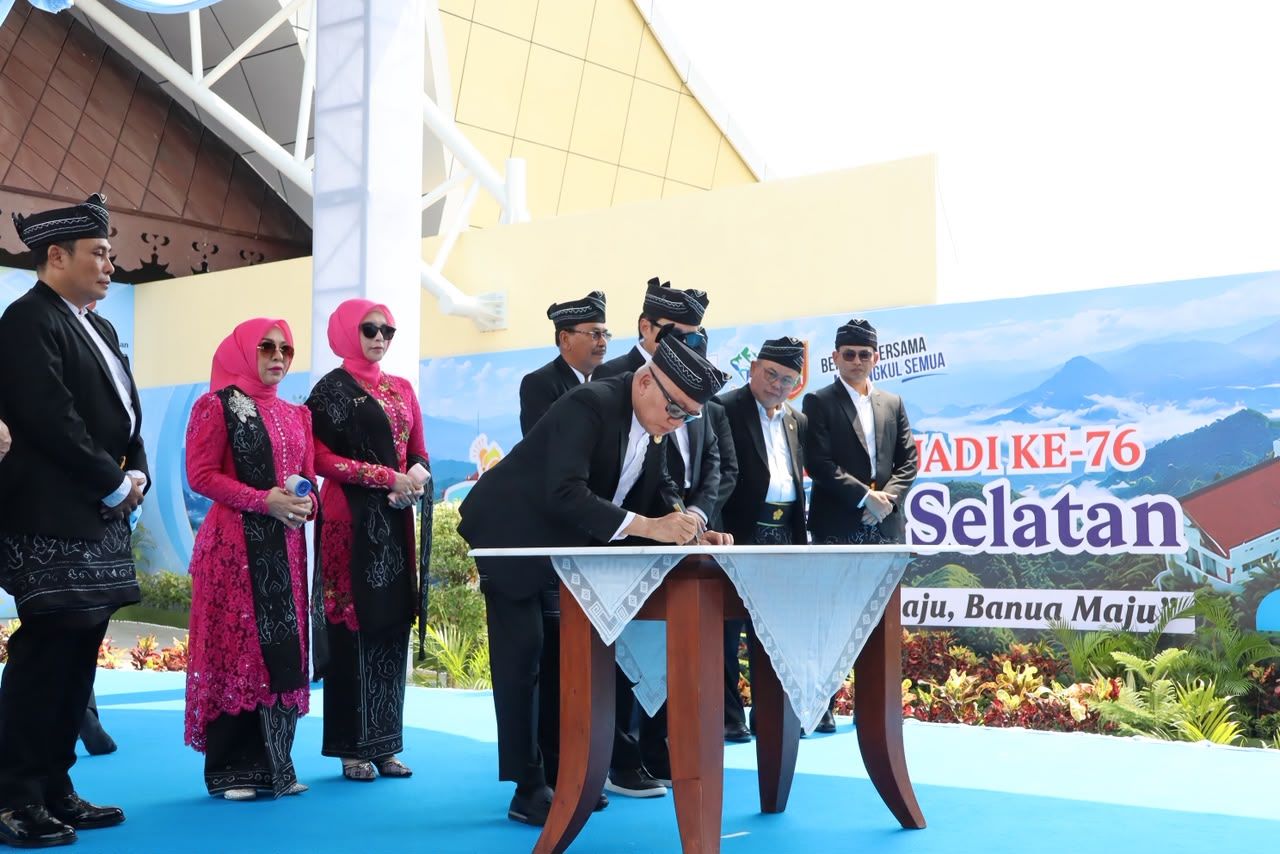
The Provincial Government of South Kalimantan is encouraging the transformation of the tourism sector into a primary driver of regional economic growth. The policy is no longer oriented solely towards increasing tourist arrivals, but is also directed at enlarging the economic value received by the community, strengthening MSMEs, opening employment opportunities, and encouraging investment.
South Kalimantan possesses diverse tourism potential, ranging from the Meratus Mountains landscape, which holds UNESCO Global Geopark status, to river, cultural, religious, and culinary tourism. This potential is considered capital for building an economic ecosystem that involves various sectors.
South Kalimantan Governor Muhidin stated that all development programmes must provide tangible benefits to the community, including the tourism sector. “Every development programme we implement must lead to improving community welfare. This includes the tourism sector, which must be able to provide real economic benefits, open business opportunities, and create jobs for the people of Banua,” Muhidin said in Banjarbaru on Wednesday (29/7).
This policy direction aligns with the development targets in the South Kalimantan RPJMD 2025-2029. The South Kalimantan Provincial Government has positioned tourism as a lever for economic growth, with a regional economic growth target reaching 8.1 percent by 2029.
To support this target, the South Kalimantan Tourism Office has drafted a regional tourism transformation roadmap involving academics. The transformation is carried out by shifting the development orientation from merely bringing in tourists to creating economic value from each visit.
South Kalimantan’s economic growth in 2025 was recorded at 5.2 percent. However, the tourism sector’s contribution to the regional economy is still around 0.22 percent. On the other hand, the region’s tourism potential continues to develop and is capable of attracting millions of tourist trips annually.
Head of the South Kalimantan Tourism Office, Iwan Fitriady, said this condition indicates the need for a paradigm shift in tourism development. According to him, the tourism sector has significant leverage because it is linked to many supporting sectors.
“The tourism sector is not just about people visiting tourist sites. Tourism is a multi-sector with extraordinary leverage on the rate of economic growth. Every tourist who comes will drive the transportation, accommodation, culinary, creative industry, and our local MSME sectors,” Iwan said.
Therefore, the regional government is encouraging tourists not only to visit for a short time but also to stay longer and use more local products and services. Thus, the economic benefits can be felt by traders, artisans, creative economy players, transport service providers, accommodation managers, and communities in tourist villages.
Iwan said destination development can no longer be carried out separately from community business development. Strengthening tourist villages, improving the quality of creative economy products, promotion, and increasing the capacity of tourism players must be done in an integrated manner.
“What is more important is how each destination is able to drive the community’s economy. When tourists come, they use local transport, stay in hotels, enjoy typical Banua cuisine, buy MSME products, and utilise tour guide services. That is where the economic value of tourism is created,” he said.
In the 2025-2029 tourism development strategy, the South Kalimantan Provincial Government has set several main levers. These include the Meratus UNESCO Global Geopark, priority destinations, tourist villages, flagship events, digital tourism, and the creative economy.
The Meratus Geopark is a focus because its UNESCO Global Geopark status opens opportunities for South Kalimantan to expand its tourism market to a global level. However, the government considers international recognition not the final goal.
“What we want to achieve is for the Meratus Geopark not only to attract tourist visits but also to encourage the development of MSMEs, the growth of tourist villages, and increased investment in the tourism sector,” Iwan said.
The development of the Meratus Geopark is directed not only at conservation aspects but also at improving accessibility, digital promotion, strengthening human resources, and empowering the community as the main tourism players.
Besides the Meratus Geopark, the South Kalimantan Provincial Government is developing destinations through a cluster approach. Banjarbakula is directed as the main gateway with the strength of urban tourism and mobility. Banua Anam relies on the Meratus Geopark and nature, culture, and religious tourism. Meanwhile, Saijaan Bersujud is developed as a marine, coastal, and adventure tourism area.
The cluster approach is expected to ensure each area has complementary advantages. Tourists are also expected to have more choices of destinations and activities while in South Kalimantan.
Tourism development is also combined with the creative economy. Iwan said tourists are now not only looking for tourist attractions but also experiences related to culture, cuisine, and local products.
“Tourists come not only to enjoy nature. They are also looking for experiences, culture, cuisine, and distinctive local products. Therefore, the creative economy is an inseparable part of Banua’s tourism development,” he said.
The South Kalimantan Provincial Government is also strengthening digitalisation to expand the promotion of destinations and local products. Social media and various digital platforms are utilised to reach a wider tourism market while increasing competitiveness.
Iwan emphasised that the success of the tourism transformation requires the involvement of various parties, including the government, business players, academics, communities, media, and the public.