
South Kalimantan Forestry Service Makes Tropical Forest Park a Model for Circular Economy
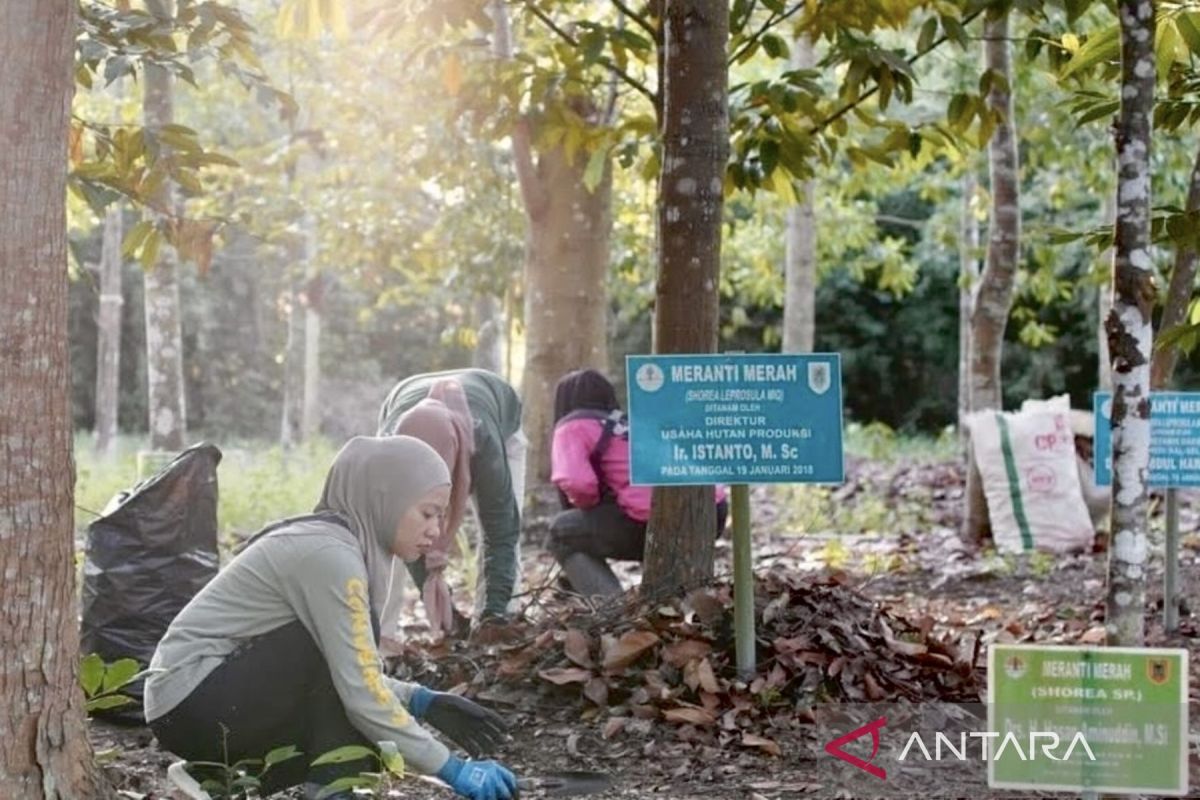
The Forestry Service of South Kalimantan Province (Dishut Kalsel) is turning the Taman Hutan Hujan Tropis Indonesia (Indonesian Tropical Rainforest Park) in Banjarbaru into a model of circular economy through the utilisation of leaf litter and twigs to produce compost, supporting sustainable environmental conservation. Head of Dishut Kalsel Fathimatuzzahra stated in Banjarbaru on Wednesday that the conversion of organic waste into compost is part of an environmentally based area management strategy that not only maintains cleanliness but also yields useful products for vegetation upkeep. She noted that the activity is carried out through regular communal work involving civil servants who clean the tropical forest park area while collecting reusable organic material. “Maintenance activities include waste cleaning, tree branch pruning, water channel clearing, and the collection of leaf litter scattered across various areas of the tropical forest park,” she said. She explained that the collected leaf litter and twigs are sorted and processed into compost, giving them higher utility value compared to simply being left as accumulated organic waste in the area. The resulting compost is then used to support plant growth within the tropical forest park as well as in greening activities at other locations requiring organic fertiliser. Fathimatuzzahra remarked that processing leaf litter into compost represents a form of sustainable resource use, as it reduces the volume of organic waste while returning nutrients to the environment through the application of natural fertiliser. “This step demonstrates a commitment to implementing circular economy principles that encourage the reuse of resources to add value to area management and ecosystem preservation,” she said. Within the Taman Hutan Hujan Tropis Indonesia area, Dishut Kalsel conserves various plant species typical of Kalimantan forests, such as ulin trees, around 14,000 meranti plants, and other endemic species that play a vital role in maintaining ecosystem balance and strengthening the area’s function as a conservation centre in the province.