
South Jakarta City Government receives 115 sacrificial animals for Eid al-Adha
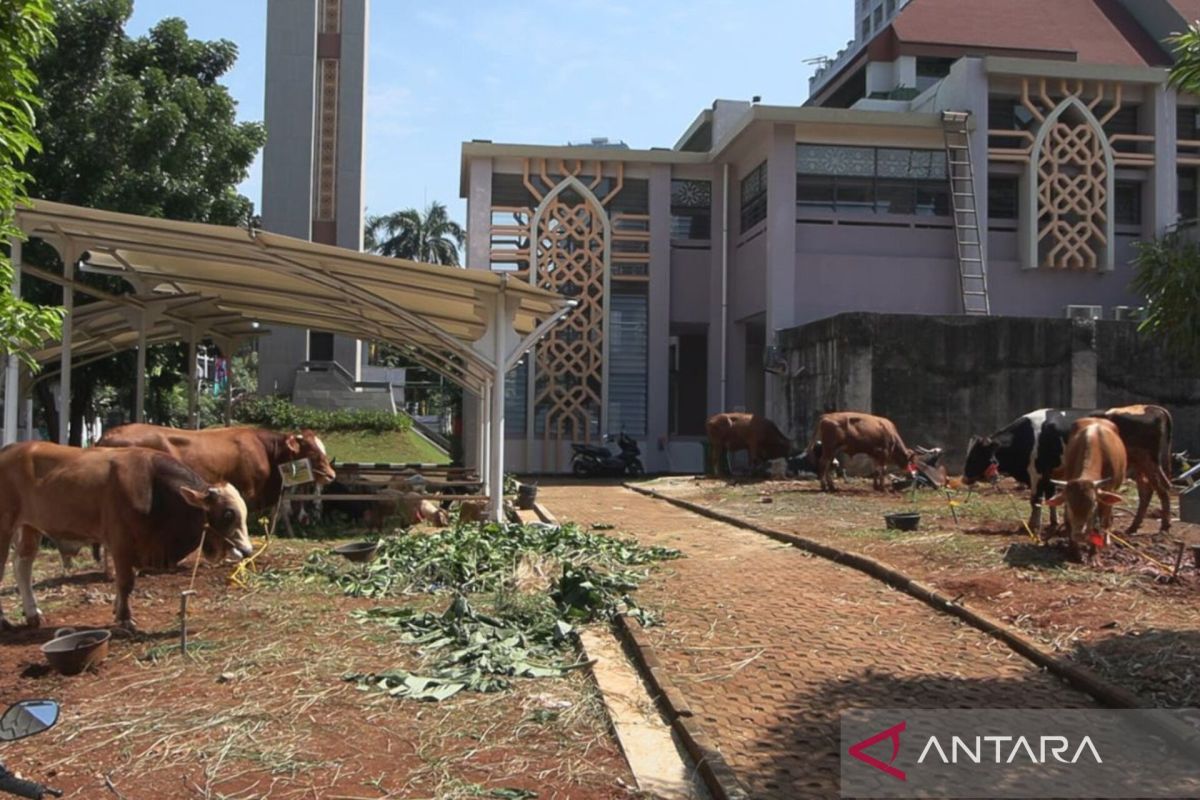
South Jakarta City Government has received 115 sacrificial animals for Eid al-Adha 1447 Hijriah at the area surrounding Darul Jannah Mosque and the South Jakarta City Hall.
“Until today, Alhamdulillah, we have received 47 cows and 68 goats. Insha Allah, this number will continue to increase through community, civil servant, and business participation,” said South Jakarta Deputy Mayor Ali Murthadho in Jakarta on Wednesday.
The South Jakarta City Government, he added, is collaborating with Darul Jannah Mosque regarding the collection, slaughter, and distribution of sacrificial animals in South Jakarta.
He explained that the distribution process is divided into two schemes: first, through mosques, foundations, or Islamic boarding schools; second, via Darul Jannah Mosque, which will conduct direct slaughter.
During the slaughter process, Darul Jannah Mosque and the committee use cattle restraint equipment to meet Islamic slaughter requirements while ensuring safety and security.
“I would like to note that the sacrificial process begins with animal health checks by veterinarians from the South Jakarta Food Security, Marine, and Agriculture Sub-Division (Sudin KPKP) immediately after the animals are received. During slaughter, the meat is also inspected again,” Ali stated.
Regarding the handling of slaughter waste, he added that the committee has prepared adequate facilities meeting environmental standards. For example, blood and offal disposal is directed to specific earth pits with designated depth and width.
For distribution, Ali mentioned the committee has prepared traditional bamboo containers (bongsang or besek). The use of these traditional containers supports waste segregation efforts and minimises non-organic (plastic) waste. This policy is also implemented at the sub-district and village levels.
“We hope this initiative will assist the community, particularly in meeting nutritional needs, while boosting the local economy for those offering sacrifices. We are confident their religious obligations will be fulfilled properly and professionally by the committee,” Ali said.