
South Jakarta Administration Mobilises Dasawisma Cadres for Household Waste Segregation
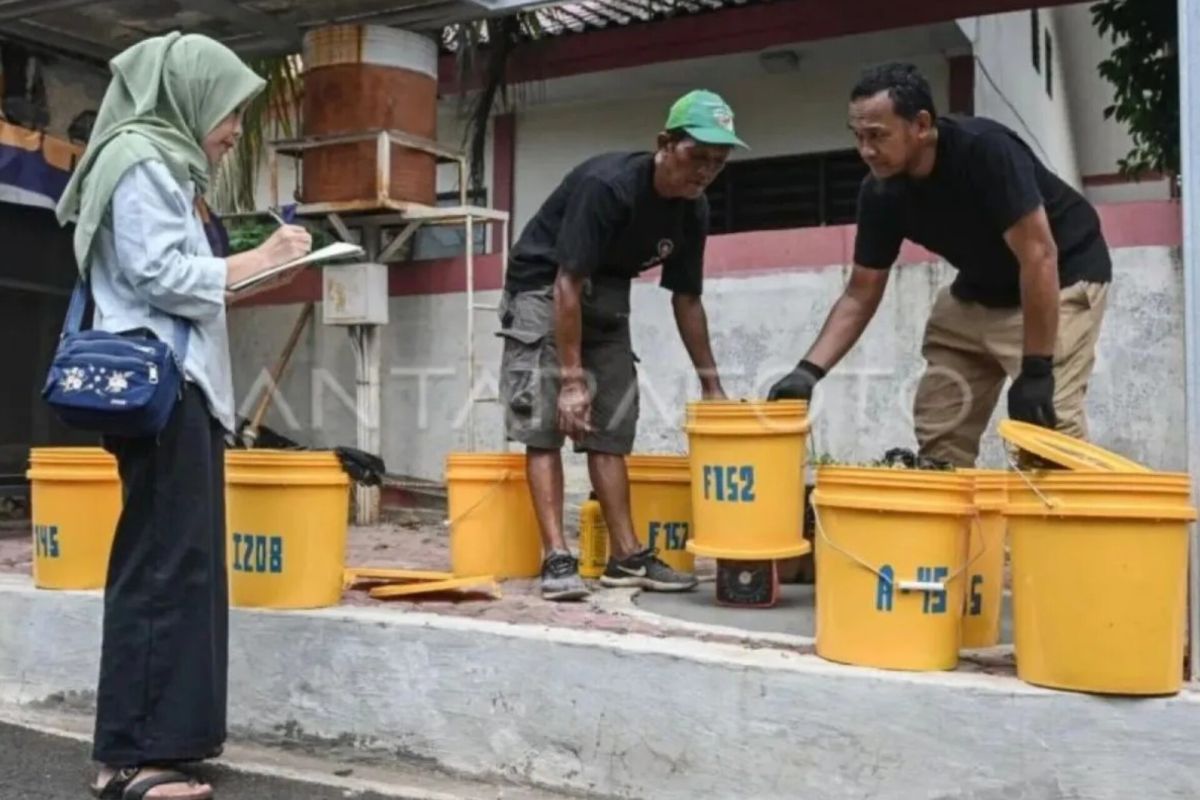
The South Jakarta City Government is mobilising Dasawisma cadres to sort household waste in an effort to realise the ‘Jaga Jakarta Pilah Sampah’ (Protect Jakarta Waste Sorting) Movement.
“If every Dasawisma cadre is able to mobilise 10 to 20 households under their supervision, a large-scale change can occur quickly and tangibly,” said the Mayor of South Jakarta, Syafrin Liputo, in Jakarta on Wednesday.
Syafrin stated that the role of Dasawisma is vital as it is an organisation closest to families and the community. The cadres are expected to lead by example and establish habits for sorting organic waste, inorganic waste, and waste that holds economic value.
“Therefore, I am calling on all Dasawisma cadres to focus on three simple yet high-impact steps,” he said.
Firstly, Syafrin urged every household within their supervised areas to begin implementing waste sorting habits at home. Secondly, he encouraged residents to channel waste with economic value to waste banks or available waste management programmes in their respective areas. Thirdly, Syafrin hopes that waste management will become part of an effort to strengthen family economies, particularly for women, to make them more independent, productive, and empowered.
Echoing this sentiment, the Head of the South Jakarta Sub-department for Community Empowerment, Child Protection, and Population Control (PPAPP), Rizky Hamid, added the importance of strengthening the capacity and role of Dasawisma as the spearhead for changing community behaviour in habituating waste sorting from home.
“This simultaneously encourages waste management with economic value to increase family resilience and welfare,” said Rizky.
According to Rizky, a total of 16,530 Dasawisma cadres across South Jakarta have been provided with education regarding the waste sorting movement.
One inspiring example is the Dasawisma cadre from the Kranji 2 and 3 Group in Srengseng Sawah, Jagakarsa, Yuliana Sri Hartati, through the ‘Komunitas Masyarakat Pilah Oper Kemasan’ (KOMPAK) collaborative programme. This programme has successfully mobilised residents to sort waste at the source, supported by a design team from CoLab Rethinking Waste from Indonesia and the Netherlands, serving as a model for successful community empowerment collaboration.
Consequently, it is hoped that as more families adopt waste sorting at home, waste management providing economic added value will expand, and the role of Dasawisma as a community driver will strengthen to realise a clean, healthy, and empowered South Jakarta, in line with the spirit of ‘Jaga Jakarta’.