
South African President Faces Impeachment Threat Over Missing Rp10 Billion Hidden in Sofa
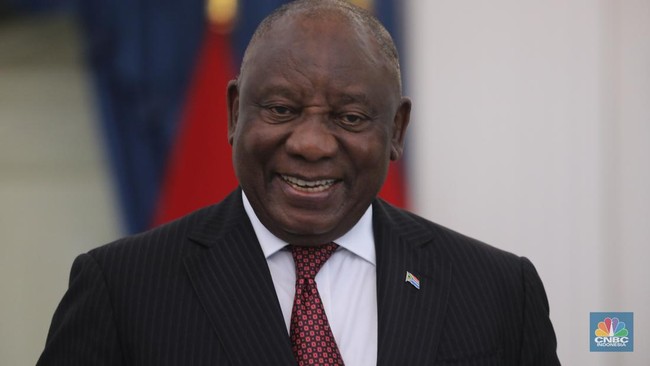
South African President Cyril Ramaphosa has long positioned himself as the clean leader the nation requires. A former trade union activist turned businessman and billionaire, he has been determined to restore the credibility of his party, the African National Congress (ANC), following a series of scandals.
However, in early September, his efforts faced a severe test that could potentially shake him from the presidency. For years, Ramaphosa has been shadowed by the Phala Phala scandal, named after the location of the President’s private wildlife lodge.
The site went viral when thieves made off with cash valued at US$580,000 (approximately Rp10.18 billion). The money itself had been hidden inside one of Ramaphosa’s sofas in 2020.
The case came to public light in June 2022, after the former head of South Africa’s intelligence agency, Arthur Fraser, reported the matter to the police and accused Ramaphosa of several violations. It was alleged that a “secret operation outside official government records” was conducted to recover the funds.
This has ultimately provided “powerful ammunition” for his opposition to challenge Ramaphosa’s promises of clean governance. Parliament has initiated investigation efforts, although Ramaphosa’s legal team has sought to have the investigation declared invalid and cancelled.
Ramaphosa stated that the money originated from the sale of buffalo to a Sudanese businessman. However, not everyone is convinced, and his explanation has triggered both laughter and scepticism. There are essentially three core issues regarding the cash that make the presidency of the official who took office in 2018 precarious: the true origin of the funds, how the thieves were handled and whether a secret operation occurred, and whether Ramaphosa breached his constitutional obligations as President (prima facie evidence).
In 2022, parliamentary investigators found sufficient evidence to demand accountability. However, the National Assembly—which was controlled by the ANC at the time—ultimately decided not to proceed with a full impeachment investigation process. Opposition parties challenged this decision in court. In May 2026, the Constitutional Court ordered Parliament to revive the impeachment process.
As of today, the case is still ongoing. The outcome will determine Ramaphosa’s fate and the potential for him to be removed from the presidency. Notably, the Phala Phala scandal has become a political focal point just months before the local elections in November, at least for the ANC. If the opposition wins these local elections, Ramaphosa will face even greater pressure.
“Opposition parties have tasted early victory,” said Mbekezeli Benjamin, an advocacy officer at Judges Matter, a legal monitoring body at the University of Cape Town, as reported by the Financial Times on Thursday (10/09/2026). “This will significantly weaken him, as well as weakening his supporting faction and his potential successors in the future,” Benjamin added.