
Sorting waste, changing habits
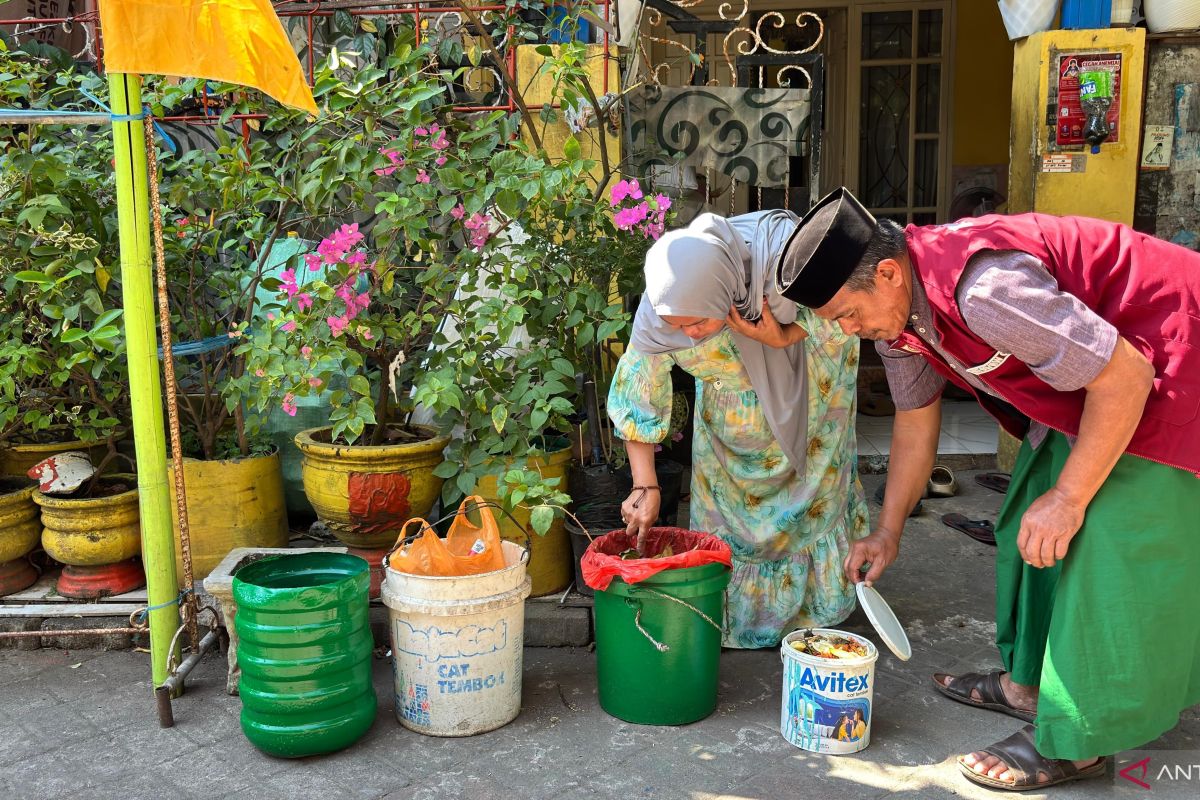
Every day, around 1,000 tonnes of waste is generated in the city of Makassar, South Sulawesi. As much as 54 per cent of it consists of household organic waste, whilst plastic waste accounts for less than 20 per cent.
For years, that waste has ended up at the Tamangapa Final Processing Site (TPA). The landfill, owned by the Makassar City Government, now holds around 7 million metric tonnes of waste.
The situation brings other problems. During the dry season, the waste piles risk triggering fires caused by methane gas. In the rainy season, leachate from the waste piles has the potential to pollute the environment.
The Makassar City Government subsequently received an administrative sanction from the Ministry of Environment in March 2026. The city government was given a deadline to fix its waste management system, including changing the operation of the landfill from the open dumping method to a sanitary landfill.
That change cannot be made at the landfill alone. The government is also encouraging waste to be sorted at home so that only residual waste is taken to the landfill.
The policy demands both adequate facilities and a change in people’s habits. The government must provide waste processing facilities from the neighbourhood level up to the landfill, whilst residents need to get used to separating organic, inorganic, and residual waste before disposal.
The Head of the Makassar City Environment Agency, Helmy Budiman, said the government’s strategy is directed at encouraging changes in people’s behaviour in sorting waste whilst simultaneously fixing the waste management system.
“From here, the main strategy is focused on provoking behavioural change in society through waste sorting. This includes carrying out a total overhaul of the disorderly waste management system,” said Helmy.
The approach targets two main groups, namely housewives and the younger generation, or Gen Z.
The Makassar City Government is also working to transform waste from an environmental burden into something of economic value through rewards and penalties, strengthening facilities from upstream to downstream, and optimising institutions such as the Central Waste Bank (BSP) and TPS3R.