
Son of Indonesian Official Lives in Poverty, Refuses to Exploit Family Name
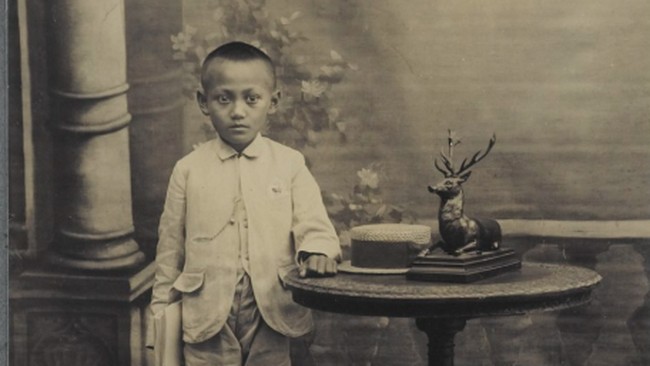
Not all children of prominent figures choose to leverage family fame for success. In Indonesian history, there is a figure who took a different path, living a simple life and refusing to use his parent’s great name as capital.
That figure is Raden Mas Soesalit Djojoadhiningrat, the only son of national heroine R.A. Kartini. Although born into a respected family and having various opportunities for an easier life, Soesalit chose to forge his own way without depending on his family’s influence or reputation.
This decision meant his name never became as famous as his mother’s, widely known as a pioneer of women’s emancipation. Yet, it is precisely this attitude that ensures Soesalit is remembered as a person who held firmly to his principles until the end of his life.
In his time, Soesalit was quite fortunate. He was born into an official’s family, as his father Raden Mas Adipati Ario Djojoadhiningrat served as the Regent of Rembang. History also records his mother, Kartini, as a great figure for her visionary thinking that was ahead of her era.
Despite this, Soesalit refused to rely on his parents’ prominent names to navigate life. According to Wardiman Djojonegoro in the book ‘Kartini’ (2024), Soesalit actually had the right to succeed his father as regent. However, he firmly rejected it. Many relatives repeatedly asked him to take the position, but his answer was always a refusal.
Instead, he chose to join the military in 1943. He was trained by the Japanese army and later joined the Pembela Tanah Air (PETA) forces. When Indonesia declared independence, Soesalit became part of the Tentara Keamanan Rakyat Republik Indonesia. From there, his career slowly flourished.
According to Sitisoemandari Soeroto in ‘Kartini: Sebuah Biografi’ (1979), Soesalit was involved in several battles against the Dutch, which led to his rapid promotion and growing reputation.
The peak of his military success came in 1946. He was appointed Commander of Division II Diponegoro, leading a crucial force tasked with guarding the nation’s capital in Yogyakarta. He also held several civilian posts, including serving as an advisor to the Minister of Defence in the Ali Sastro Cabinet in 1953.
At that time, few people knew that Soesalit was the son of the great Indonesian figure R.A. Kartini. He deliberately never traded on his mother’s name. Throughout his life, Kartini’s story repeatedly served as an inspiration, told across generations about a woman who demanded equality through her letters. Even the popular song ‘Ibu Kita Kartini’ by W.R. Soepratman was already widely sung.
Soesalit’s superior, General Nasution, witnessed how he never flaunted his parentage. Nasution observed that after leaving service, Soesalit chose to live in poverty as a veteran. He did not even claim his veteran rights.
Nasution noted, as quoted in ‘Kartini: Sebuah Biografi’ (1979), that Soesalit could have easily avoided poverty simply by stating he was Kartini’s only son. Doing so would have garnered much sympathy and could have changed the life of the two-star general.
However, Soesalit held fast to the principle instilled in him from the beginning: he refused to reveal that he was a descendant of Kartini. As a result of this principle, the man born in Rembang continued to live in limited circumstances until his passing on 17 March 1962.
Source: jawawa.id (https://jawawa.id/newsitem/son-of-indonesian-official-lives-in-poverty-refuses-to-exploit-family-name-1781337035)
Originally published by CNBC Indonesia (https://www.cnbcindonesia.com/market/20260613115445-17-742567/anak-pejabat-ri-hidup-melarat-tolak-jual-nama-besar-orang-tua), translated from Indonesian