
Something Is Wrong with Earth, Scientists Growing More Worried
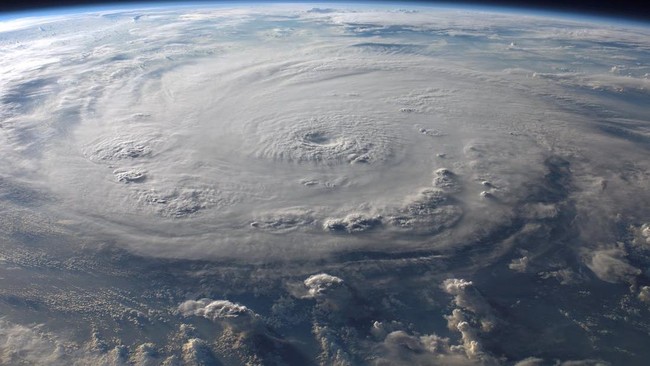
Global temperature records have repeatedly been broken in recent years. Heatwaves are arriving more frequently, ice is melting faster, and extreme weather is becoming ever harder to predict.
What worries scientists most now, however, is not merely the rise in temperature. New findings show the Earth is absorbing far more energy than it releases back into space.
More surprisingly still, the rate of change has outstripped the estimates of many of the climate models that have long served as the world’s reference.
Satellite data show the Earth absorbing far more energy than it releases back into space. This imbalance has grown continuously over the past two decades and has more than doubled since 2000.
Even more striking, the rate of change cannot yet be fully explained by the climate models that have served as the global benchmark.
These findings have led scientists to question whether climate change is unfolding faster than previously estimated.
The Earth Is Storing More Energy
To understand EEI, imagine the Earth as a financial account.
Every day the sun sends energy to the Earth. Some of it is reflected back into space, while the remainder is absorbed by land, oceans and atmosphere.
At the same time, the Earth continuously releases energy in the form of infrared radiation. As long as energy income and expenditure remain roughly balanced, global temperatures change little.
The problem is that this balance is now shifting.
Incoming energy keeps rising, but outgoing energy is not increasing at the same pace. This difference is what is known as the Earth’s Energy Imbalance, or EEI.
In other words, the Earth system is now continuously “saving” heat.
According to scientists, as long as EEI remains positive, global warming will continue even if surface temperatures do not always rise immediately.
Why Does This Imbalance Matter?
EEI is not just another number in climate science. For researchers, it describes the “main engine” driving global warming.
As long as the Earth receives more energy than it releases, the climate system will keep warming. The effects will not stop straight away even if emissions eventually slow.
More than 90% of that excess energy does not directly heat the air but is absorbed by the oceans. The ocean then acts as a vast heat store that can influence global temperatures, weather patterns, and the likelihood of future heatwaves and extreme weather.
For this reason, scientists consider EEI a more fundamental indicator than surface temperature change alone.
Satellite Data Show a Consistent Trend
These changes are monitored through NASA’s Clouds and the Earth’s Radiant Energy System (CERES) project, which has measured the Earth’s energy budget using satellites since the late 1990s.
The instruments record three main components at once: incoming solar energy, the amount of sunlight reflected back into space, or albedo, and the infrared heat emitted by the Earth.
Observations show the Earth’s albedo is steadily declining. This means less sunlight is being reflected and more energy is being absorbed by the planet.
At the same time, the Earth is indeed releasing more heat into space. However, the increase in outgoing energy has not kept pace with the rise in incoming energy. As a result, the Earth’s Energy Imbalance keeps growing.
CERES findings are corroborated by the Argo float network, which measures temperatures down to about 6 kilometres deep in the world’s oceans. Because more than 90% of the Earth’s excess energy is stored in the ocean, Argo data provide independent confirmation that the additional heat is genuinely accumulating in the seas.
What Is Making Scientists More Anxious
The rise in EEI is not in itself surprising. Global warming was expected to increase the energy imbalance.
The problem is its speed.
The latest data show EEI rising far more than projected by many of the climate models used in various climate projections, including those underpinning the Intergovernmental Panel on Climate Change (IPCC).
“For the first time we are truly interpreting measurements, not just models,” Bjorn Stevens, Director of the Max Planck Institute for Meteorology in Hamburg, told The Economist.
According to Stevens, the finding is a game changer because scientists now have long-term observations sufficient to compare the real world against model simulations.
More than 50 climate researchers voiced similar concerns in a scientific paper published in late 2025. They described the current EEI rise as “hard to reconcile with climate models”, indicating that real-world conditions have moved beyond the variation the models had anticipated.
For scientists, the question is no longer simply whether the Earth is warming. The question now is whether the pace of change has outstripped the ability of climate models to predict it.
Two Leading Suspects Behind the EEI
Scientists do not yet have a definitive answer as to why the Earth’s energy imbalance is rising so quickly. Most research, however, points to two main causes.
The first is that the Earth is reflecting less sunlight than before.
The second is changes in cloud cover that allow more energy to be retained within the climate system.
Both are linked to albedo, the Earth’s ability to reflect solar radiation back into space.
When albedo falls, more energy is absorbed than reflected.
In simple terms, the two biggest suspects are:
The sky is reflecting less light
Sulphur emissions from power plants and ships have fallen.
The amount of aerosol particles in the atmosphere has declined.
Aerosols have long helped reflect sunlight.
When aerosols decrease, more solar energy reaches the Earth’s surface.
Cloud cover is changing
The extent of low-level cloud over some ocean regions has shrunk.
Low clouds normally help reflect solar radiation.
Fewer clouds mean the ocean absorbs more heat.
As a result, the Earth’s albedo falls further.
Researchers believe the two mechanisms are likely working together, amplifying the Earth’s Energy Imbalance.
Cleaner Air, Faster Warming?
Among these findings is one paradox that has attracted particular attention.
For decades, many countries have tightened rules on sulphur emissions from power plants and ships, because the pollutant is harmful to human health.
The policy worked.
Global sulphur emissions fell from around 81 million tonnes to 69 million tonnes after various control policies were implemented. One of the biggest changes came from new rules from the International Maritime Organization (IMO) that took effect in 2020, requiring ships to use lower-sulphur fuels.
Sulphur, however, has one side effect that has actually been helping to cool the planet.
Sulphate aerosols can reflect part of the sun’s rays back into space. These particles also help form brighter, more reflective low-level clouds.
As the air becomes cleaner, that natural cooling effect diminishes.
According to research by Øivind Hodnebrog of CICERO and colleagues, roughly half of the EEI increase between 2001 and 2019 can be explained by the decline in aerosols. They also estimate that sulphur’s cooling effect may have been underestimated by about 10% to 40% in previous estimates.
Other research suggests the IMO’s 2020 regulation alone reduced sulphur-derived cooling by more than 10%.
For scientists, these results do not mean pollution control was a mistake. Rather, the findings show the climate system is far more complex than previously assumed.
Clouds Are Changing Too
Besides aerosols, scientists have also highlighted changes in cloud cover, particularly low-level clouds over the ocean.
In 2023, Helge Gössling of the Alfred Wegener Institute and his team found a decline in low-level cloud over several ocean regions. That same year also recorded the highest global temperatures, the lowest albedo, and the highest EEI — conditions that IPCC models were unable to reproduce.
Separate research led by Paulo Ceppi of Imperial College London found that changes in low-level cloud have indeed contributed to rising EEI over the past two decades.
However, those results also show that cloud changes alone cannot explain the entire observed increase in EEI.
Climate Models Are Falling Behind the Data
This is where scientists’ focus has shifted.
The central problem is no longer whether the Earth is warming, but why climate models have not been able to keep up with what is actually happening.
In late 2025, more than 50 researchers published a paper describing the current EEI rise as “hard to reconcile with climate models”. They concluded that the signal seen in the real world has exceeded the internal variation the models had anticipated.
Maria Rugenstein of Colorado State University said the issue has consequences beyond climate research.
“These models are used to calculate the impacts of climate change, carbon budgets, and almost every projection about the future,” she said.
This means that if the models cannot accurately describe current conditions, a wide range of long-term projections will also need continual re-evaluation.
What Does This Mean for the World?
To the public, EEI may sound like a technical term far removed from daily life.
Its impacts, however, are very real.
The larger the energy imbalance, the more heat is stored in the oceans. That energy can later resurface as more intense heatwaves, extreme rainfall, drought, and stronger El Niño events.
Some scientists also estimate that the pace of global warming in the coming decade could be 10% to 30% higher than current estimates if the EEI trend continues.
This means the world faces not only relentlessly rising temperatures, but also the possibility that the change is unfolding faster than has long been assumed.