
Soligi Zero Stunting Programme Becomes Effort to Reduce Stunting in North Maluku
Efforts to improve the quality of human resources (HR) continue to be promoted in various regions, including North Maluku. One of the main focuses now receiving attention from the North Maluku Provincial Government is addressing stunting.
To date, stunting remains a public health challenge in Indonesia, particularly in remote and island areas. This condition not only affects children’s physical growth but also impacts cognitive development and future productivity.
Under the leadership of the Governor of North Maluku, Sherly Tjoanda, various stunting prevention programmes continue to be strengthened. Improvements in health services and fulfilment of child nutrition have become one of the regional development priorities.
“Addressing stunting must reach communities directly. Interventions must start from pregnancy until the first 1,000 days of a child’s life so that we truly produce a healthy generation,” said Sherly in a written statement on Wednesday (1/4/2026).
Private Sector Collaboration to Reduce Stunting Cases in North Maluku
In tackling stunting, the North Maluku Provincial Government is also encouraging the involvement of various parties so that stunting prevention can be carried out comprehensively and sustainably. One form of such collaboration is evident from Harita Nickel’s involvement through the Soligi Zero Stunting programme on Obi Island.
Harita Nickel’s Community Development Manager, Broto Suwarso, explained that the Soligi Zero Stunting programme has been running since 2022, combining nutrition interventions, health education, and strengthening community health services.
This programme is part of the company’s social responsibility initiative as well as support for the North Maluku Provincial Government’s efforts to reduce stunting rates.
“This success is the result of collective work. We believe that child health is an important foundation for a stronger and more prosperous future,” he stated.
Nevertheless, the implementation of this programme is not without field challenges. Strengthening the capacity of cadres is still needed, particularly in accurately measuring and monitoring child growth and development. On the other hand, limitations in health infrastructure such as puskesmas buildings also pose obstacles that need to be addressed immediately.
In addition, the availability of medical equipment, medicines, and health personnel still needs to be improved so that services can run optimally. Another challenge is access to clean water, which still needs to be expanded to support overall community health.
Intensify Education to Facility Development
To address these challenges, Harita Nickel is taking several concrete steps through cross-sector collaborations. One of them is partnering with posyandu cadres, midwives, and PKK members as the frontline in family support and child growth monitoring.
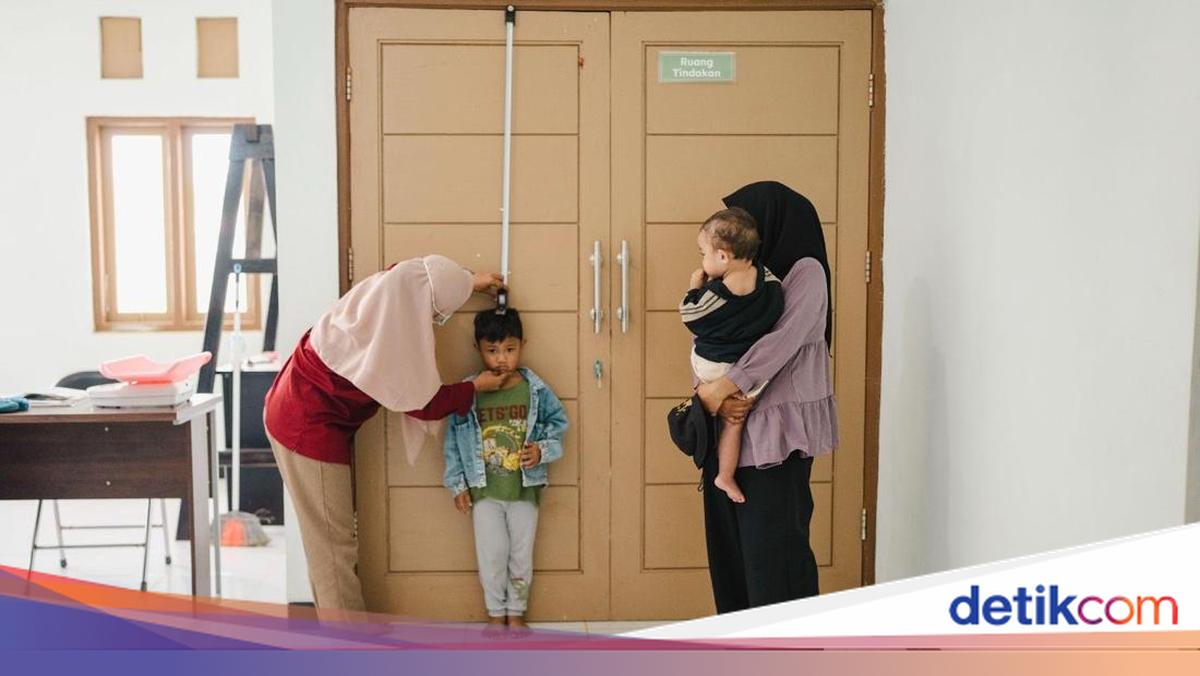
Harita Nickel also provided education to 57 participants consisting of village midwives in South Obi sub-district, posyandu cadres, and PKK members around the causes, impacts, and prevention efforts of stunting. Then, education on monitoring toddler growth and development through filling out the Road to Health Card (KMS); and training on the procedures for using anthropometric medical tools or child body measurements.
One posyandu cadre from Soligi Village, Murni, explained that posyandu activities are carried out routinely every month through weighing, measuring children, and distributing supplementary feeding. They also often conduct home visits to undernourished and stunted toddlers.
“We also proactively visit homes of toddlers at risk of stunting and provide counselling to mothers to pay attention to children’s nutrition and routinely check their pregnancies at the puskesmas,” said Murni.
Not only that, Harita Nickel, together with the Soligi Village Government and the South Halmahera District Health Office, built an Auxiliary Health Centre (PUSTU) building. Built using donated land from residents, the PUSTU building now serves as the epicentre for stunting eradication in Soligi Village.
Collaborating with the Indonesian Army (TNI AD), the National Population and Family Planning Board (BKKBN) of North Maluku Province, the South Halmahera District Women’s Empowerment, Child Protection, and Family Planning Office (DP3AKB), and the South Halmahera District Health Office, Harita Nickel also identified groundwater sources and built clean water wells for residents. Thus, Soligi Village residents can easily access clean water for daily life.
In eradicating stunting, the Soligi Zero Stunting Programme also includes providing supplementary food (PMT) based on local food, handing over milk for pregnant women, to regular monitoring of nutritional status, weight, and head circumference of children. Basic vaccinations for infants and the elderly, and tetanus toxoid vaccinations for pregnant women are also carried out to prevent disease risks in child growth and development.
Stunting Reduction Trend Begins to Show
The integrated stunting prevention efforts are starting to show real results. Since the Soligi Zero Stunting Programme was introduced, 354 children have received intensive support. In addition, around 300 PMT packages have also been distributed to support child nutrition fulfilment.
Not only that, positive impacts are also evident from the availability of active village cadres in early detection of stunting cases. Multi-stakeholder partnerships involving government, health workers, and the private sector are also becoming increasingly solid.
As a result, by the end of 2025, 21 out of 25 children were recorded as non-stunted in Soligi Village. This figure shows significant improvement in stunting prevention and handling efforts.
“We hope that next year it can truly be zero, and the children of Soligi grow healthier,” said Marni.
On a broader scale, North Maluku Province also shows a decline in stunting prevalence from 31.4% in 2018 to 23.2% in 2024, or a drop of 8.2 percentage points over six years (about 1.4 points per year).
For this achievement, the Soligi Zero Stunting Programme has received various accolades. One of them is the Subroto 2025 award from the Ministry of Energy and Mineral Resources (ESDM) in the category of the Most Innovative Community Development and Empowerment Programme in Health.