
Solid Fundamentals: BRI Strengthens Its Contribution to the National Economy
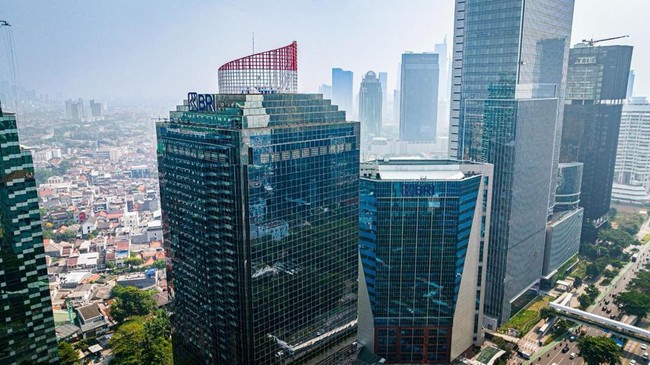
PT Bank Rakyat Indonesia (Persero) Tbk, or BRI, recorded positive performance up to the second quarter of 2026. This is reflected in adequate liquidity, an increasingly high-quality funding structure and solid capitalisation.
These fundamentals form the foundation for BRI to continue growing its business in a healthy manner whilst carrying out its intermediation function in support of national economic growth.
BRI’s Finance & Strategy Director, Achmad Royadi, revealed that BRI’s liquidity remains at an adequate level. The bank’s consolidated Loan to Deposit Ratio (LDR) was recorded at 90.8%, still at an ideal level for carrying out its intermediation function. Meanwhile, on the capital side, BRI’s Capital Adequacy Ratio (CAR) stood at 21.5% in the second quarter of 2026.
“With well-managed liquidity and capital that remains strong, BRI has a sufficient foundation to continue growing in a healthy and sustainable manner, whilst upholding the principle of prudence and maintaining a balance between growth, asset quality, liquidity and profitability,” said Achmad Royadi in an official statement on Monday (7/9/2026).
BRI’s liquidity position is further supported by an increasingly high-quality funding structure. As of the end of the second quarter of 2026, BRI’s third-party funds (DPK) reached Rp1,581 trillion, growing 6.7% year-on-year (yoy).
This growth was accompanied by an improved composition of low-cost funds, reflected in the CASA ratio rising from 65.5% to 67.6%.
Well-maintained liquidity and a higher-quality funding structure give BRI room to carry out its intermediation function optimally.
On the other hand, strong capitalisation provides the company with the capacity to support business expansion whilst maintaining resilience against risk. Amid this growth, BRI continues to prioritise the quality of its lending and disciplined risk management.
This is reflected in continuously improving asset quality, with the Non-Performing Loan (NPL) ratio falling from 3.07% in 2025 to 2.9% in the second quarter of 2026. This trend is in line with BRI’s risk management strategy through the application of selective growth, strengthening of the early warning system in the retail segment, and optimisation of collection and recovery functions.
Positive performance is also visible in continuously improving credit risk indicators. The Loan at Risk (LaR) ratio fell from 9.6% at the end of 2025 to 9.1% at the end of the second quarter of 2026. This decline reflects the improving quality of new loan bookings. In line with this, the Cost of Credit (CoC) fell from 3.4% at the end of 2025 to 3.1% at the end of the second quarter of 2026.
These well-maintained fundamentals have also supported the strengthening of BRI’s performance throughout the second quarter of 2026. BRI’s total assets reached Rp2,352 trillion, growing 11.7% year-on-year, mainly driven by accelerated lending, which grew 16.2% to Rp1,646 trillion. The combination of business growth and improving fundamentals also drove BRI’s net profit to Rp31.2 trillion, up 17.5% yoy.
These fundamental strengths give BRI room to continue carrying out its intermediation function, particularly in the MSME segment, which is the company’s core business. The focus on MSMEs is not only part of efforts to broaden financial inclusion, but also goes hand in hand with BRI’s support for various government priority agendas.