
Soldiers Serving as Imams and Khatibs: Why Not?
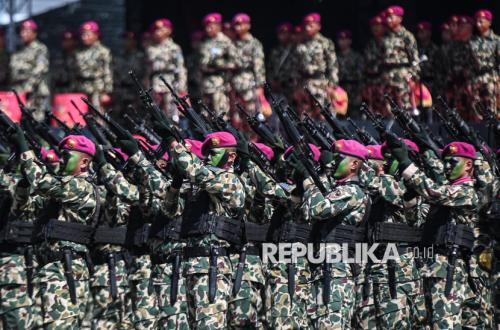
The plan by the Ministry of Defence, as stated by Defence Minister Sjafrie Sjamsoeddin to the House of Representatives (DPR RI) in mid-May 2026, to involve TNI soldiers in contributing to the religious life of the community is a noteworthy proposal that warrants further elaboration. While some parties question its relevance, others view it as an expansion of the TNI’s territorial role within society.
In my view, this idea should be understood proportionally and objectively. If implemented correctly, this programme could serve as an instrument for strengthening national resilience through moral, social, and spiritual approaches. We often perceive national defence solely through a military dimension; however, national history demonstrates that a nation’s strength is not determined solely by weaponry, technology, or the number of military personnel. A strong nation is one that possesses character, morality, unity, and robust social resilience.
In this context, the Defence Minister’s statement—that personnel from territorial development battalions could assist the community, including in religious activities such as serving as imams or khatibs—should be read as part of a community development approach, rather than an attempt to usurp the functions of religious scholars (ulama) or religious institutions. It must be understood that serving as a prayer leader (imam) or preacher (khatib) is not an exclusive profession reserved for a specific group. In Islamic tradition, anyone with the necessary scholarly capacity, proficiency in reciting the Al-Qur’an, an understanding of religious fundamentals, and the trust of the congregation can serve in these roles.
Furthermore, the Defence Minister explained that some personnel assigned to the territorial development battalions come from pesantren (Islamic boarding school) backgrounds and possess religious competence. Therefore, their presence would not be foreign to the community’s religious life. Indeed, this nation has a long history of collaboration between religious scholars and soldiers in the struggle for independence. From the 1945 PBNU Jihad Resolution and the 1946 Muhammadiyah Jihad Mandate to various student militias (laskar santri), history shows that moral strength and national defence often go hand in hand. Consequently, collaboration between preachers (dai) and soldiers is not a new concept in Indonesian history.