
Solar Energy Increasingly Strategic for Export-Oriented Industries
The Indonesian Solar Energy Association (AESI) assesses that solar energy is increasingly becoming a strategic necessity for export-oriented industries amidst rising global market demands for low-carbon products. Companies that adopt clean energy more quickly are considered to have a competitive advantage in maintaining access to international markets.
AESI Chairperson Mada Ayu Habsari stated that the period from 2026 to 2028 will be a crucial momentum for accelerating the adoption of Solar Power Plants (PLTS) in the industrial sector. According to her, a combination of policy support, increasing industrial needs, and global market demands makes the utilisation of solar energy increasingly relevant for businesses.
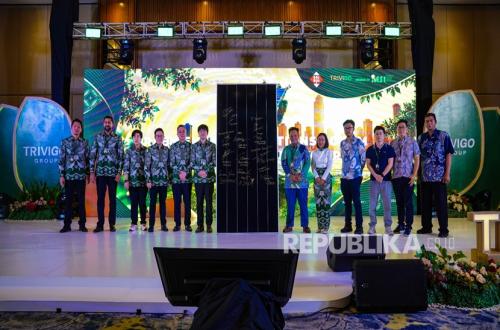
“The adoption of solar energy in the industrial sector is growing consistently and the direction is very positive. Currently, the majority of national rooftop PLTS capacity is used by the industrial sector. However, compared to Indonesia’s vast technical solar energy potential, its utilisation is still below one percent,” she said at the Green Energy Solutions for Manufacture Owners Forum in Bandung, Wednesday (10/6/2026).
She explained that the manufacturing sector is currently the largest user of national rooftop PLTS. Nevertheless, there is still ample room for growth considering Indonesia’s solar energy potential has not been optimally utilised.
According to Mada, the acceleration of solar energy adoption is driven by four main factors: the availability of open PLTS quotas, increasing demand from the industrial sector, government policy support, and global market pressure for sustainable business practices.
“Companies that move earlier will have a greater advantage in securing their future business competitiveness,” she said.
AESI considers that the full implementation of the European Union’s Carbon Border Adjustment Mechanism (CBAM) since early 2026 has further strengthened the urgency of using clean energy in the industrial sector. Additionally, demands for carbon footprint transparency in the global supply chain are also pushing companies to accelerate decarbonisation steps.
At the same forum, Trivigo CEO Kunadi Setiadi said that energy has now become one of the factors determining the competitiveness of the manufacturing industry. According to him, pressure from energy costs and international market demands means companies need to start viewing green energy as part of their business strategy.
Kunadi assessed that there is currently momentum supporting the acceleration of the energy transition, namely increasingly open regulations, increasingly competitive solar panel technology prices, and growing global market attention to product carbon footprints.
“There are three things that rarely move together, and all three are moving now. Regulations are increasingly supportive, technology prices are increasingly competitive, and global market pressure on carbon footprints is increasingly real,” said Kunadi.
He added that electricity costs remain an important component in the production cost structure of several industries. In the textile sector, for example, energy costs can reach 15 to 25 percent of total production costs.
According to Kunadi, investment in solar energy is no longer solely related to environmental issues, but also concerns cost efficiency and long-term business sustainability.
“In the next three to five years, the use of solar energy in the industrial sector will no longer be a differentiator, but a minimum standard. Companies that move faster will enjoy a competitive advantage that is difficult for latecomers to catch up,” he said.