
Soil Health and the Future of Food Security
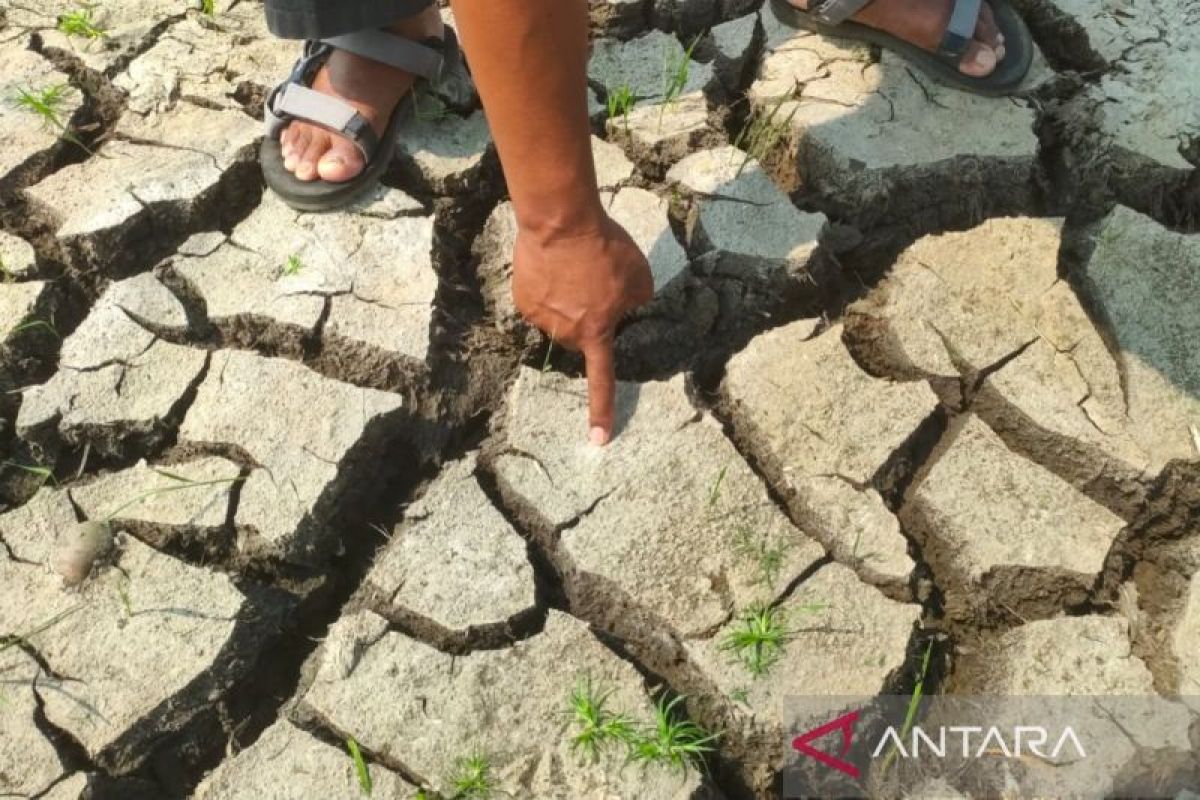
The future of Indonesian agriculture depends not only on the amount of rain that falls, but also on the soil’s ability to retain every drop of water it receives. In recent weeks, drought has begun to be felt in various parts of Java. Rain-fed rice fields are drying out faster, river flows are decreasing, small reservoirs are receding, and the ground surface is beginning to show increasingly wide cracks. This phenomenon aligns with the Meteorology, Climatology, and Geophysics Agency’s (BMKG) forecast that the 2026 dry season will arrive earlier in many regions, with rainfall tending to be below normal. Most of Java is expected to enter the peak of the dry season in August, while several areas have been experiencing the onset of the dry season since May. This condition increases the risk of agricultural drought, especially on rain-fed land that is highly dependent on seasonal rainfall. For farmers, soil cracks are one of the first signs that water reserves are depleting. For the general public, cracked soil is often seen merely as a result of hot weather. But for soil scientists, cracks are the ‘language’ the soil uses to indicate that its water reserves have decreased beyond a certain limit. When the rain stops, water in the soil pores gradually disappears through evaporation from the soil surface and plant transpiration. As long as the water content is sufficient, the soil structure remains stable. When the water content continues to decrease past the shrinkage limit, the soil volume begins to shrink. This shrinkage creates tension within the soil mass, and cracks form as a natural mechanism to release that tension. Not all soils undergo the same process. Sandy soils almost never form cracks because they do not experience significant volume shrinkage. Conversely, soils rich in clay minerals, especially Vertisols dominated by smectite minerals, can swell when wet and shrink strongly when dry, so cracks can appear in just about 10–20 days during a hot dry season. Volcanic soils, which are commonly found in Indonesia, generally contain allophane and imogolite minerals capable of storing more water, so cracks usually appear more slowly. The current concern is not merely the appearance of soil cracks, but the fact that these cracks are forming faster than they did a few decades ago. Climate change is one of the main causes. Rising air temperatures accelerate evaporation from the soil surface and increase plant water requirements. A temperature increase of one to two degrees Celsius is estimated to increase evapotranspiration by about 4–10 percent. As a result, soil water reserves are depleted faster, causing the soil to reach its shrinkage limit more quickly and cracks to form earlier. Besides climate change, soil quality on much agricultural land is also continuously declining. Reduced return of straw to the soil, low use of organic fertilisers, burning of crop residues, and soil compaction due to the use of heavy machinery cause the soil to lose its ability to store water. Rainwater that falls during the rainy season can no longer be stored optimally, so the soil dries out faster when the dry season arrives. The loss of ground cover vegetation also increases water loss through evaporation. The combination of increasingly high temperatures, dwindling water reserves, and declining soil quality means soil cracks now appear faster than before. Soil cracks do not merely reflect drought; they also provide a picture of soil health.