
Soekarno-Hatta Airport Closure Disrupts Rp 2.9 Trillion Export-Import Flow
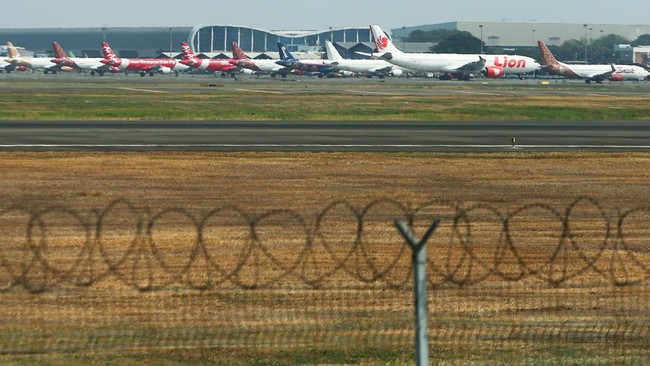
Jakarta, CNBC Indonesia – Founder & CEO of Supply Chain Indonesia (SCI) Setijadi has laid out the impact of airport closures, particularly Soekarno-Hatta Airport in Tangerang, caused by the eruption of Mount Anak Krakatau, on Indonesia’s export and import flows.
He said the suspension of activity at Soekarno-Hatta could affect production and trade activities, as the airport is the main gateway for high-value and time-sensitive goods.
In 2025, non-oil and gas exports through Soekarno-Hatta reached US$9.90 billion and imports US$20.77 billion. The indicative value of gross trade flow totalled US$30.67 billion a year, or an average of US$84.03 million per day.
Import volume reached 174.9 thousand tonnes a year, or an average of 479 tonnes per day. These figures are based on data from BPS and the Ministry of Trade’s One Data Trade, with the 2025 export figures subject to revision.
Setijadi explained that an eight-hour flight disruption could delay export-import flows by around US$28 million, comprising US$9.04 million in exports and US$18.97 million in imports, including nearly 160 tonnes of imported goods.
If the disruption lasts 48 hours, the indicative value of goods potentially delayed rises to around US168million, orroughlyRp2.96trillion(assuminganexchangerateofRp17, 630perUS), comprising US$54.23 million in exports and US$113.83 million in imports, including around 960 tonnes of imported goods.
According to him, these calculations only cover international trade through Soekarno-Hatta, exclude domestic shipments, and are not an estimate of direct losses. Exports use FOB values whilst imports use CIF values; actual losses depend on flight cancellations, cargo diversions, commodity characteristics, and the time needed to restore operations.
Recommended Solutions
SCI recommends short-term solutions: airport operators, airlines, freight forwarders, Customs and Excise, quarantine authorities, and cargo owners need to activate emergency response coordination. Priorities include real-time monitoring of ash distribution, flight rescheduling, provision of additional capacity, faster document handling, and diversion of cargo to alternative airports.
Perishable goods, pharmaceuticals, critical production components, high-value electronics, and express shipments should be given priority. Domestic deliveries can be diverted to road, rail, sea, or multimodal networks.
In the long term, companies need to build business continuity plans based on various disruption duration scenarios, designate alternative airports and transport modes, and hold standby capacity contracts with logistics service providers. Importers need to adjust safety stock for critical raw materials, whilst exporters need to prepare alternative warehouses and cold chain facilities.
The government needs to draw up a cross-agency disaster logistics protocol so that flight disruptions caused by eruptions do not escalate into wider supply chain and production disruptions.
Source: jawawa.id (https://jawawa.id/newsitem/soekarno-hatta-airport-closure-disrupts-rp-2-9-trillion-export-import-flow-1788792719)
Originally published by CNBC Indonesia (https://www.cnbcindonesia.com/news/20260907200656-4-765984/bandara-soetta-ditutup-arus-ekspor-impor-rp-29-triliun-tersendat), translated from Indonesian