
Soedeson Tandra: State Losses Must Remain Part of the Definition of Corruption
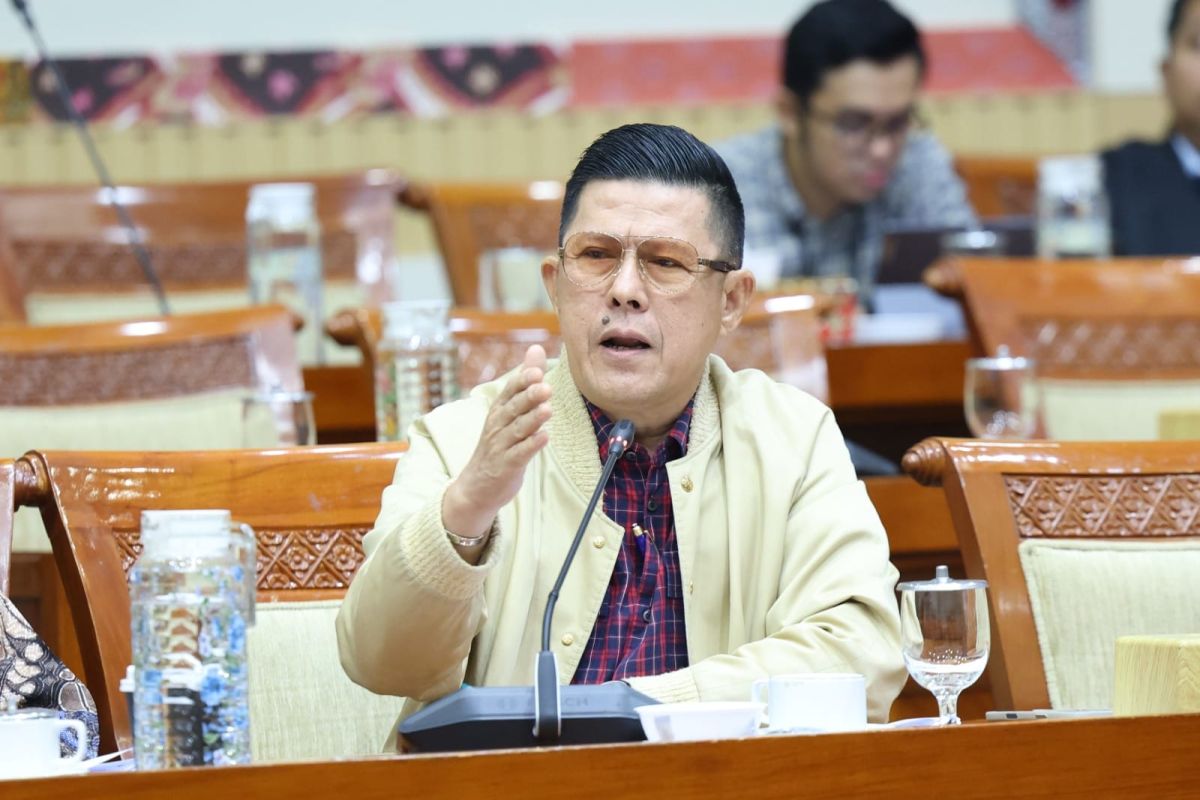
“If corruption is considered an ordinary crime, I am concerned that people will later demand, ‘If it is an ordinary crime, disband the Corruption Eradication Commission (KPK).’ In my view, this could become a national disaster.”
Jakarta (ANTARA) – Soedeson Tandra, a member of Commission III of the House of Representatives (DPR), said the element of state financial losses must remain part of the definition of corruption following a proposal by the National Economic Council (DEN) to revise it.
“If corruption is considered an ordinary crime, I am concerned that people will later demand, ‘If it is an ordinary crime, disband the KPK.’ In my view, this could become a national disaster,” Soedeson said in a statement in Jakarta on Thursday.
He said the proposal to remove state losses as an element and limit the definition of corruption to bribery risked changing the status of corruption as an extraordinary crime.
He was responding to a proposal by DEN Chair Luhut Binsar Pandjaitan to adjust the definition of corruption to align it with the United Nations Convention against Corruption (UNCAC), which focuses on bribery.
Soedeson said Indonesia had included unlawful conduct and state financial losses in its corruption laws since the early years of independence, taking into account the country’s circumstances at the time, including concerns about morality and state-finance leakages.
He added that corruption’s status as an extraordinary crime was reflected in the national Criminal Code (KUHP), under Articles 603 and 604.
“In our criminal law, corruption is a material offence, with state losses as a key element or consequence. If the state-loss element is removed, what does corruption mean?” he said.
He acknowledged concerns among bureaucrats, businesspeople and officials at state-owned enterprises who were hesitant to make strategic decisions for fear of being prosecuted over state losses.
However, he said the solution was not to remove the state-loss element, but to clarify the definition of unlawful conduct so that law enforcement officials could not interpret it too broadly.
Soedeson also called for legal certainty in determining state financial losses. He said such losses should be established on the basis of audits by the Supreme Audit Agency (BPK), rather than determined unilaterally by investigators.
“We want to prevent financial leakages and people who plunder state funds. Corruption must remain an extraordinary crime; it must not be removed from that category,” he said.
Luhut had earlier said that Indonesia’s handling of corruption needed to follow international standards. He proposed aligning the definition of corruption with UNCAC, a convention agreed by United Nations member states and ratified by Indonesia.
At a press conference after a limited Cabinet meeting at Merdeka Palace in Jakarta on Tuesday evening (20 October), Luhut explained that UNCAC identifies bribery as one of the main forms of corruption, rather than focusing solely on state financial losses.
“Indonesia is the only country that applies the issue of state losses,” Luhut said.
He also said President Prabowo Subianto had approved the DEN’s study on adjusting the definition of corruption.
Luhut later stressed that the proposal was not intended to remove accountability for state losses. At a press conference on Wednesday (21 October), he said the adjustment aimed to clarify the burden of proof so that perpetrators of corruption could still be held accountable, while decision-makers acting in good faith would not be punished without a clear legal basis.
Source: jawawa.id (https://jawawa.id/newsitem/soedeson-tandra-state-losses-must-remain-part-of-the-definition-of-corruption-1792695075)
Originally published by Antara (Indonesian) (https://www.antaranews.com/berita/5806323/soedeson-tandra-kerugian-negara-harus-tetap-masuk-definisi-korupsi), translated from Indonesian