
SOE Ministry: Food, Energy Security, and Human Resources Form Foundation for Golden Indonesia
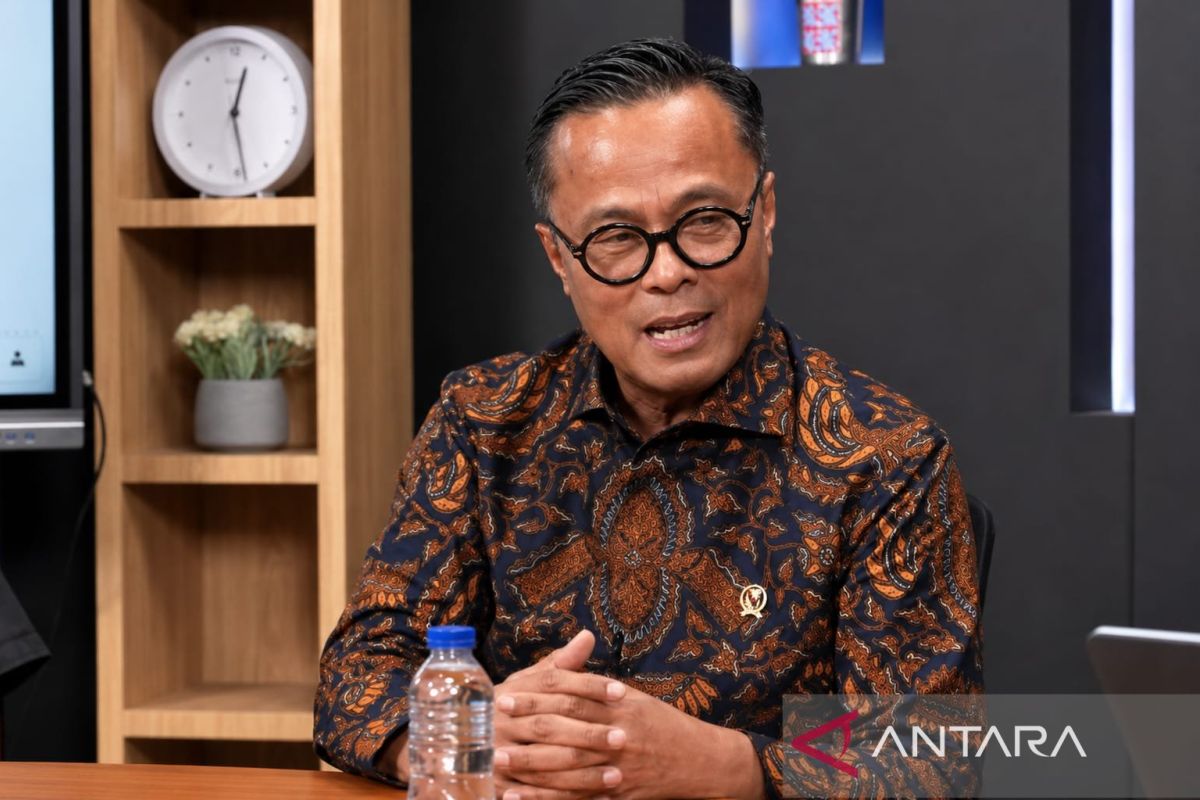
The Indonesian government is undertaking a fundamental economic transformation based on three pillars to guide the country towards developed nation status by 2045: food security, energy security, and the strengthening of human resources, according to the Head of the Supervisory Board for State-Owned Enterprises (BP BUMN), Dony Oskaria. “In a country undergoing transformation, there will certainly be responses, both positive and negative. But the most important thing is public understanding of the transformation process being fundamentally carried out by the government,” Dony said in a statement received in Jakarta on Thursday. He explained that the various strategic programmes currently being implemented are not standalone policies but part of a comprehensively designed national economic transformation. Dony stated that the government is placing food security as the main foundation for becoming a developed country. No nation can develop sustainably without the capacity to meet its own food needs, he noted. To this end, the government is executing various programmes ranging from opening new rice fields, constructing irrigation networks, controlling the conversion of agricultural land, to reforming the fertiliser trading system. The government is also strengthening the policy on purchasing farmers’ grain and bolstering national food storage capacity through the state logistics agency Bulog to support the food self-sufficiency target. Beyond food, the government is reinforcing energy security as the second pillar of the national economic transformation. Dony said a developed country must have energy independence so as not to rely on supplies from abroad. To achieve this goal, the government is developing new and renewable energy, expanding the B50 biodiesel programme, increasing national fuel reserve capacity, and conducting exploration for new energy sources. “If a country wants to be sovereign and become a developed nation, it must have energy security. That is why we are developing new renewable energy, adding fuel storage, exploring new energy reserves, and running the B50 programme to reduce dependence on energy imports,” Dony stated. The government is also promoting the development of household gas distribution networks as part of a long-term strategy to strengthen national energy security. The third pillar, deemed the most decisive, is the strengthening of human resources. According to Dony, President Prabowo Subianto places the development of human quality as a top priority because a developed country can only be built by a healthy, intelligent, and productive society. He highlighted the national stunting rate, which remains at around 22 percent, as a major challenge that must be addressed immediately. “All advanced and sustainable countries have strong and intelligent human resources. That is why the government views the stunting issue as a very fundamental problem. Currently, our stunting rate is still around 22 percent. This is a big challenge we must resolve,” he said. Additionally, the government is building around 200 ‘people’s schools’, developing top-tier schools, and distributing smart boards to various schools to improve equitable quality of education.