
Social Ministry: Rehabilitation and Economic Self-Reliance Among Poor Communities Improve
Jakarta (ANTARA) — The Social Affairs Ministry (Kemensos) is maintaining the pace of its performance during the first two years of President Prabowo Subianto’s administration, expanding social rehabilitation services for vulnerable groups and strengthening the economic self-reliance of the poorest families through prioritised empowerment programmes.
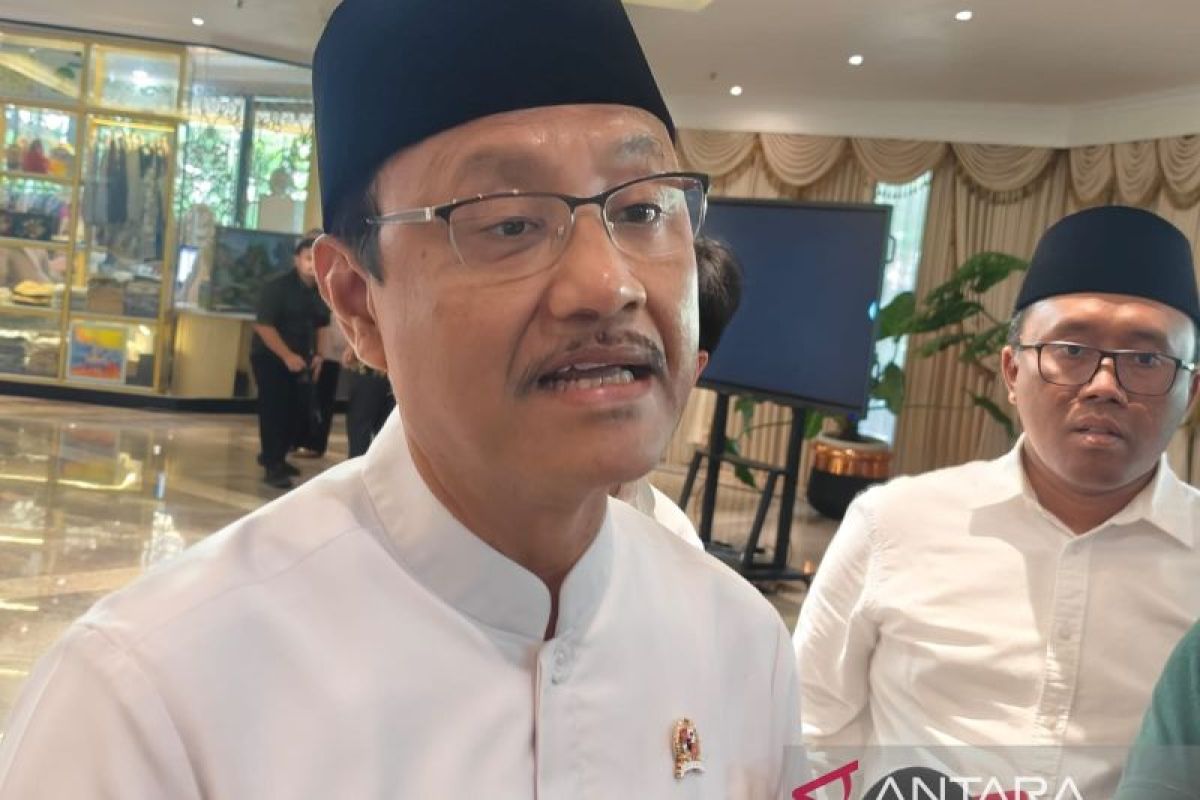
Social Affairs Minister Saifullah Yusuf, speaking in Jakarta on Tuesday, said tangible progress had been made in social rehabilitation for people with disabilities and older people, as well as in increasing the number of families moving above the poverty line.
In a presentation, he said social rehabilitation services had provided therapy to more than 13,000 people with disabilities, while 1,535 people had received equivalency education services.
“Procurement of accessibility aids also rose from 5,257 units in 2025 to 6,756 units in 2026,” he said.
He added that the number of beneficiaries of the Social Rehabilitation Assistance Programme (ATENSI) who had succeeded in developing their own businesses increased from 5,031 in 2025 to 7,455 in 2026.
He said the increase had also been supported by the continuing construction of Integrated Prosperous Homes, rising from 784 units in 2025 to more than 7,914 in 2026.
These changes to social welfare provision have been accompanied by improvements to the governance of social assistance beneficiary data under Presidential Instruction No. 4/2025, which established the Single National Social and Economic Data (DTSEN).
The Social Affairs Ministry, together with other relevant ministries and agencies and local governments, completed field verification of 14.4 million families using DTSEN.
He said the verification process was far more accurate than before, supported by millions of submissions made through village deliberations and the government’s Usul Sanggah (Propose and Challenge) application.
“The data are consolidated, verified and updated,” he said.
He said the improved database had made social assistance distribution more accurately targeted, reaching more than 4.3 million new families among the 10 million households receiving the Family Hope Programme (PKH), as well as more than 18 million households receiving food assistance, also known as Non-Cash Food Assistance (BPNT).
In disaster-related social protection, figures showed large-scale assistance in 2025: more than 347,000 affected residents received emergency logistics aid, 9,447 people received compensation for natural disasters, and 1,078 received compensation for social and non-natural disasters.
The period up to October 2026 saw the distribution of 202,201 emergency logistics packages for natural disaster victims, 2,486 social recovery assistance packages for natural disaster victims, and 13,106 social recovery packages for victims of social and non-natural disasters. Special post-disaster assistance in Aceh, West Sumatra and North Sumatra included compensation for 1,140 victims, living-cost assistance for 646,037 victims, housing contents assistance for 268,899 families, and socio-economic stimulus assistance for 161,207 families.
He added that the ministry was also operating 182 Sekolah Rakyat (People’s Schools) for primary, junior secondary and senior secondary pupils across Indonesia.
The boarding-school programme has provided more than 44,000 children from poor and extremely poor families identified through DTSEN with the opportunity to receive free education, with the aim of helping them excel and break the cycle of poverty affecting their families.
Source: jawawa.id (https://jawawa.id/newsitem/social-ministry-rehabilitation-and-economic-self-reliance-among-poor-communities-improve-1792489986)
Originally published by Antara (Indonesian) (https://www.antaranews.com/berita/5799133/kemensos-rehabilitasi-kemandirian-ekonomi-masyarakat-miskin-meningkat), translated from Indonesian