
Social Minister Reveals 11 Million PBI Participants Transferred, This is the Reason
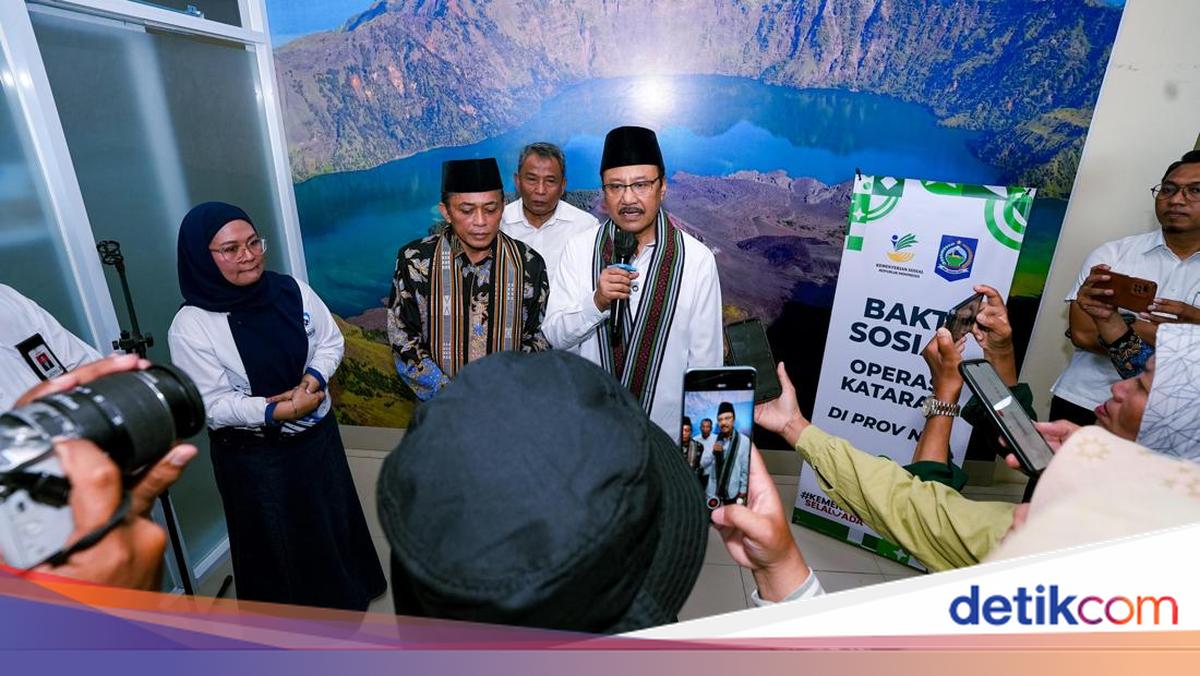
Social Minister Saifullah Yusuf, or Gus Ipul, has emphasised that the policy of updating data for Penerima Bantuan Iuran Jaminan Kesehatan Nasional (PBI JKN) recipients is not a form of reducing state protection. According to him, this step is an effort to regulate so that subsidies are truly received by those who deserve them. He explained that around 11 million PBI participants who have been transferred are those who, based on data update results, no longer meet the criteria as premium assistance recipients. Among them are participants who have passed away, those with ASN status, TNI, Polri, as well as those who have entered the capable category based on the National Single Socio-Economic Data (DTSEN). “What is happening is not the state reducing protection, but the state regulating the data so that health premium assistance truly goes to those who deserve it. So this is not a reduction in protection, but a transfer to other citizens who are more deserving,” said Gus Ipul in a written statement on Friday (17/4/2026). Gus Ipul emphasised that the narrative claiming these 11 million participants are “discarded” from state protection is inaccurate. He stressed that what changes is not the amount of protection, but the direction of favouritism, so that assistance is not continuously enjoyed by those who no longer meet the requirements, while there are still many poor and vulnerable citizens in deciles 1 to 5 who need it more. “The state must always be there for those who need it most. If erroneous data is maintained, it is the truly deserving poor who could lose access. Therefore, what is being fixed is the data, so that the state’s favouritism is more on target,” he stated. Gus Ipul also clarified the assumption that the DPR meeting on 9 February 2026 decided to reactivate all 11 million participants. He emphasised that what was stressed during the transition period is the guarantee of health services for the sick community, not mass reactivation without verification processes. “Clearly, anyone who is ill must be accepted and treated in hospital. So the substance is the guarantee of health services. Administrative participation may be regulated, but services to citizens in need must continue to run,” he said. For this reason, the government ensures that verification and reactivation mechanisms are carried out quickly and easily so as not to disrupt public health services. Currently, reactivation applications can be made through social services or village or sub-district offices, with processing time as fast as one day and at most three days under normal conditions. Gus Ipul added that the government is also preparing a special scheme for citizens in emergency conditions who need immediate health services. In that scheme, the Ministry of Social Affairs together with BPJS Kesehatan has added a direct reactivation service channel at health facilities. “If in an emergency, the public must immediately receive services at hospitals or health facilities, then reactivation must not be complicated. Therefore, we have agreed with BPJS to open direct reactivation services at health facilities, so that BPJS officers at the facilities can receive reactivation applications from inactive PBI participants,” he said. Gus Ipul explained that the frequent mistake in this polemic is mixing up administrative participation status with the right to health services. According to him, both must be understood holistically. Data regulation is done so that subsidies are on target, while health services must still be provided to those in need. Regarding the transfer of some participants to the PBPU Pemda segment, Gus Ipul emphasised that this cannot be interpreted as the central government releasing responsibility to the regions. He explained that protection in the regions continues to run because transferred participants will be replaced by other citizens who are more deserving in the same area. “The protection quota remains. Local governments are actually helping to strengthen coverage, not replacing the central government’s responsibility. What we are doing is ensuring who most deserves state support,” he said. He also explained that decile-based adjustments should not be seen as an effort to reduce budgets for the poor. On the contrary, this step is a form of affirmation so that social assistance and social security are more focused on the groups that need it most. “Decile adjustment does not mean reducing protection, but deepening favouritism. The focus is so that the poorest, most vulnerable, and most needy people receive attention first,” he said. Gus Ipul emphasised that the core of this policy is simple, namely transferring 11 million old participants deemed no longer eligible to 11 million other citizens who are more deserving of assistance. On the other hand, he assured that the state still guarantees those in need, especially those who are ill, to continue receiving health services. “This is fair policy. The data is cleaned, protection continues to be implemented, health services are guaranteed, and the state’s favouritism is strengthened to those who need it most,” he concluded.