
Social Issues Impede Geothermal Investment in Indonesia
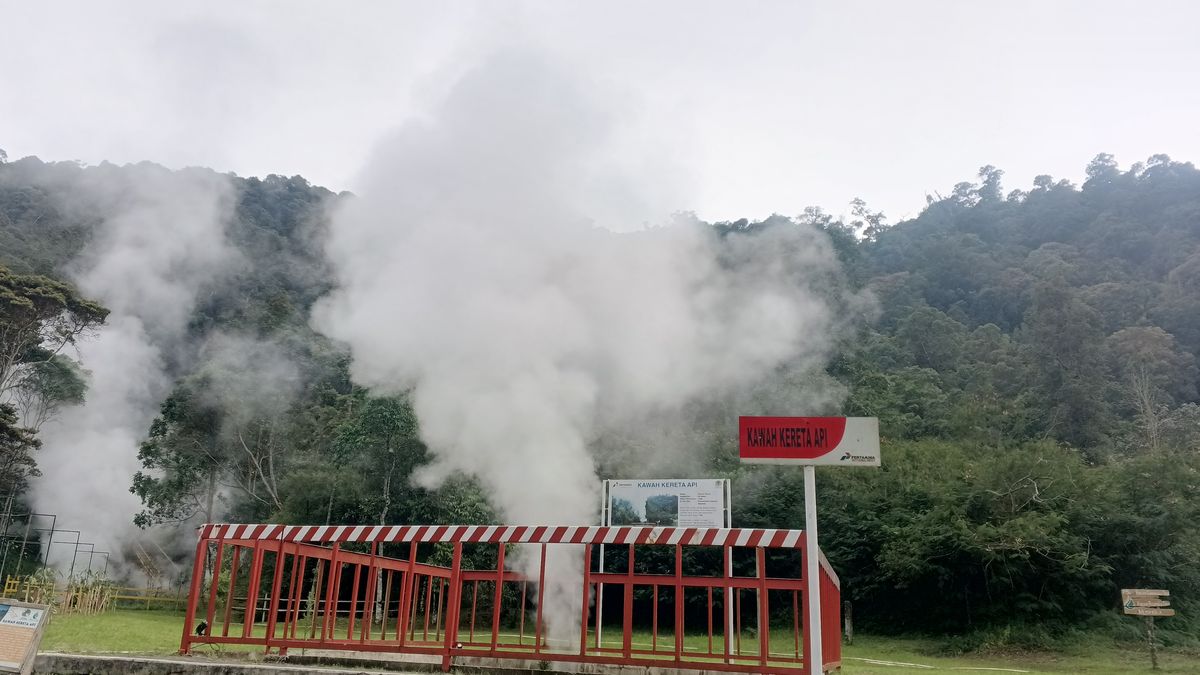
Geothermal power plant investment climate in Indonesia is considered not yet conducive. The government acknowledges that the development of geothermal projects in several regions still faces social challenges in the form of community opposition.
Priatin Hadi Wijaya, Director of Geothermal at the Directorate General of New, Renewable Energy and Energy Conservation (EBTKE) of the Ministry of Energy and Mineral Resources (ESDM), said one of the biggest tasks in developing geothermal energy is increasing public understanding of geothermal projects.
According to him, community protests against geothermal projects are often triggered by ignorance and unfounded concerns. For example, communities associate drilling activities with risks of earthquakes or mud eruptions such as the Lapindo mudflow disaster in Sidoarjo.
The former Head of the Centre for Volcanology and Geological Disaster Mitigation (PVMBG) explained that drilling activities in geothermal projects do require disaster mitigation measures, particularly related to ground movement. However, this must be understood proportionally.
Therefore, Hadi said that the central and local governments, geothermal developers, and other stakeholders need to engage more actively with communities. Public outreach is seen as essential so that the public understands the benefits of geothermal projects, which are considered greater than the risks.
He gave as an example that social issues also affect land-use planning and permitting processes for geothermal projects. In fact, much of Indonesia’s geothermal potential lies in protected forests and conservation forests.
According to Hadi, similar social challenges also occur in the development of geothermal projects in Lembata Regency, East Nusa Tenggara (NTT).
‘NTT, forgive me, even the Bishop of Larantuka frequently protests,’ he said. ‘This is something we need to socialise on a massive scale so that the public understands the balanced benefits of geothermal energy.’
On the other hand, Hadi assessed that geothermal projects could bring economic benefits to regions through non-tax state revenue (PNBP). Under the geothermal PNBP sharing scheme, the central government would receive only 20 percent, while the remaining 80 percent would be allocated to the regions.
He explained that 16 percent goes to provincial governments, 32 percent to producing regencies, and the remaining 32 percent is distributed evenly among all regencies in the relevant province.
Beyond social challenges, the development of geothermal investment also faces regulatory issues and electricity tariffs with PLN (Persero).
Indonesia, however, possesses large geothermal potential. Hadi noted that Indonesia’s geothermal capacity stands at 24 gigawatts (GW), the second-largest in the world after the United States.
However, utilisation of geothermal for the electricity sector has only reached 2.7 GW, or about 11.8 percent of the total potential.
He said geothermal could become the backbone of the national electricity system while supporting the target to phase out coal gradually toward a net zero emission (NZE) by 2060.
In addition to power generation, geothermal energy can also be utilised directly for tourism, agro-business, the hydrogen industry, and mineral extraction.
‘If we can move to 20 percent, that would already be extraordinary. The hope is that by 2030 it could reach above 4 GW,’ said Hadi.