
Social Hijrah in the Islamic New Year: BAZNAS RI and the New Zakat Movement for Public Welfare
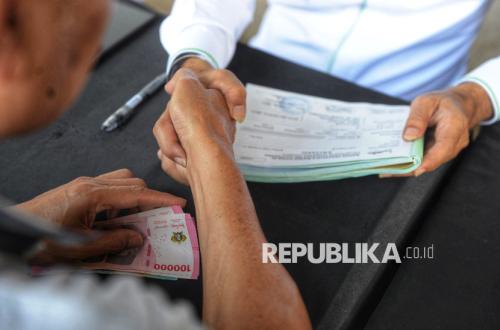
The Islamic New Year is more than just a change in the Hijri calendar; it is an invitation for deep reflection on how far the Muslim community in Indonesia has moved from individual piety towards collective piety.
With the arrival of the month of Muharram, the meaning of ‘hijrah’ resonates once again. It is not merely a historical event of Prophet Muhammad SAW’s migration from Makkah to Madinah, but a paradigm shift towards a more just social order. In the contemporary Indonesian context, this paradigm is most tangibly manifested through the instrument of zakat and the institution that manages it, BASTNAS RI.
The nation’s socio-economic reality still contains concerning contradictions. Data from the Central Bureau of Statistics (BPS) as of March 2025 records the number of poor people at 23.85 million, or 8.47 per cent of the total population, a decrease from 10.14 per cent (27.54 million people) in March 2021.
This figure reflects a positive trend over the last five years. However, behind this trend, extreme poverty still reaches 2.38 million people (0.85 per cent), and income inequality remains high with a national Gini Ratio of 0.375 as of March 2025.
Even more concerning, the World Bank, using a threshold of US$6.85 per capita per day (PPP), noted that more than 60.3 per cent of Indonesia’s population, or equivalent to 171.8 million people, were below the economic vulnerability line in 2024. This is not absolute poverty, but rather the ease with which individuals could slip back into the abyss of poverty at any time.
This is where zakat becomes relevant, not only as an act of worship but as a religion-based social protection system that should serve as the first line of defence before individuals fall to the lowest level.
National zakat collection data shows an appreciable leap. The national realisation of ZIS-DSKL (Zakat, Infak, Sedekah, and Other Religious Social Funds) increased from Rp 14 trillion in 2021, to Rp 22.5 trillion (2022), Rp 32.3 trillion (2023), and Rp 40.5 trillion in 2024, representing a year-on-year growth of 25.34 per cent.
The number of muzaki (zakat payers) has also grown significantly: from 10 million people (2021) to 28.1 million people (2024), including a surge in corporate muzaki by 62.73 per cent in just one year, from 182,276 entities (2023) to 296,620 entities (2024).
This achievement is encouraging. However, one figure must be kept in mind as a reminder: the national zakat potential, based on the Zakat Potential Mapping Indicator (IPPZ), reaches Rp 327 trillion per year—whereas the 2024 realisation only reached Rp 40.5 trillion, or approximately 12.4 per cent of the potential. The gap of Rp 286 trillion is a measure of the journey that still remains to be undertaken.
BAZNAS RI stands at the forefront of that responsibility. The Indonesian Muslim community, both as muzaki, as citizens, and as a moral community, has an irreplaceable role in ensuring that this movement is truly realised. That is the true meaning of social hijrah in this Islamic New Year.
Source: jawawa.id (https://jawawa.id/newsitem/social-hijrah-in-the-islamic-new-year-baznas-ri-and-the-new-zakat-movement-for-public-welfare-1782726817)
Originally published by Republika (https://analisis.republika.co.id/berita/thdyx6368/hijrah-sosial-di-tahun-baru-islam-baznas-ri-dan-gerakan-baru-zakat-untuk-kesejahteraan-umat), translated from Indonesian