
Social Assistance Not Yet Disbursed Despite Being Registered? Here Are 8 Reasons Why
Jakarta (ANTARA) – Social assistance serves as a form of protection for members of the public who meet the beneficiary criteria. However, having one’s name listed in the social assistance recipient system does not always mean the aid arrives at the same time.
So, what causes social assistance to remain undisbursed even though a name is still registered as a recipient?
- Social assistance is distributed in phases
One reason assistance has not been received is that the distribution process is carried out in stages. Disbursement schedules may differ from one region to another, depending on the distribution process and the disbursement mechanism used.
Therefore, members of the public need not immediately conclude that assistance has been discontinued simply because their balance has not increased when checked.
- Recipient data is still being updated
Social assistance distribution in 2026 uses the National Social and Economic Single Data (DTSEN). This data is the source used on the Ministry of Social Affairs’ official Cek Bansos (Check Social Assistance) website.
The Ministry of Social Affairs explained that decile status is dynamic. This means a family’s socio-economic condition can change, and data can be updated through the village or sub-district government, the social affairs office, or the Cek Bansos application.
Such data changes can affect the determination of assistance targets, so someone who previously received assistance is not necessarily guaranteed to receive it in the following period.
The public also needs to distinguish between status as a beneficiary and the status of assistance distribution.
A name appearing in the system indicates that a person’s data is recorded as a recipient or included among the targets of certain assistance. Meanwhile, disbursement still depends on the distribution process for the current period.
Thus, registered status cannot yet be taken as a sign that funds or physical assistance are available for collection.
- Technical issues can cause failed distribution
Technical problems can also cause assistance to go unreceived. The Ministry of Social Affairs previously stated that there was social assistance data that experienced distribution failures. Of around 1.3 million data records that failed to be distributed, more than 580,000 beneficiary families have been successfully reprocessed, whilst others still require handling.
A failed distribution can mean a recipient who is still recorded in the data must wait until the distribution issue is resolved.
- Distribution may be suspended for verification
In 2026, the government also carried out adjustments to recipient data to ensure assistance is given to groups that meet the criteria.
One example is the temporary suspension of assistance distribution to around 1.49 million Beneficiary Families (KPM) whose data requires further examination. This situation shows that being recorded as a recipient does not always mean assistance is automatically distributed without a verification process.
- Different assistance uses different mechanisms
Government social assistance is not entirely distributed through the same mechanism. Some assistance may be channelled through distributing banks’ accounts, whilst certain programmes have different distribution mechanisms.
For rice food assistance, for example, the government assigned state logistics firm Perum Bulog to distribute aid to more than 33 million recipients. In the July to September 2026 period, distribution was lumped together, meaning recipients received three months’ allocation at once, totalling 30 kilogrammes of rice.
Therefore, the timing of receipt may differ from social assistance distributed through bank accounts.
- How to check social assistance status
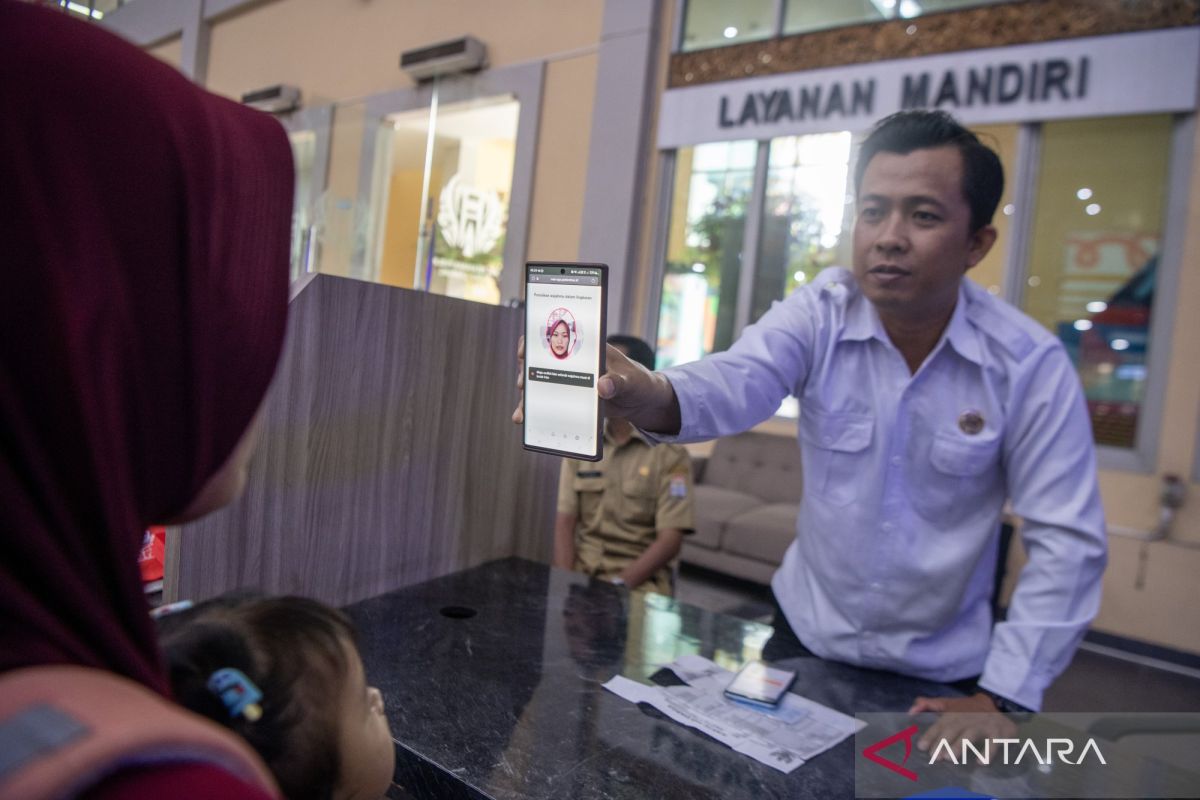
Members of the public can check recipient status through the Ministry of Social Affairs’ official Cek Bansos website. The system uses DTSEN as its data source and asks users to enter their 16-digit NIK as shown on their ID card, along with a verification code, before selecting the search menu.
If a name is still recorded but assistance has not been received, people can look at the type of assistance, the distribution period, and the status shown in the system.
If there is a data mismatch, the public can submit updates through the village or sub-district government and the social affairs office. The Ministry of Social Affairs also explained that the decile in DTSEN can be updated if it does not reflect actual circumstances.
- No need to panic if assistance has not arrived
A name still recorded as a recipient but with assistance not yet disbursed does not necessarily indicate removal from the recipient list. There are several stages that must be completed before assistance reaches the public, from data updates, recipient determination, to the distribution process.
Therefore, the first step is to recheck assistance status through official channels and ensure population data is correct. If there are problems with data or distribution, the public can seek information through local regional governments or the local social affairs office.