
Social Assistance Budget Reaches Rp1,300 Trillion, Qodari Says Digital System Could Save Rp200 Trillion
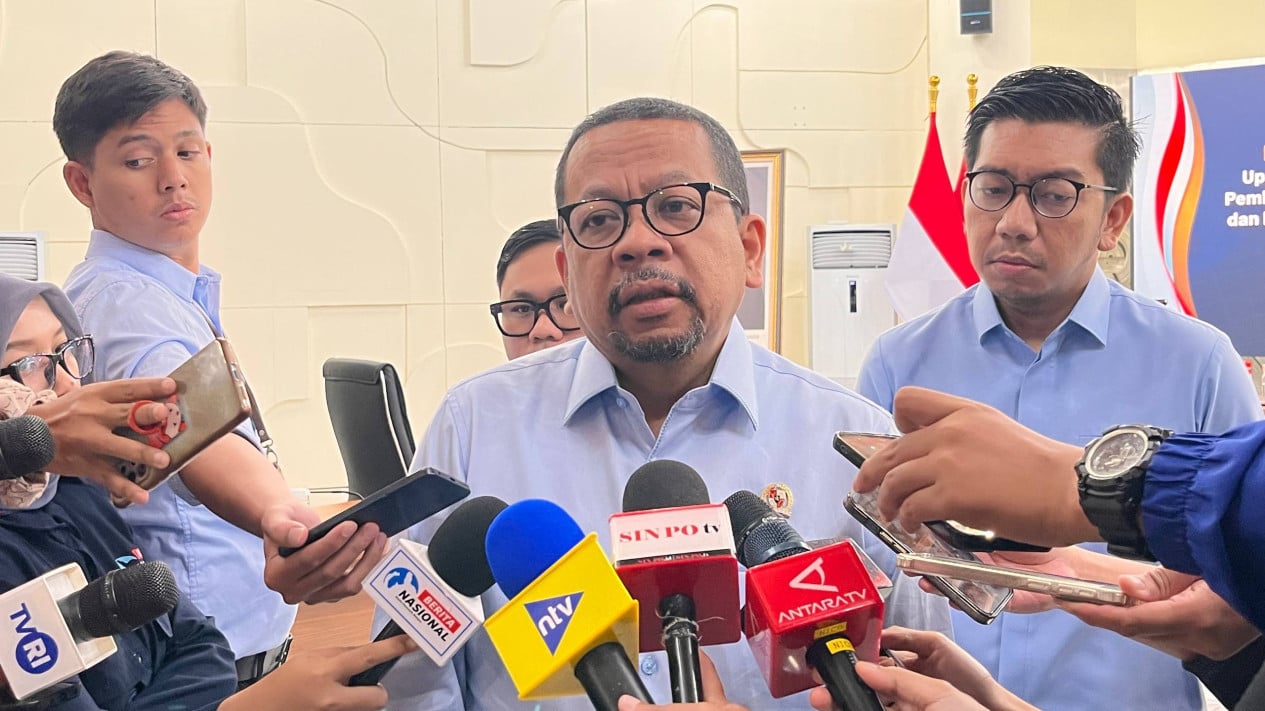
The government has said there is potential for social protection budget efficiency of up to Rp200 trillion through the implementation of Digital Public Infrastructure (DPI) and improvements to the data filtering of social assistance (bansos) recipients.
Head of the Government Communication Agency (Bakom) Muhammad Qodari said the digitalisation of the social protection system has the potential to trim budgets that have so far been eroded due to problems with the accuracy of beneficiary data.
This potential is considered significant given that the government’s social protection budget reaches around Rp1,300 trillion, or nearly 30 percent of the state budget (APBN).
“Media colleagues, the application of DPI principles and the use of better data filters in the PKH and BPNT programmes has the potential to save tens of trillions of rupiah in government budgets,” Qodari said at the Bakom office in Central Jakarta on Wednesday, 19 August 2026.
According to Qodari, efficiency is not only potentially achievable in the Family Hope Programme (PKH) and Non-Cash Food Assistance (BPNT). If a similar system were applied to various other social protection programmes, the budget value that could be made more efficient is estimated to be far greater.
“Meanwhile, if applied to various other social protection programmes, the potential efficiency is estimated to reach Rp127 to Rp200 trillion, referring to the National Economic Council’s correction in 2024. This is good news for Mr Ferry and the Ministry of Finance,” he said.
The scale of the potential efficiency is linked to the government’s efforts to improve the accuracy of social assistance beneficiary data. A digital social protection system allows the government to use more indicators to verify whether a person still meets the requirements to receive assistance.
With this mechanism, the government can reduce the risk of inclusion error, where assistance is given to people who no longer meet the criteria. At the same time, the system is also directed at reducing exclusion error, where people who should receive assistance are missed from the beneficiary list.
Digitalisation also allows data from various ministries and agencies to be used in an integrated manner so that the beneficiary verification process does not rely solely on a single data source.
Qodari assessed that the potential savings are in line with the policy direction of President Prabowo Subianto, who wants state spending to provide maximum benefit to the public.
“The potential efficiency is in line with the vision and mission of President Prabowo’s leadership to ensure the state budget is used effectively so that its benefits can be felt concretely and maximally by the Indonesian people,” Qodari asserted.
Source: jawawa.id (https://jawawa.id/newsitem/social-assistance-budget-reaches-rp1-300-trillion-qodari-says-digital-system-could-save-rp200-trillion-1787125988)
Originally published by VIVA.co.id (https://www.viva.co.id/berita/nasional/1922491-anggaran-bansos-capai-rp1300-triliun-qodari-tegaskan-bisa-hemat-rp200-t-pakai-sistem-digital), translated from Indonesian