
Social Assistance Begins Distribution Through Village Co-operatives, Social Affairs Minister Says No Deductions
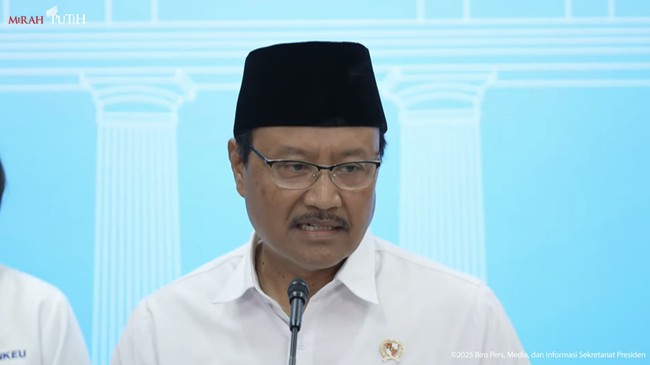
Jakarta, CNBC Indonesia – Social Affairs Minister Saifullah Yusuf, known as Gus Ipul, said social assistance in the form of the Family Hope Programme (PKH) and non-cash food assistance (BPNT), also known as staple-food assistance, can now be collected at Merah Putih Village/Urban-Ward Co-operatives (KDKMP).
Last week, the government also trialled the co-operative-based distribution mechanism, including in Tambakrejo Village, Waru District, Sidoarjo Regency, East Java, on Thursday (15 October 2026).
“A trial distribution of social assistance was also held earlier. Both PKH and non-cash food assistance can now be collected at co-operatives. Where operations have begun and all the equipment is in place, we can operate and distribute assistance through the co-operatives,” Gus Ipul said, according to a press release on Monday (19 October 2026).
Gus Ipul explained that assistance would be distributed through several state-owned banks in the Himbara group, whose agents would be brought directly to KDKMP outlets.
“The distributing banks will open service counters at the village co-operatives. This will bring services closer to beneficiaries. They will also be able to spend the assistance directly on various staple goods available at the co-operative,” he said.
Beneficiaries of both PKH and the food assistance programme will automatically become KDKMP members, Gus Ipul said. He stressed that there would be no additional fees or deductions from assistance distributed through the co-operatives.
“Trials have gradually begun at several locations, and later everything will go through there [the co-operatives], in line with the President’s instructions. Not a single rupiah will be deducted,” he said.
Meanwhile, Coordinating Minister for Food Affairs Zulkifli Hasan, known as Zulhas, said inspections of KDKMP co-operatives would be conducted simultaneously over eight days, following an instruction from President Prabowo Subianto.
“A total of 10,070 [co-operatives] will be checked and inspected. Of course, I must say that not all of them are good. The fact that inspections are taking place today does not mean they are all in good condition; this will take time and a process, because it is a major undertaking,” Zulhas said.
He added that although implementation still had shortcomings, KDKMP represented a new initiative intended to help villages grow their economies from within.
“This belongs to the village and is managed by the village head and the co-operative chair, assisted by a manager. It is intended to serve everyone with subsidised goods and assistance,” he said.