
Social Affairs Ministry Partners with BRIN to Strengthen Research on 'Sekolah Rakyat' and Empowerment
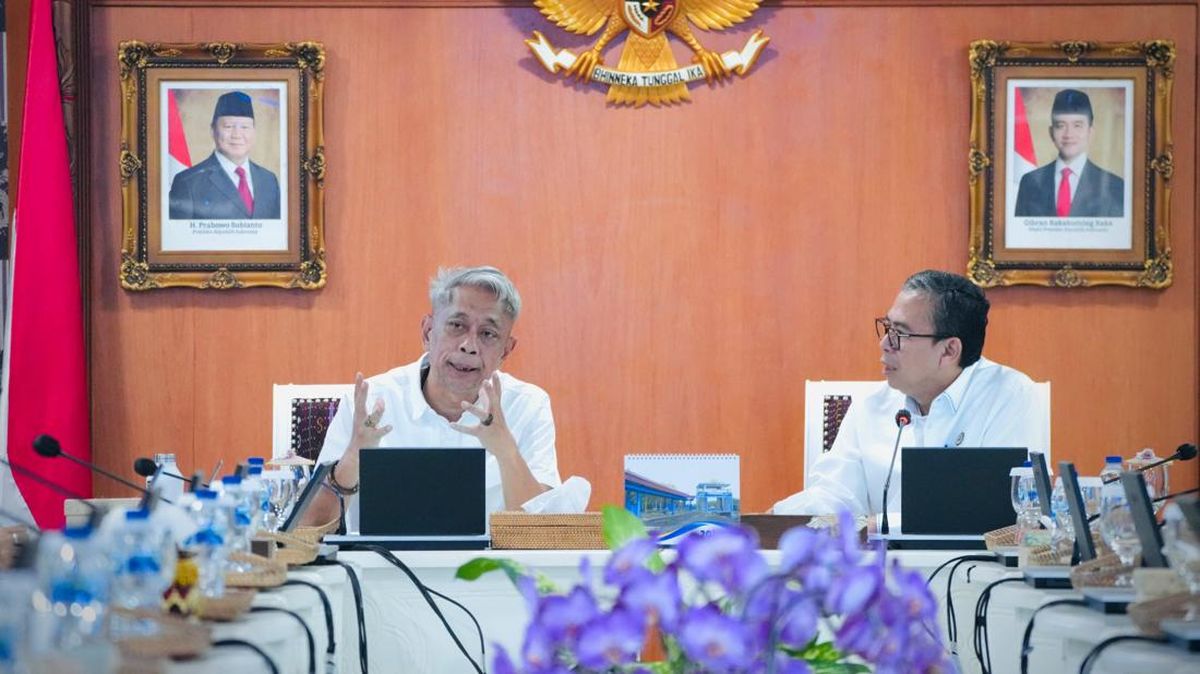
The Ministry of Social Affairs (Kemensos) and the National Research and Innovation Agency (BRIN) have agreed to build cooperation aimed at strengthening the implementation of People’s Schools (Sekolah Rakyat) whilst expanding research- and technology-based community empowerment programmes.
The commitment emerged from a meeting between Deputy Minister of Social Affairs Agus Jabo Priyono and BRIN’s Deputy for Development Policy, Nunung Nuryartono, and their teams in the Main Meeting Room of the Ministry of Social Affairs on Wednesday (29/7).
During the meeting, BRIN stated it was ready to support the studies and technological development needed by the Ministry of Social Affairs to run various government priority programmes.
“BRIN is ready to support the Ministry of Social Affairs. Please send a letter promptly regarding the studies or technologies required so we can follow up together immediately,” said Nunung, quoted from an official statement.
According to Nunung, the support will be delivered through BRIN’s research networks, ranging from policy study formulation, technology development, to the evaluation of government priority programmes.
One of the main focuses already studied is the People’s School, a priority programme of President Prabowo Subianto. BRIN has offered support in the form of evidence-based studies to evaluate the impact of the People’s Schools whilst providing recommendations for policy refinement.
The study will not only assess pupils’ development but also cover the ecosystem of the People’s Schools, including infrastructure, curriculum, governance and various other supporting aspects.
Beyond research, BRIN has also offered various technologies that can be applied at People’s Schools, including water source detection, rainwater harvesting, water desalination, water recycling, and technology-based waste management.
One of the innovations offered is LASAMOR technology, a household-scale waste processing system that can be utilised by social assistance beneficiary families (KPM) as part of economic empowerment efforts.
“Waste processing not only solves environmental problems but can also generate economic value for communities. The technology is already available and ready to be synergised with the Ministry of Social Affairs,” said Nunung.
In response, Deputy Minister Agus Jabo explained that the Ministry of Social Affairs has been running community-based empowerment programmes through Kemensos Empowered Villages (Kampung Berdaya), including the Clean and Empowered Village programme piloted in Serang, Bogor and Bali.
“This village-based empowerment programme aligns very well with BRIN’s offer. We have already started the Clean and Empowered Village movement, so BRIN’s waste processing technology can strengthen it so that waste carries economic value and improves community welfare,” he said.
The effort reflects a paradigm shift at the Ministry of Social Affairs, which now focuses not only on distributing social assistance but also on empowerment so that beneficiary families can escape the trap of poverty.
Agus further explained that the Ministry currently carries three main mandates from the President: updating the National Socio-Economic Single Data (DTSEN), delivering accurately targeted social assistance, and People’s Schools as an instrument for poverty alleviation.
The People’s School in particular is a top priority because it carries the mission of breaking intergenerational chains of poverty through education for children from poor and extremely poor families. In this context, BRIN’s involvement will greatly help achieve poverty reduction targets.
“If BRIN is involved from the start through research and studies, it will certainly strengthen the People’s Schools. The research results can later also explain to the public the changes occurring among students and what policy refinements are needed going forward,” he said.
In addition to supporting the People’s Schools, both parties discussed opportunities for collaboration on various community empowerment programmes, including developing appropriate technology for vulnerable groups, strengthening community economies, and utilising BRIN research results to support poverty alleviation.
As a follow-up, the Ministry of Social Affairs and BRIN agreed to promptly draw up a cooperation mechanism through technical coordination between work units so that the various priority programmes can be implemented soon.