
Social Affairs Ministry Integrates Welfare Assistance with Empowerment for School for the People Parents
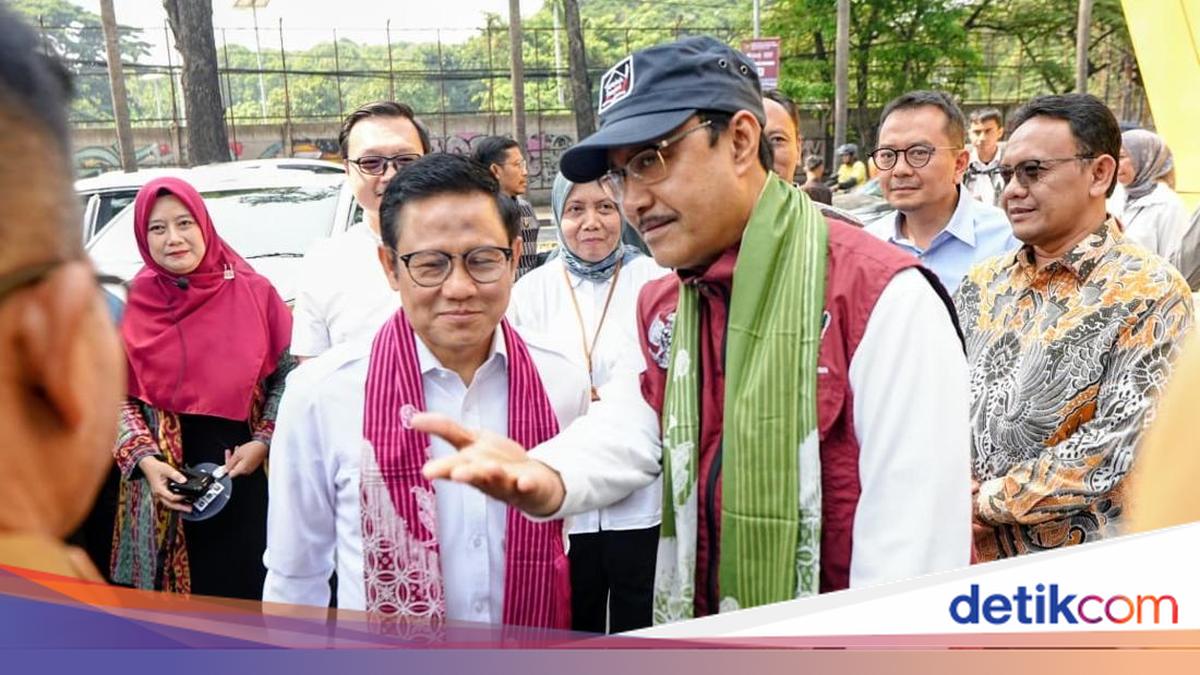
Social Affairs Minister Saifullah Yusuf (Gus Ipul) is pushing to integrate social assistance with empowerment programmes to improve the welfare of disadvantaged families through the School for the People programme.
With around 44,000 pupils reached so far, the programme offers the government an opportunity to extend integrated family empowerment.
One initiative is the Micro Social Capacity Action Steps for Inclusion (LAKSMI) training for 100 microbusiness owners in Greater Bandung. It focuses on the mothers and guardians of School for the People pupils, helping them develop their businesses and increase household incomes.
“Social assistance is temporary. Empowerment lasts. It is as simple as that,” Gus Ipul said in a written statement on Tuesday (20 October 2026).
He made the remarks at the Model for a Community Business Empowerment Ecosystem through Perintis Berdaya Connect event at Bandung Creative Hub in Bandung on Tuesday.
Gus Ipul said the integration of social assistance and empowerment followed President Prabowo Subianto’s direction that government programmes should go beyond meeting basic needs and help beneficiary families achieve self-reliance.
He said social assistance and empowerment have related goals, but are often not effectively connected in practice. Sectoral divisions and coordination between institutions remain challenges that need to be addressed through more systematic collaboration.
“For this purpose, the President established the Coordinating Ministry for Community Empowerment. He recognised that these two areas—social assistance and empowerment—often do not meet,” Gus Ipul said.
“There are sectoral divisions and complex issues between them that are often never discussed around the same table,” he added.
Gus Ipul therefore praised the role of the Coordinating Ministry for Community Empowerment, led by Muhaimin Iskandar, in strengthening cooperation across ministries and institutions.
The collaboration is expected to connect social assistance with a range of empowerment measures in a more targeted way.
“With this coordinating ministry in place, we are being encouraged to work together more systematically and connect all government programmes, especially by linking social assistance to empowerment,” Gus Ipul said.
He cited the School for the People programme as a strategic presidential initiative that not only provides children from disadvantaged families with access to education, but also creates opportunities to improve their families’ welfare.
“The child goes to school and graduates, and the family moves up. That is roughly the idea,” Gus Ipul said.
He said the programme is designed to improve families’ circumstances as a whole. In addition to access to education, pupils’ families are expected to be connected with other support, including decent housing, health insurance, and social and economic empowerment programmes.
Education is intended to help break the cycle of intergenerational poverty. Parents, meanwhile, are encouraged to build their capacity and independence so that family welfare can improve sustainably.
The School for the People programme has so far reached around 44,000 pupils. That figure represents a potential pool of families for empowerment initiatives, with programmes tailored to each family’s needs and circumstances.
“About 44,000 pupils means 44,000 families will be included in the Coordinating Minister’s programme,” Gus Ipul said.
In Bandung, 100 parents of School for the People pupils have begun taking part in empowerment activities. Gus Ipul said he hoped they would make the most of the opportunity and become examples for other families in their areas.
“You will be examples and role models. If you succeed, God willing, others in different places will succeed too,” he said.
Gus Ipul and Coordinating Minister for Community Empowerment Abdul Muhaimin Iskandar (Cak Imin) visited 100 mothers and guardians of School for the People pupils from across Greater Bandung who were taking part in microbusiness training under the LAKSMI programme run by the Ministry of Micro, Small and Medium Enterprises at Bandung Creative Hub.
“Support is being provided here, so you must succeed and become self-reliant rather than depend on social assistance any more,” Gus Ipul said.
Cak Imin said he was optimistic that families of School for the People pupils could become business owners and improve their economic standing.
“God willing, Minister Gus Ipul, we will aim to help at least 40,000 School for the People parents move up and become business owners. That way, their children can thrive through education while their parents overcome the economic difficulties they face,” Cak Imin said.
He described the empowerment of 100 parents in Bandung as a strategic pilot project to break the transmission of poverty.
“This will be a highly strategic pilot for the School for the People programme and for breaking the cycle of poverty. It is an example of children going to school while their parents are also given a pathway to progress,” Cak Imin said.
The event was also attended by Syaiful Huda, Deputy Chair of Commission V of the House of Representatives; Deputy Minister of Industry Faisol Riza; Bandung Deputy Mayor H Erwin; Bandung Regent M Dadang Supriatna; West Bandung Deputy Regent Asep Ismail; and Cimahi Deputy Mayor Adhitia Yudisthira.
Other attendees included Social Affairs Ministry Secretary-General Muhamad Hasan Chabibie; Director-General of Social Empowerment Mira Riyati Kurniasih; Social Affairs Minister’s Special Staff member Ishaq Zubaedi Raqib; ministerial experts Andy Kurniawan and Agustinus Budi Prasetyohadi; and Beni Sujanto, Secretary of the Directorate-General of Social Protection and Security.
Also present were Dyah Tri Kumolosari, Deputy for Coordinating Social Welfare Improvement at the Coordinating Ministry for Community Empowerment; Deputy I Leontinus Alpha Edison; the Coordinating Minister’s Special Staff members Arif Ruba’i and Andreas Marbun; Reghi Perdana, acting Deputy for Microbusinesses at the Ministry of Micro, Small and Medium Enterprises; Destry Anna Sari, Deputy for Cooperative Talent and Competitiveness Development at the Ministry of Cooperatives; Bank Indonesia West Java Deputy Representative Head Naniek Sekarningsih; the President Director of BNI; and participants and guests from empowerment and micro, small and medium enterprise programmes.
Source: jawawa.id (https://jawawa.id/newsitem/social-affairs-ministry-integrates-welfare-assistance-with-empowerment-for-school-for-the-people-parents-1792497098)
Originally published by detikcom (https://news.detik.com/berita/d-8716011/kemensos-integrasikan-bansos-dengan-pemberdayaan-untuk-wali-sekolah-rakyat), translated from Indonesian