
Social Affairs Ministry Explains School Procurement for People's School Shoes Must Use Tender Process
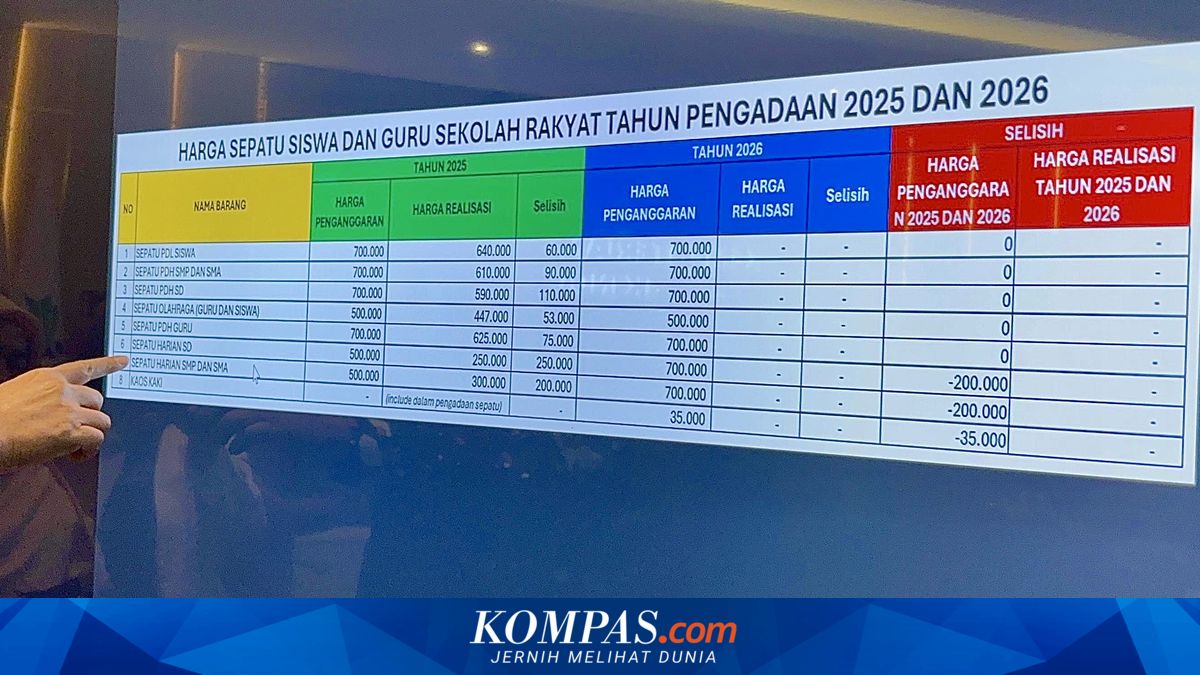
JAKARTA - The Secretary General of the Indonesian Ministry of Social Affairs, Robben Rico, explained the reason why the procurement of shoes for People’s School students does not use a self-management scheme involving direct school participation but instead a tender process.
“Self-management has its requirements. For the procurement of goods and services, it’s mandatory. There needs to be a tender process so it can compete properly,” said Robben at the Ministry of Social Affairs office in Central Jakarta on Wednesday (13/5/2026).
“But it can’t be done (procurement of goods and services) on our own. How could we just buy a car ourselves like that? No, there is a process,” he clarified.
Not without reason, according to Robben, the procurement of goods and services requires a lengthy process, including tenders, to avoid disrupting the economic chain below.
“Actually, this is also to ensure, roughly speaking, the economy can move. Like the rule that you can’t buy directly from the factory. Then those in the lower chain get their share of the fortune,” he added.
“So don’t jump to the conclusion that this is more expensive. Not like that, let’s see first, let’s put it in the right perspective,” he further stated.
He emphasised that what is most important for him and Social Minister Saifullah Yusuf is that not a single penny of the funds for the People’s School shoe procurement enters their pockets.
“For us, me and Mr Minister, what’s important is that not a single cent of money enters us,” he said.
Previously, Deputy Social Minister Agus Jabo revealed findings of potential maladministration based on clarifications from a special team in the People’s School shoe procurement process in 2025.
“Based on the results of clarifications on the goods and services procurement process, it was found that there was a large procurement volume, time limitations, and human resource constraints, thus there is potential for maladministration,” said Agus Jabo.
Agus Jabo stated that these findings still need further investigation to confirm whether there are inaccuracies in the goods and services procurement process or the possibility of discrepancies between planning and realisation.
“If problems are later found as suspected above, the relevant parties will be held accountable according to applicable provisions and the involved civil servants will be subject to disciplinary sanctions,” he explained.
If aspects of legal violations are found, the handling will be handed over to law enforcement authorities according to their authority.