
Social Affairs Ministry Demonstrates Digital Social Assistance System to House
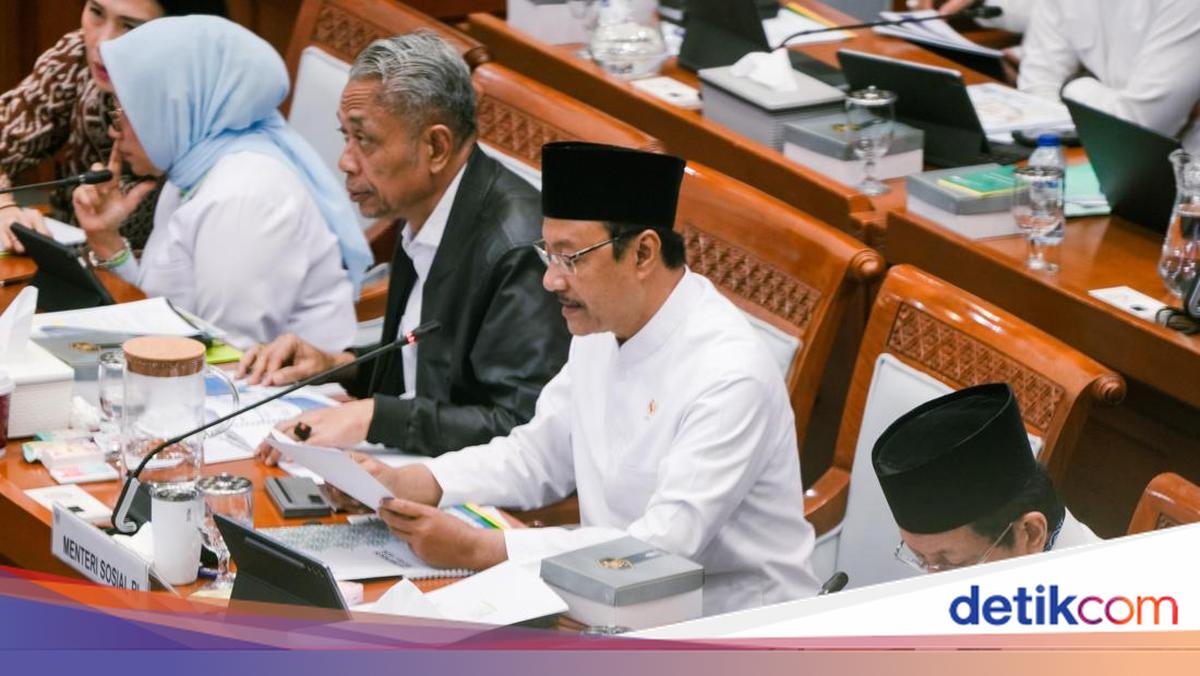
The Ministry of Social Affairs (Kemensos), together with the National Economic Council (DEN), has demonstrated a digital social assistance (bansos) system during a working meeting with House of Representatives (DPR) Commission VIII. The demonstration served not only as a display of readiness for digital transformation in social protection, but also to strengthen the DPR’s oversight function and policy support.
Social Affairs Minister Saifullah Yusuf, commonly known as Gus Ipul, accompanied Deputy Social Affairs Minister Agus Jabo Priyono and other Kemensos officials and DEN representatives. In his presentation, Gus Ipul stressed that the digitisation of social assistance is part of a comprehensive reform of social protection governance that is data-based, transparent, and accountable. This aligns with the President’s directive to realise a single national data system as the basis for planning and budgeting.
“Through this system, the result of every social assistance application can be immediately known, including the reasons for acceptance or rejection. This is important to avoid disputes on the ground and increase public trust,” Gus Ipul stated.
The system was tested directly with the involvement of DPR Commission VIII member Atalia Praratya, who registered for social assistance through the perlinsos.kemensos.go.id website using her National Identity Number (NIK) and biometric verification with facial scanning (Liveness Detection).
Rahmat Danu Andika, a representative from DEN who guided the simulation, explained the system is designed to ensure identity validity and data accuracy in real time. “What just happened is, first, it checked that the person in question is actually a human in front of the mobile phone, and second, it checked with Dukcapil as the Source of Truth for Indonesia’s population biometrics. Even without inputting a name, the data immediately appeared in real time as a feedback from Dukcapil,” he explained.
He added that once the biometric authentication process is successful, the system immediately conducts integrated cross-database verification. “Once an application is made, the system will instantly query various data sources, from vehicle ownership, employment status and wages, electricity consumption, to land asset ownership, all database to database in real time,” he elaborated.
The system operates using a Data Exchange Platform approach that connects various national databases. It is also integrated with welfare decile data from Statistics Indonesia (BPS) as a determinant of recipient eligibility. The entire process takes place in a matter of seconds and produces a decision with measurable and traceable reasons. When an application is deemed ineligible for assistance, the system transparently displays determining factors including asset ownership, electricity consumption levels, and position within the welfare deciles. This approach provides certainty for the public and field implementers.
Members of the DPR, as oversight authorities, assessed that data transparency and openness regarding decisions represent a progressive step in ensuring programme accountability. The system is considered capable of supporting the DPR’s oversight and budgeting functions because the entire process is based on integrated and standardised data.
The Ministry of Social Affairs has also prepared an objection mechanism for citizens who feel their data is not yet accurate. Through this feature, data updates can be submitted directly and connected to the national system, allowing corrections to be made promptly before the determination of beneficiaries.
The biometric authentication feature serves as a key innovation to prevent data misuse, including identity lending practices. Furthermore, the Liveness Detection ensures that applications are made by the individuals present, not through manipulations of photos, videos, or digital engineering.
The implementation of this social assistance digitisation has been trialled by the Task Force of the Government Digital Transformation Acceleration Committee (KPTDP), chaired by Luhut Binsar Pandjaitan. The trial was carried out through an E-Targeting scheme that continues to be expanded, and has reportedly been developed in 42 districts/cities as part of the national digital transformation agenda. Several ministries and agencies, including the Ministry of Social Affairs, the Ministry of State Apparatus and Bureaucratic Reform, Bappenas, the Ministry of Finance, the Ministry of Home Affairs, BPKP, LKPP, and BSSN, are involved in this committee to realise a Digital Public Infrastructure (DPI) that integrates data across government agencies in one unified system to improve the accuracy of social assistance distribution.