
Social Affairs Ministry and BNPT Strengthen Social Rehabilitation in Deradicalisation Programme
The Ministry of Social Affairs (Kemensos) and the National Counter-Terrorism Agency (BNPT) are strengthening their collaboration in implementing the deradicalisation programme through social rehabilitation, mentoring, and reintegration services for beneficiaries. In this collaboration, BNPT acts as the coordinator of the deradicalisation programme, while Kemensos provides support through social rehabilitation services at its centres.
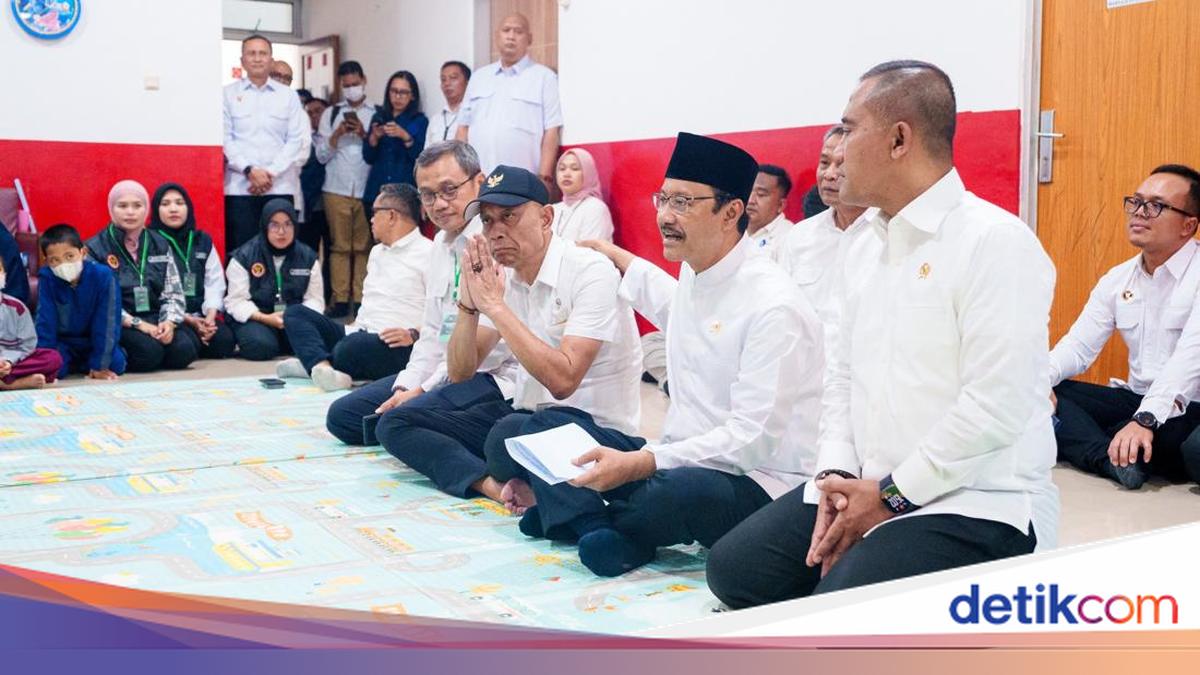
This was discussed during a meeting between Minister of Social Affairs Saifullah Yusuf (Gus Ipul) and Head of BNPT Commissioner General of Police (Ret.) Eddy Hartono at the Handayani Centre in East Jakarta on Monday (27/7/2026). The meeting was also attended by Deputy Minister of Social Affairs Agus Jabo Priyono and officials from both institutions.
“We have been working together for a long time. BNPT leads the way, and we at the Ministry of Social Affairs and our staff support the programme to ensure it runs well,” Gus Ipul said in a written statement on Monday. He explained that during the rehabilitation process, Kemensos and BNPT, along with related ministries and agencies, provide assistance to help beneficiaries recover and resume their social functions within their families and communities.
Gus Ipul elaborated that Kemensos accepts beneficiaries recommended by BNPT to undergo rehabilitation at its centres. While at the centres, they receive psychosocial services, medical rehabilitation, and empowerment training until they are ready to return to their respective environments. “We carry out rehabilitation here, including psychosocial services, medical rehabilitation, and empowerment. The ultimate goal is reintegration, enabling them to return to their communities,” he stated.
Meanwhile, Head of BNPT Eddy Hartono said the collaboration is part of the mandate of President Prabowo Subianto’s Asta Cita vision, as outlined in the 2025-2029 National Medium-Term Development Plan (RPJMN). “This collaboration is a mandate from the President’s Asta Cita, detailed in the RPJMN 2025-2029, specifically through the synergy of defence and security instruments for prevention,” Eddy said.
He assessed that the Ministry of Social Affairs plays a strategic role in supporting the deradicalisation programme through social rehabilitation and reintegration. “Today we are collaborating with the Ministry of Social Affairs because its role is quite strategic. We carry out guidance starting from the identification, rehabilitation, re-education, to social rehabilitation stages,” he explained.
Eddy noted that the development of information technology has changed the pattern of spreading radical ideologies, which now increasingly utilise digital spaces. Therefore, the government continues to strengthen prevention efforts through cross-ministerial and institutional collaboration. “We have issued a National Action Plan for the Prevention and Countering of Violent Extremism Leading to Terrorism. The President’s directive is synergy and collaboration in implementing deradicalisation,” he concluded.
On that occasion, Gus Ipul and Eddy, along with their staff, also reviewed the social rehabilitation services at the Handayani Centre as part of strengthening the collaboration between the two institutions.