
Social Affairs Minister Targets Full Integration of Ministry Programmes by 2027
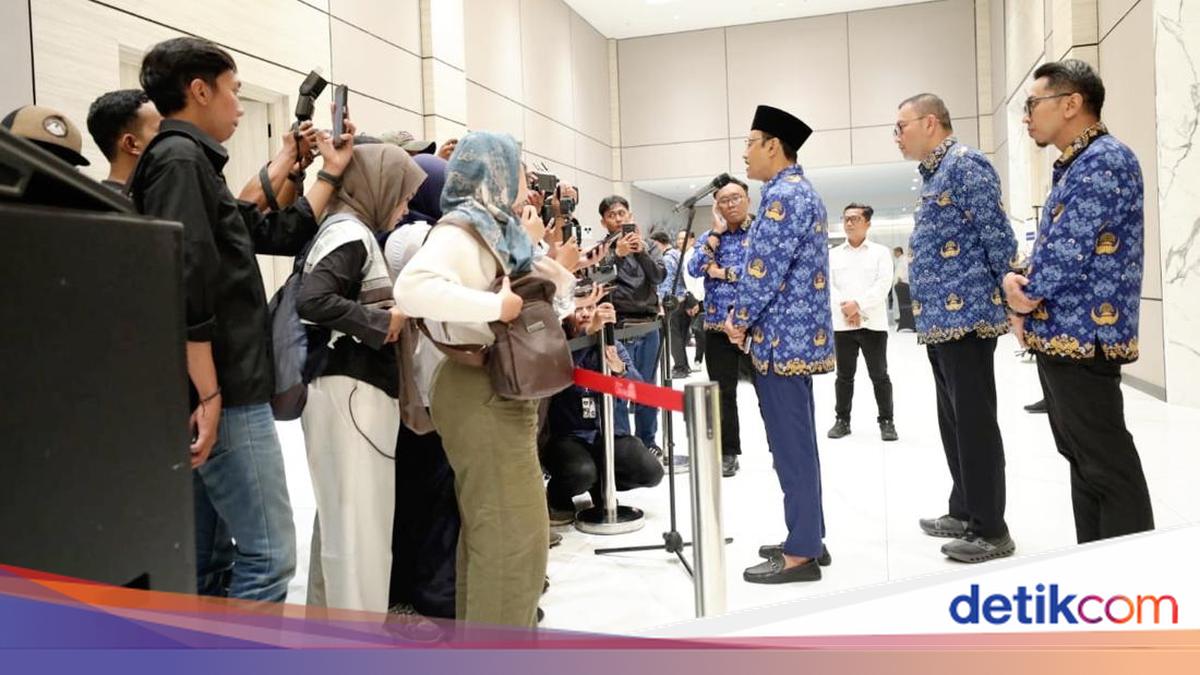
Minister of Social Affairs Saifullah Yusuf, known as Gus Ipul, has emphasised that 2027 will be a crucial moment for the Ministry of Social Affairs to enter a phase of escalation and integration. He stated that all social programmes will no longer operate in isolation but will be interconnected within a single system to accelerate improvements in public welfare. “2027 is the year we install the roof and connect the electricity and water to all rooms. The components that have been standing alone must be connected to become a whole, functioning house,” Gus Ipul said in a statement on Monday (29/6/2026). He made the remarks while opening the 2027 Programme and Budget Plan Deliberation in Cibinong, Bogor Regency, West Java. The three-day event was attended by Echelon I and II unit leaders, as well as heads of centres from across Indonesia, to align the ministry’s policy direction, programmes, and budgeting for 2027. In his directive, Gus Ipul likened the implementation of the Ministry’s 2025-2029 Strategic Plan to building a house. The year 2025 was the foundation phase, involving the structuring of the National Socio-Economic Single Data (DTSEN) and institutional strengthening. The year 2026 is the acceleration phase, where programmes begin to run fully. Consequently, 2027 is the phase where all components that have been built must be connected into a single unit. Following this integration phase, the Ministry will enter a consolidation stage in 2028 before reaching the final target of the Strategic Plan in 2029, which is the realisation of improved social welfare. “2027 will determine whether our house is truly unified or just a collection of separate rooms. Therefore, we must start connecting one to another,” he stressed. Gus Ipul explained that all 2027 programmes and budgets must be directed to produce measurable impacts on social welfare development targets. He requested that every work unit no longer merely present a list of activities but demonstrate their contribution to the ministry’s performance indicators. Targets for 2027 include a Social Welfare Index of 64.51, up from 59.51 in 2025 and moving towards 69.80 in 2029. The Ministry is also targeting 1 million families to achieve prosperous graduation, an increase from the 700,000 families targeted in 2026, with 1.5 million families graduating from poverty annually. Furthermore, the accuracy of aid targeting based on DTSEN is targeted at 85 percent as a step towards 95 percent by 2029. Meanwhile, the Elderly Welfare Index is targeted at 65.07 and the Disability Welfare Index at 48.84. “I want every Director General to place their programme on this target map. Do not come with a list of activities; come with answers: which figure does your activity move, by how much, and when will the result be achieved,” he said. Gus Ipul outlined three major agendas marking 2027 as a year of genuine escalation, not just a continuation of routine. First, the full implementation of social assistance digitalisation. This transformation aims to accelerate data updates, improve targeting accuracy, and speed up the distribution of aid to entitled citizens. Second, the elevation of Sekolah Rakyat from a programme to a stronger institution. In 2027, the Human Resources Development and Sekolah Rakyat Management Agency (BPSDM-SR) will begin full operations as an Echelon I unit. The number of Sekolah Rakyat service points will continue to grow, serving more than 100,000 boarding students with increased budget support as part of a strategy to break the poverty chain through education. Third, the People’s Welfare Programme (PROKESRA) will begin integration as a cross-ministerial, institutional, and regional government graduation ecosystem. This programme will be implemented through two instruments: the Welfare Card as a graduation pathway for beneficiary families and the Affirmative Business Card as a pathway to independence through enterprise or employment. “These three breakthroughs look great on paper, but none will succeed if we continue to walk alone,” he said. According to Gus Ipul, the biggest challenge for the Ministry in 2027 is no longer budget, but the ability of all work units to build programme integration. The Ministry’s indicative budget ceiling for 2027 reaches IDR 84.7 trillion, with around 85 percent allocated for social assistance spending. Additionally, an extra IDR 22.49 trillion for priority programmes has been approved by Commission VIII of the House of Representatives. “If the money is already on the table, the question is simple: will we use it to walk alone or walk together?” he said. He likened the current situation to a poor family being visited by several officers from different programmes, each bringing their own services without coordination. “It is like one patient being treated by five doctors, but there is no single medical record to unify them. What the community needs is one complete intervention, not assistance that runs separately,” he explained. He gave the example of services for neglected elderly people and persons with severe disabilities, which involve more than one programme. Cash assistance, daily care services, wheelchairs, and other aids should be designed as a single intervention package based on the same data to provide a more optimal impact. To realise this integration, Gus Ipul established four main principles to guide the preparation of the 2027 programmes and budget: one data for all, one definition of graduation, eliminating sectoral egos, and maintaining dignity and accountability. He stated that DTSEN must be the sole reference for all programmes.