
Social Affairs Minister States People's School Has Positive Impact on Students' Academic and Character Development
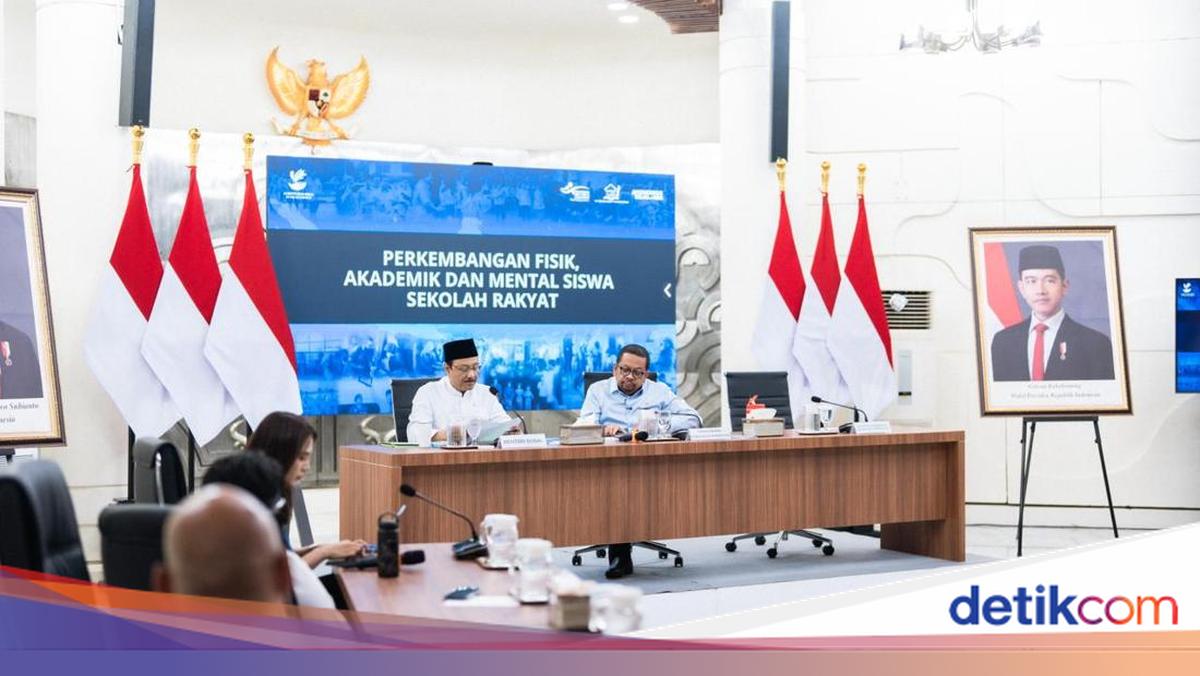
We designed the People’s School as an effort to break the chain of poverty. We must not surrender to circumstances, and the state must be present for those who have long been invisible,” said Gus Ipul in a written statement on Wednesday (6/5/2026).
This was stated by Gus Ipul during a press conference held at the Auditorium of the Bakom RI, Central Jakarta, today. The event was part of reporting on cross-sectoral government programme achievements, including free health checks (CKG) in schools, tuberculosis (TB) handling, and strengthening access to education for vulnerable groups.
The People’s School programme is implemented in accordance with the constitutional mandate, particularly Article 34 of the 1945 Constitution, which emphasises the state’s obligation to care for the poor and neglected children.
Based on collected data, Gus Ipul revealed that the majority of People’s School students come from families in decile 1 and decile 2 of the National Social and Economic Single Data (DTSEN). Around 60 percent of parents work as labourers or daily wage earners, 67 percent have incomes below Rp 1 million per month, and 65 percent have more than four dependents. There are even children who have never attended school or have dropped out, as well as those living in vulnerable social conditions.
“Unlike regular schools, student admissions are conducted through active outreach based on data, field verification, dialogue with parents, and determination by local governments. For the 2026 academic year, the government targets the admission of 32,640 new students,” he explained.
He stated that currently, the People’s School operates in 166 pilot locations spread across 34 provinces and 131 regencies/cities, with more than 14,936 students.
Gus Ipul invited reflection after more than nine months of operation, noting that the development of People’s School children shows significant changes, not only academically but also in terms of health and mental well-being.
In terms of health, many students who previously suffered from malnutrition, anaemia, or low fitness now show improvement. Weight and height have increased, physical condition is fitter, and concentration in learning has also improved.
“This may seem simple, but it is very fundamental. Healthy children have far better learning opportunities,” he said.
Meanwhile, in terms of character, there have been significant behavioural changes. Students have become more disciplined, confident, independent, and exhibit more positive attitudes in daily life.
Even based on parental testimonials, children are now more diligent in worship, accustomed to waking up early, no longer addicted to gadgets, and beginning to have the spirit to help their families.
“The People’s School does not only change one child, but restores hope in an entire family,” he stated.
In addition, academic development is also starting to show. In 2026, the People’s School will graduate its first 453 students from primary (SD), junior secondary (SMP), and senior secondary (SMA) levels. These graduates are directed to continue to higher education levels or enter the workforce as skilled workers according to their interests and potentials.
In the field of achievements, People’s School students are beginning to show competitiveness at various levels. One student has achieved an international-level accomplishment, including 2nd place in the Senkaido Open International Karate Championship Series 7 in 2025.
Additionally, 162 students have recorded national-level achievements, 87 at the provincial level, and 75 at the regency/city level. These accomplishments prove that children from vulnerable families can excel when given proper access and support.
“We ensure that the entire implementation of the People’s School, including programme management and facility support, is carried out transparently and accountably in accordance with applicable provisions,” said Gus Ipul.
Meanwhile, Head of the Government Communication Agency Muhammad Qodari emphasised the importance of early health interventions through schools.
“Through schools, the state is present to ensure that all children, without exception, receive the same basic services, so that potential health problems can be detected and addressed more quickly,” he concluded.