
Social Affairs Minister Invites SP2MI to Take Part in Sekolah Rakyat Programme
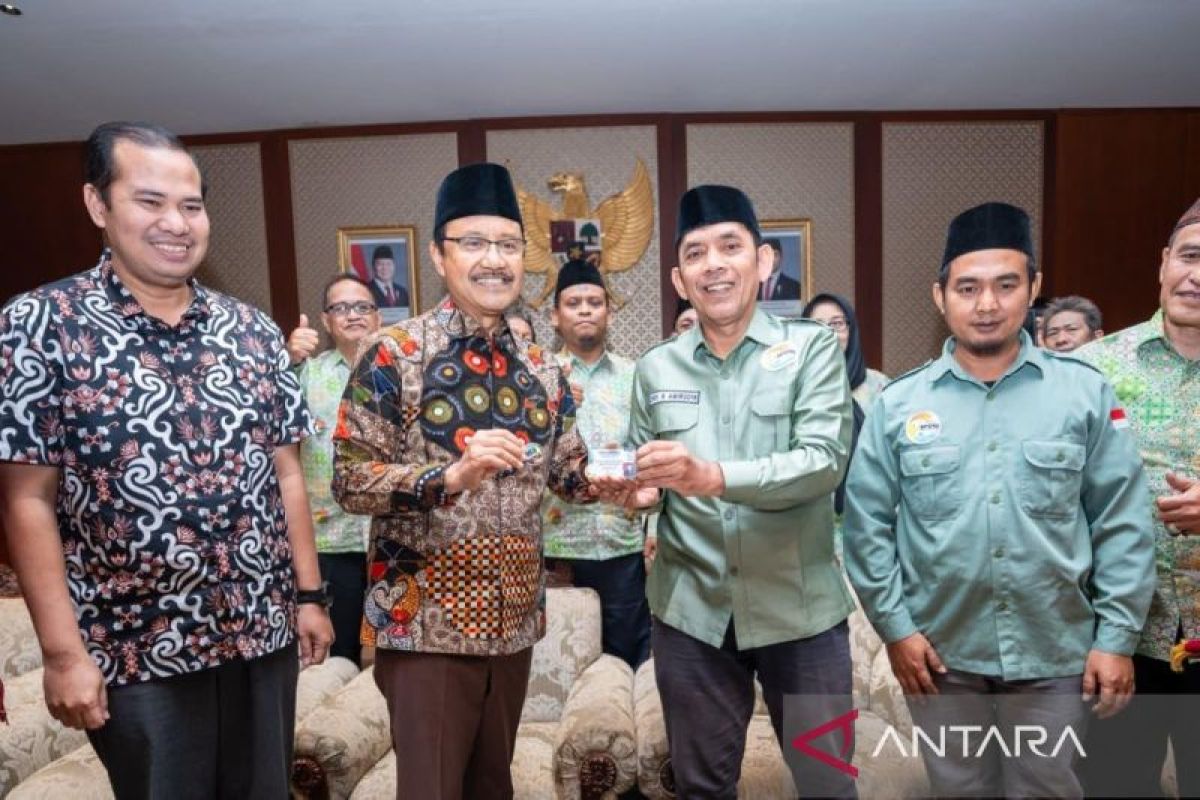
Social Affairs Minister (Mensos) Saifullah Yusuf has invited the Indonesian Community Education Movement (SP2MI) to take a role in reaching children who are not in school, have dropped out, or are at risk of dropping out, to provide them with access to proper education through the Sekolah Rakyat (People’s Schools) programme.
“On this occasion, I invite you all to be involved in updating the data. If you find students who have not been registered, you can help update the information through the channels we have established,” he said in a statement received in Jakarta on Friday.
Speaking at the SP2MI 2026 National Gathering at Sasonobudoyo Hall, Taman Mini Indonesia Indah (TMII), Jakarta, the Minister was the keynote speaker. The event was attended by SP2MI Chairman Amirudin and his team, Acting Director of Operations for TMII Dede Noviardi, SP2MI members from various regions across Indonesia, managers of Community Learning Centres (PKBM), Community Reading Gardens (TBM), and private early childhood education centres (PAUD) from 12 provinces, as well as academics and government partners involved in community education.
“I am delighted today to be among the warriors of Indonesian education. Volunteers who have chosen a path in life to help, to comb through areas for school-age children who are not in school, have never been to school, or have dropped out,” he said.
The issue of out-of-school children remains a major challenge that must be addressed collectively. Data indicates that more than four million school-age children are not in education.
“Data shows that over four million school-age children are not in school, have never attended school, have dropped out, or are at risk of dropping out. This is our shared homework, and you have chosen to help these children,” he stated.
According to Saifullah, President Prabowo Subianto has given the Ministry of Social Affairs three strategic mandates: updating the National Single Socio-Economic Data (DTSEN), distributing social assistance accurately, and organising Sekolah Rakyat.
He stressed that Sekolah Rakyat does not use a standard school registration mechanism. Instead, the programme prioritises an outreach approach to children from poor and extremely poor families.
“Sekolah Rakyat does not open registration. Sekolah Rakyat conducts outreach. We do not open registration, but we reach out to those in Desil 1 and 2. The poorest families,” he said.
For this reason, he believes the presence of SP2MI and its network of community education institutions holds a strategic position to help find and assist prospective Sekolah Rakyat students in various regions.
He expressed hope that the synergy between the Ministry of Social Affairs and SP2MI could be strengthened through collaboration with the ministry’s Family Hope Programme (PKH) facilitators, who are spread across Indonesia.
“We have PKH facilitators throughout Indonesia, more than 30,000 of them, some of whom you may have already worked with. I hope that going forward, Mr Amirudin and colleagues can cooperate with our PKH facilitators in various places,” he said.
He also opened the door for broader cooperation between the Ministry of Social Affairs and SP2MI in supporting the implementation of Sekolah Rakyat and addressing the issue of out-of-school children through various community education programmes.
“I really hope we can work together. Mr Amirudin can collaborate with the Ministry of Social Affairs team handling Sekolah Rakyat. We will find ways to help. Afterwards, I will convey to the Minister of Primary and Secondary Education what programmes we can also synergise,” he said.
Meanwhile, SP2MI Chairman Amirudin affirmed that SP2MI shares a common mission with the Ministry of Social Affairs, as it has been actively assisting community groups that have not yet gained optimal access to education.
“SP2MI has been a government partner, and our hope is that we focus on skills and community empowerment at PKBM. If the Ministry of Social Affairs is willing to invite us to be a partner for the skills and empowerment of our children,” said Amirudin.
SP2MI members come from various regions and are mostly involved in equivalency education programmes such as Paket A, Paket B, and Paket C, giving them direct experience in reaching children outside the formal education system.
At the end of the event, SP2MI Chairman Amirudin presented a special participant pin to the Social Affairs Minister. The atmosphere became more festive as the Minister, together with hundreds of participants, simultaneously proclaimed the three key principles of Sekolah Rakyat: reaching the unreachable, making the impossible possible, and honouring the common people.