
Social Affairs Minister: BKKBN Data is Accurate; Changes in Decile Ranking Do Not Automatically Terminate Social Assistance
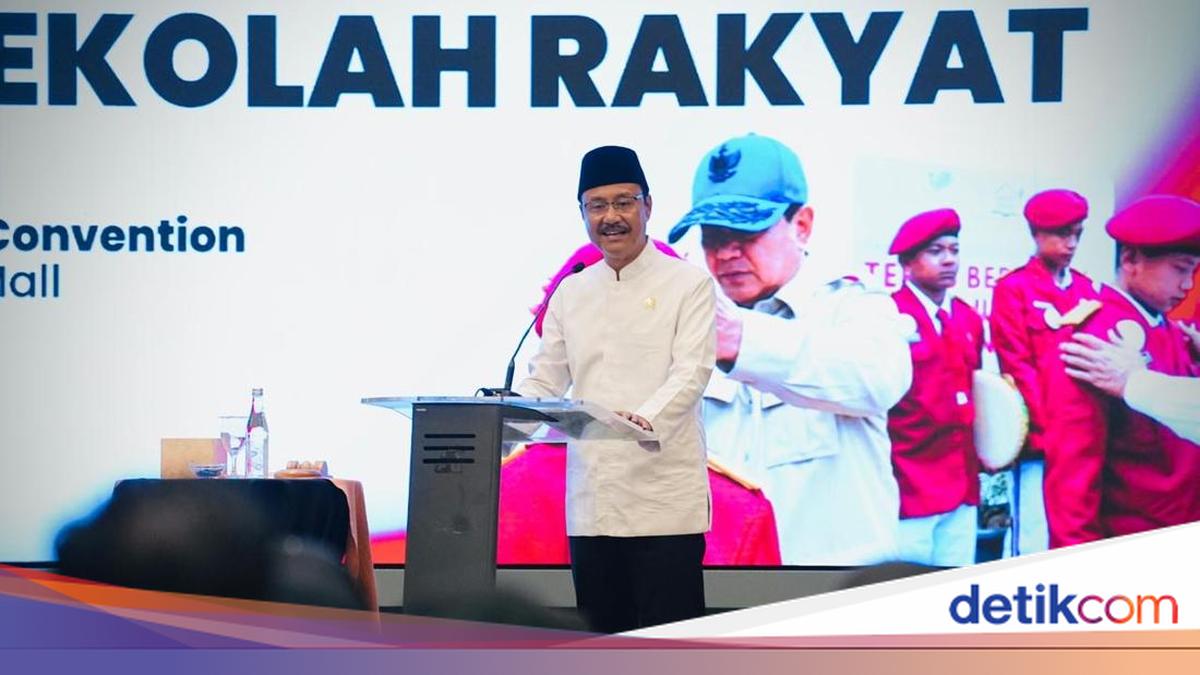
Minister of Social Affairs Saifullah Yusuf (Gus Ipul) has asserted that data sourced from the Ministry of Population and Family Development/BKKBN is not erroneous. This data is part of a national data consolidation process that is subsequently verified, validated, and ranked by Statistics Indonesia (BPS).
“The data from BKKelse BKKBN or the Ministry of Population and Family Development is not incorrect. There is absolutely nothing wrong with it. This data is part of a national data consolidation process,” said Gus Ipul in a written statement on Saturday (5/9/2026).
Gus Ipul emphasised that, in accordance with Presidential Instruction Number 4 of 2025, BPS serves as the sole manager of the National Socio-Economic Single Data (DTSEN). Meanwhile, ministries, agencies, and local governments play a role in assisting the updating process.
Various data sources from ministries and agencies are then verified, validated, and standardised in scale by BPS before being presented in rankings from decile 1 to decile 10.
“This data is very dynamic. Every day there are births, deaths, relocations, marriages, and changes in economic status, both upward and downward. Therefore, the updating process must be carried out continuously,” he said.
In addition to data from the Ministry of Social Affairs and BKKBN, the consolidation process also utilises data from various other agencies, including motor vehicle data and land data from the Ministry of ATR/BPN. This integration is necessary so that the socio-economic condition of the community can be depicted more accurately.
Gus Ipul stated that if surges or changes in decile rankings are found during the consolidation process, the data is continuously being improved and updated.
“If there are surges occurring now, they are being corrected and updated. Hopefully, in the near future, the rankings will become more aligned with the established metrics,” he expressed.
Decile Changes Do Not Automatically Stop Social Assistance
Gus Ipul also clarified the assumption that individuals found to be in a higher decile during data updates are automatically removed from social assistance recipient lists.
He emphasised that the determination of social assistance recipients is conducted every three months based on updates from various parties, including local governments, which are subsequently processed and re-measured by BSS.
“If a decile is found to be inaccurate, it does not mean the social assistance is immediately revoked. There is still a period for appeals and updates for the next distribution cycle,” explained Gus Ipul.
He revealed that information suggesting someone recorded in decile 10 automatically loses social assistance is inaccurate.
The Ministry of Social Affairs, he continued, has provided several channels for the public to rectify data. Through the ‘Cek Bansos’ application, the public can submit proposals or appeals and view their decile position within the DTSEN.
Furthermore, a government channel is available through SIKS-NG, which can be accessed by data operators in villages, sub-districts, and social services across Indonesia. Citizens can also visit their village or sub-district offices directly to receive assistance in the data updating process.
“Every village and sub-district has a data operator. Through these operators, update proposals are forwarded for processing,” he said.
Digitalisation of Social Assistance Expands Public Participation
In addition to updating the DTSEN, the government is also expanding the digitalisation of social protection. The programme is designed so that the public can apply for themselves or propose others for social assistance through a digital system by providing the necessary supporting data.
The digitalisation of social assistance was previously trialled in Banyuwangi and has now been expanded to 42 regencies/cities. The government aims to implement this nationally if the implementation in the trial areas proceeds well.
One of the developments is a system that allows the eligibility of aid recipients to be tested using cross-agency government data.
“Later, the public can submit proposals, and the system will provide an answer as to whether they meet the requirements or not. If they do not meet the requirements, the reason can also be identified because the data is linked to various government agencies,” said Gus Ipul.
He believes this integration is expected to reduce errors in aid targeting caused by data inaccuracies, which have long been an issue in the distribution of subsidies and social assistance.
Consequently, Gus Ipul invited the public to actively monitor and improve the data. Citizens who know of wealthy families still receiving social assistance can file an appeal. Conversely, those deemed eligible but not yet included as recipients can be proposed.
“The government is completely open. Nothing is being hidden. We want the public to be involved because the more parties that participate, the more accurate our data will be,” he said.
Gus Ipul ensured that the Ministry of Social Affairs continues to monitor public complaints, including those shared via social media.
“On social media, there is true information, partially true information, and false information. We respond to, investigate, and follow up on all of it because we truly want to obtain accurate data,” he concluded.