
Social Affairs Minister Asserts Changes in Decile Ranking Do Not Automatically Remove Social Assistance Recipients
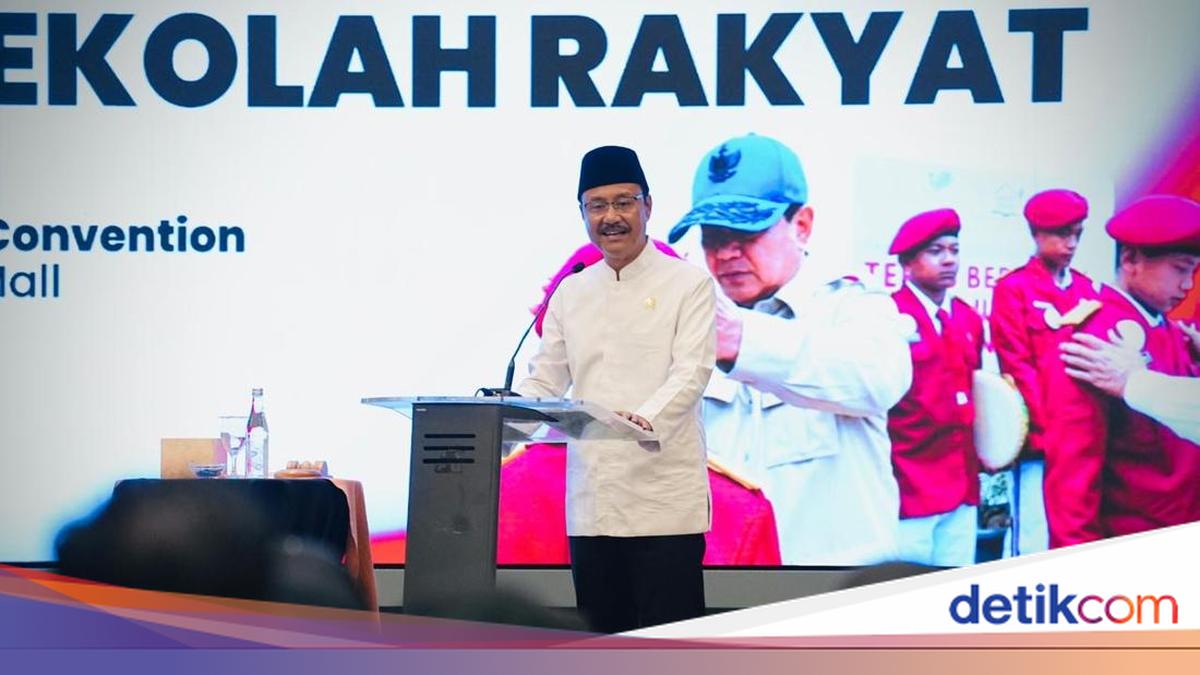
Minister of Social Affairs Saifullah Yusuf (Gus Ipul) has emphasised that changes in welfare rankings, or deciles, within the National Socio-Economic Single Data (DTSEN) do not automatically lead to the immediate removal of social assistance (bansos) recipients. Gus Ipul explained that social data is dynamic and is continuously updated to ensure that assistance is provided to the right members of the community.
The DTSEN is the result of consolidating various data sources, which are then standardised and ranked by Statistics Indonesia (BPS). In accordance with Presidential Instruction Number 4 of 2025, BPS serves as the manager of the single data, while ministries, agencies, and local governments play a role in the update process.
“This is a relative ranking because this data is very dynamic every day. Every day there are deaths, births, relocations, marriages, people moving up a class, and people moving down a class,” said Gus Ipul in his statement on Saturday (5/9/2026).
He noted that the update process utilises various government data sources. Consequently, changes in ranking can occur when the socio-economic conditions of the community or supporting data undergo changes. He added that current surges in data discrepancies are being rectified and updated, with the hope that rankings will soon align with established metrics.
Gus Ipul emphasised that the public has several channels to assist in improving the data. Updates are conducted via SIKS-NG by village/sub-district operators and social services, as well as through Cek Bansos, ground checks, call centres, WhatsApp Lapor Bansos, Cek DTSEN, and the Social Protection (Perlinsos) platform.
Under this scheme, community information or proposals can serve as material for updates within the Ministry of Social Affairs. The data is then processed, and BPS performs ranking updates within the DTSEN. Furthermore, ground checks are conducted by field officers, including PKH (Family Hope Program) facilitators, BPS officers, and local governments, to ensure field conditions match the data.
“If an inaccurate decile is found now, it does not mean social assistance is removed, because there is still a period for rebuttal and updating, which will then be distributed in the following three months,” explained Gus Ipul.
He stressed that the determination of social assistance recipients is conducted periodically, every three months, based on the results of updates subsequently re-measured by BPS. “It is not the case that if someone is found in decile 10 now, their social assistance is automatically cut or not distributed. I believe that is misinformation,” he asserted.
He added that the DTSEN update process does not rely on a single data source. BPS also performs variable standardisation and validation so that data from various ministries, agencies, and local governments can be consolidated. Gus Ipul revealed that the BPS standardisation instrument covers more than 40 variables, with a validation process involving survey officers trained by BPS. Data accuracy must be provable and include monitoring and evaluation mechanisms.
“The government is open, following the President’s direction. We want this data to become more accurate, and for that purpose, we are opening it to public participation,” said Gus Ipul.
Therefore, Gus Ipul encouraged the public to actively submit corrections. If they find social assistance recipients deemed ineligible, the public can submit a rebuttal. Conversely, they can also propose families who are eligible but have not yet received assistance.
“If there is a family or beneficiary who is not entitled but is receiving aid, this can be addressed through the update process via existing channels. Or vice versa, they are eligible but have not received aid. Let us help and participate together,” he explained.
In addition to updates via local governments and the public, the Ministry of Social Affairs is also promoting the digitalisation of social protection through Perlinsos. The public will eventually be able to apply for themselves or propose others for assistance by providing necessary evidence.
Gus Ipul explained that this digital system is being developed to make the proposal process more transparent, as community data is linked to various government data sources. “What is new in this digitalisation of social assistance is that the public can propose directly, but the response will be handled by a machine—an application that has been prepared,” he noted.
Currently, the digitalisation of social assistance has been piloted in Banyuwangi and subsequently expanded to 42 regencies/cities. The government hopes the system can be further refined before being implemented more widely.
“To be honest, it must be admitted that our data previously was inaccurate, leading to many social subsidies and social assistance being mistargeted,” said Gus Ipul.
He noted that improving the DTSEN is part of the government’s effort to ensure that social assistance and various social protection programmes are provided based on data that is increasingly accurate, measurable, and in line with the community’s actual conditions.