
Social Affairs Minister and 12 Regional Governments Discuss Issues of the Invisible People in the Regions
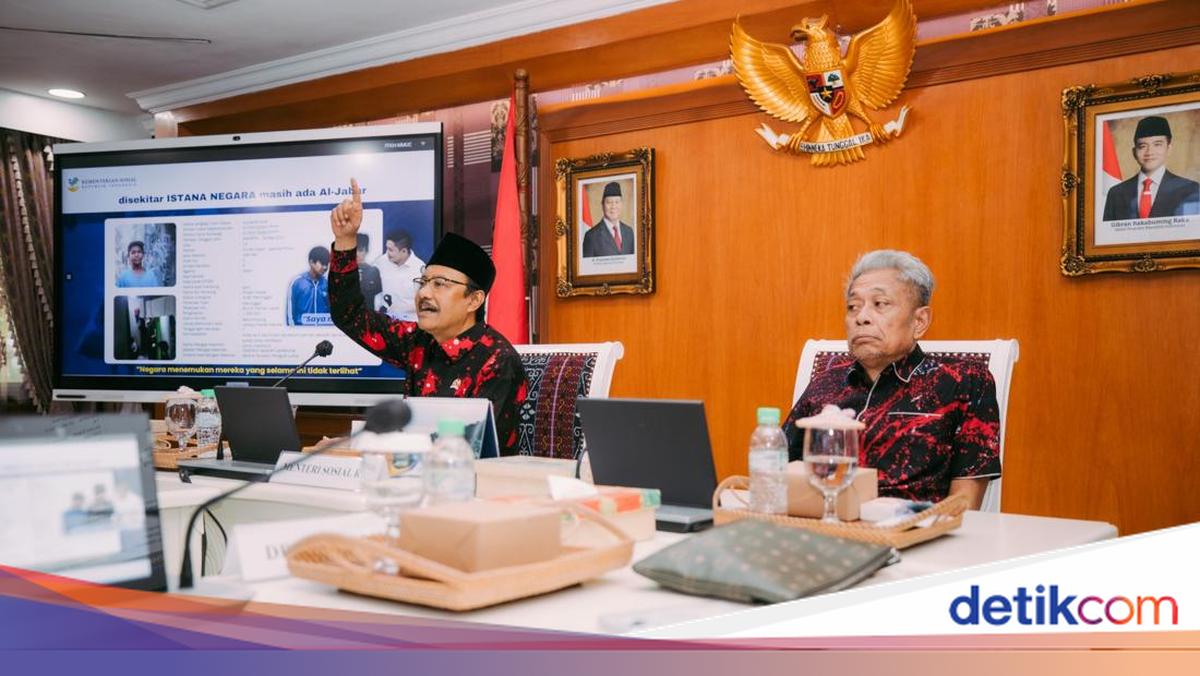
An audience was attended by Deputy Chairman of the NTT Provincial DPRD Kristien Samiyato Pati, Deputy Chairman of the Mataram City DPRD Istiningsih, Batang Regent Muhammad Faiz Kurniawan, Jombang Regent Warsubi, Solok Regent Jon Firman Pandu, Simeulue Regent Mohammad Nasrun Mikaris, Aru Islands Regent Timotius Kaidel, Acting Regent of Tulungagung Ahmad Baharudin, Deputy Regent of Kebumen Zaeni Miftah, Head of Social Affairs Trisno, and Head of Garut Regency Social Affairs Marlinda.
Meanwhile, Gus Ipul was accompanied by Deputy Minister of Social Affairs Agus Jabo Priyono, Secretary General of the Ministry of Social Affairs Robben Rico, Head of the General Bureau Salahuddin Yahya, Head of the Data and Information Centre Joko Widiarto, as well as special staff and expert aides to the minister.
In the audience, Gus Ipul raised the phenomenon of the invisible people, namely groups of poor and vulnerable people who have not been reached by the state because they are not properly recorded in the data. He exemplified the story of Al-Jabbar, a 12-year-old child in Jakarta who has never been to school despite living not far from the centre of government.
“He could be our neighbour, he might not be far from us. But his suffering is not visible because they never express what their needs are,” said Gus Ipul in his statement on Tuesday (12/5/2026).
According to him, similar problems are also found in various regions, including island areas and regions with limited access to social services. Therefore, he asked regional governments to strengthen the updating of the National Single Socio-Economic Data (DTSEN) so that vulnerable citizens are no longer missed from government interventions.
In response to this, Gus Ipul emphasised that the deactivation of PBI-JK membership is not a reduction in quota, but rather a transfer to other citizens who are more in need in the same area.
“If 10,000 are deactivated in Madam’s place, it means there are 10,000 new citizens in Madam’s place who receive it. So it’s not reduced, it’s transferred to those who need it most,” he explained.
In that meeting, Gus Ipul and the regional heads also discussed the progress of developing People’s Schools in several regions. Jombang Regency was mentioned as one of the areas with the most advanced construction progress, while Batang has prepared land for permanent school construction.
Meanwhile, Solok, Simeulue, Aru Islands, Kebumen, Tulungagung, Pangandaran, and Garut also conveyed readiness of land, technical documents, and outreach to prospective students.
Gus Ipul said the target number of People’s School students continues to increase every year. Currently, there are around 15,000 existing students. That number is targeted to increase to around 46,000 students in 2026, more than 150,000 students in 2027, up to more than 400,000 students in 2029.
“The President’s target is one permanent People’s School building in each district and city, and at least two permanent buildings in each province,” said Gus Ipul.
He asked for support from regional governments so that the student outreach process and the construction of People’s Schools in the regions run optimally.
“Let us welcome the President’s programme and ensure that those reached are truly the children who need it most,” said Gus Ipul.
Gus Ipul emphasised that People’s Schools do not open registrations, but rather through outreach to children who truly need it.
“There should be no placements, no infiltrations. Those who can attend school here are those in the DTSEN and truly from outreach,” he stressed.
He also asked regional heads to strengthen village data operators because the success of targeted social assistance as well as People’s Schools greatly depends on the accuracy of data from the regions.
“Our fate depends on the village data operators. Because those who input it are the village data operators,” he said.
Meanwhile, Deputy Chairman of the NTT Provincial DPRD Kristien Samiyato Pati said that people in her region face layered social pressures, from extreme drought, the impact of climate change, poverty, to PMI issues.
“We come not asking for pity, but we come to ensure that the state is more strongly and fairly present for the people in the Nusa Tenggara Timur island region,” said Kristien.
She also highlighted the condition of PMI from NTT who are often repatriated in a state of death. According to her, many families have difficulty bringing the bodies back to their home villages due to limited costs.
“The state must not stop being present at the debarkation airport. The state must be present until the final stage, ensuring they return with dignity to their hometowns,” she said.
In addition, Kristien requested strengthening of social rehabilitation services for people with mental disorders, affirmative support for island regions in updating social data, and strengthening of social granaries for drought-prone areas.
On the other hand, Deputy Chairman of the Mataram City DPRD Istiningsih highlighted the deactivation of nearly 10,000 PBI-JK memberships in Mataram City. She asked for clarity on the reactivation mechanism and supervision of the validity of social assistance recipient data.
“How is the supervision of the deletion process of nearly 10,000 Mataram City residents from BPJS PBI membership so that data errors do not occur again,” said Istiningsih.
She also requested supervision of the misuse of social assistance for online gambling and online loans, as well as the need for a temporary shelter for Social Attention Recipients in Mataram City.