
Social Affairs Minister Affirms 'Sekolah Rakyat' is President Prabowo's Commitment to Breaking the Cycle of Poverty
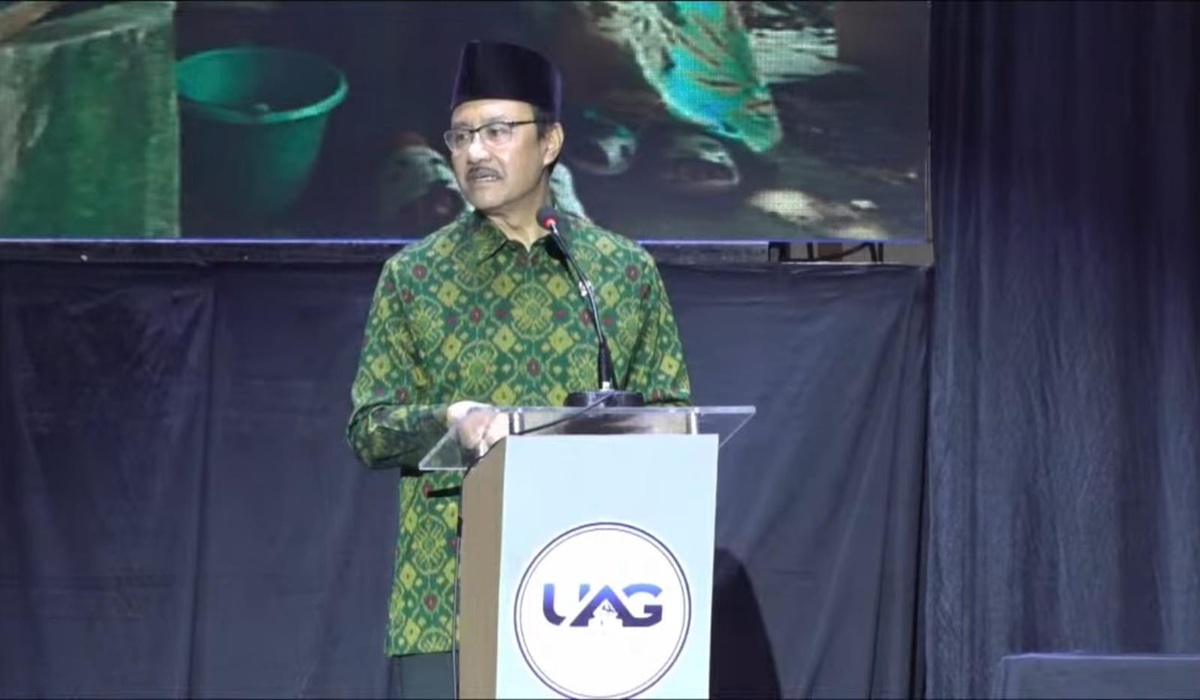
The Minister of Social Affairs, Saifullah Yusuf, has emphasised that the establishment of ‘Sekolah Rakyat’ (People’s School) is a tangible manifestation of President Prabowo Subianto’s commitment to opening educational access for impoverished families. This programme specifically targets children who have previously been overlooked by national development efforts.
Saifullah made these remarks during the 10th Graduation of UAG University and the 14th New Student Welcoming Reception in Jakarta on Wednesday. According to Saifullah, Sekolah Rakyat is designed specifically for the most disadvantaged or pre-prosperous groups of society, whom he described as ‘the invisible people’—those whose hardships often escape national data systems and state attention.
“Sekolah Rakyat is a school intended for the most underprivileged families, those who have not been included in the development process, and those who have been less fortunate,” said Saiferalah.
He cited the harsh realities on the ground, where families still struggle to meet basic needs, are unable to retrieve educational certificates, or can only afford one meal a day. Such conditions are a primary concern for President Prabowo, in accordance with the mandate of Article 34 of the 1945 Constitution, which stipulates that the poor and abandoned children shall be cared for by the state.
Unlike general schools, Sekolah Rakyat operates on a boarding school system. Under this model, the state covers not only the cost of education but also all daily necessities for students 24 hours a day.
Saifullah emphasised that Sekolah Rakyat is not merely a place for basic learning, but a strategic instrument to break the cycle of intergenerational poverty. Graduates are directed towards two clear future paths: becoming skilled workers, either domestically or abroad, or pursuing higher education.
To support this, the curriculum will be strengthened with vocational training and enhanced foreign language skills for those interested in international careers.
One success story of the programme is Putri, the daughter of a gravedigger, who had previously dropped out of vocational high school to support her family’s economy. Encouraged by her mother, Putri joined Sekolah Rakyat and has since successfully secured a scholarship to Ary Ginanjar University.
“I was previously unemployed because I wanted to help my parents. But my mother said, ‘Go to Sekolah Rakyat so you can have a happy future’. Everything is provided there, including meals. Sekolah Rakyat is the best,” said Putri.
The Minister of Social Affairs hopes that students like Putri can become agents of change, not only transforming their own destinies but also elevating the status of their families and communities in the future.