
Social Affairs Deputy Minister Urges Teachers to Understand the Spirit of People’s Schools to Break the Cycle of Poverty
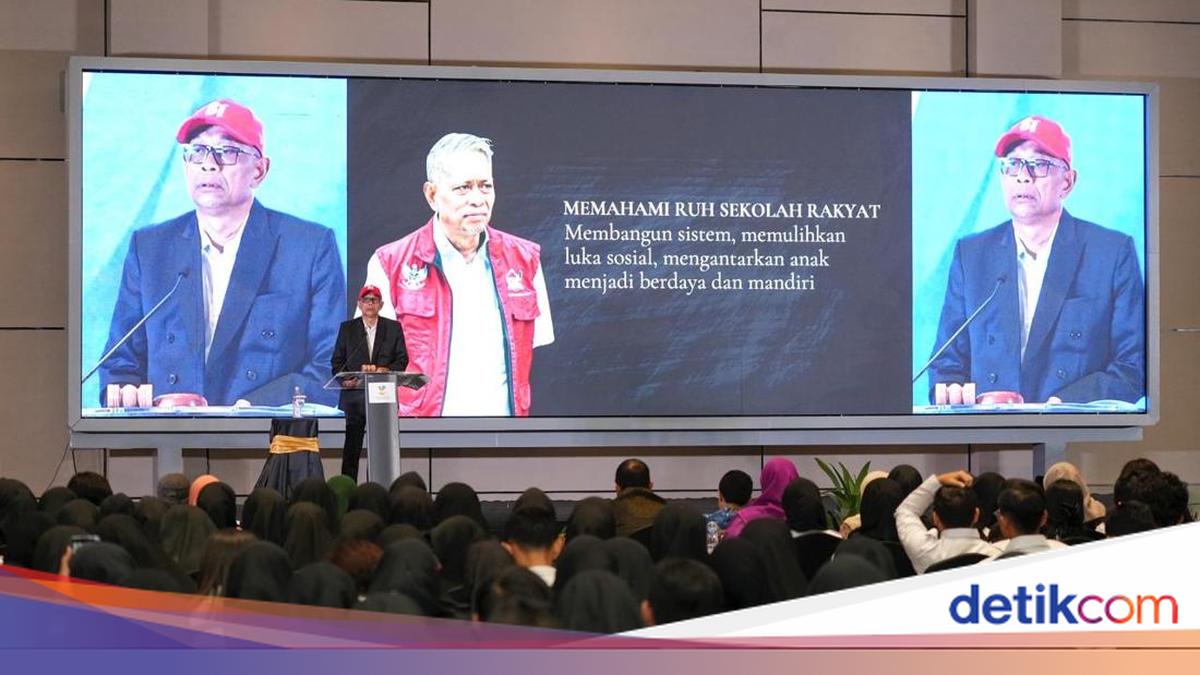
Deputy Social Affairs Minister Agus Jabo Priyono has urged teachers to understand the overarching concept, or spirit, of Sekolah Rakyat (People’s Schools). This is key to achieving President Prabowo Subianto’s priority programme of breaking the cycle of poverty.
Without a sufficient understanding of this central concept, hard work will not produce the best results.
“I will never tire of explaining this overarching concept so that we truly understand what Sekolah Rakyat is and how it differs from other regular schools. This major mission must be understood in every aspect, from governance and teaching materials to all human resources, from headteachers to education staff,” Agus Jabo said in a written statement on Wednesday (11 November 2026).
He made the remarks while officially opening the second batch of Deep Learning Training for functional-position teachers at Sekolah Rakyat, at the Harris Hotel & Conventions Cibinong City Mall in Bogor, on Tuesday.
The training was organised by the Education, Training and Professional Development Centre of the Ministry of Social Affairs in collaboration with the Banten Provincial Centre for Teachers and Education Personnel. The blended-learning programme, which runs until Saturday, is attended by 544 teachers and deputy headteachers responsible for curriculum.
The programme is intended to develop outstanding educators with strong character who can respond to the challenges of modern education, while also promoting clean and principled governance.
Before delivering his address, Agus Jabo paid tribute to the educators present, calling them unsung heroes. He also stressed the importance of a shared understanding of the overarching concept of Sekolah Rakyat, an initiative conceived by President Prabowo Subianto.
Agus Jabo said Sekolah Rakyat was designed as a key strategy to eradicate poverty at its roots and break the intergenerational transmission of poverty. According to Statistics Indonesia (BPS) data for March 2026, Indonesia still had 22.93 million people living in poverty, including 2.2 million in extreme poverty.
In addition, around 4.1 million school-age children had never attended school or were no longer in education.
“The President has emphasised that poverty in Indonesia is often structural or transmitted across generations, with poor parents causing their children to become trapped in poverty as well. Sekolah Rakyat was established under Presidential Instruction No. 8 of 2025 to break that chain,” he said.
Agus Jabo added that children from poor families often carry emotional burdens and trauma, described by the Ministry of Social Affairs as “social wounds”. Data show that most families of the approximately 45,000 pupils earn less than Rp1 million a month; one in three Sekolah Rakyat pupils’ families live in someone else’s home or rent; two in three families support four or more people; and nearly half of the pupils’ fathers work as farmers or day labourers.
He also said one in three Sekolah Rakyat pupils needed support with emotional difficulties linked to social vulnerability in their communities. One in six had lost their father, mother or both; 181,884 school-age children were found to be working; and 736 children were undergoing rehabilitation at Ministry of Social Affairs centres.
“They face malnutrition and health problems, extremely poor family environments, and a lack of affection and attention,” he said.
Sekolah Rakyat therefore serves not only to provide knowledge, but also to support recovery and social rehabilitation. Agus Jabo stressed that teachers must act as trusted carers, providing nurture and affection and creating an inclusive social environment.
“The educational concept of Sekolah Rakyat combines the thinking of Ki Hajar Dewantara: ngemban, or guiding children until they can become independent. Three things must be provided for these children: a safe and comfortable social environment, a role model, and skills training so that, after graduating, they are ready to work and live independently,” he added.
Concluding his address, Agus Jabo called on educators and stakeholders to work together and embrace their role in supporting the children as a form of service to the nation.
“Our heroes once fought against colonialism; today, our struggle is against poverty. You are patriots preparing these children for a stronger and more prosperous Indonesia,” he said.
After the address, Agus Jabo, Ministry of Social Affairs Secretary-General M Hasan Chabibie, and Director-General of Social Protection and Security Agus Zainal Arifin symbolically presented training badges to curriculum deputy headteacher Rahmi Mudri and teacher Aflahatu Zikra of SRT 26 Pidie Jaya, Aceh; Herlin, a teacher at SRMP 21 Manado; and Desi Mulyana, a teacher at SRMA 26 Pidie Jaya, Aceh.
The event was also attended by Ministry of Social Affairs Secretary-General M Hasan Chabibie; acting head of the Education, Training and Professional Development Centre Afrizon Tanjung; ministerial special adviser Ishaq Zubaedi Raqib; ministerial experts Fajar WH and Alif Kamal; Director-General of Social Protection and Security Agus Zainal Arifin; secretary of the Directorate-General of Social Protection and Security Beni Sujanto; representative of the BSDM and Sekolah Rakyat transition team Herman Koswara; senior and mid-ranking officials; and invited guests.
Source: jawawa.id (https://jawawa.id/newsitem/social-affairs-deputy-minister-urges-teachers-to-understand-the-spirit-of-peoples-schools-to-break-the-cycle-1794369143)
Originally published by detikcom (https://news.detik.com/berita/d-8747742/wamensos-minta-guru-pahami-ruh-sekolah-rakyat-untuk-putus-kemiskinan), translated from Indonesian