
SO2 Gas Spreading from Mount Anak Krakatau Eruption? Here's What BMKG and PVMBG Say
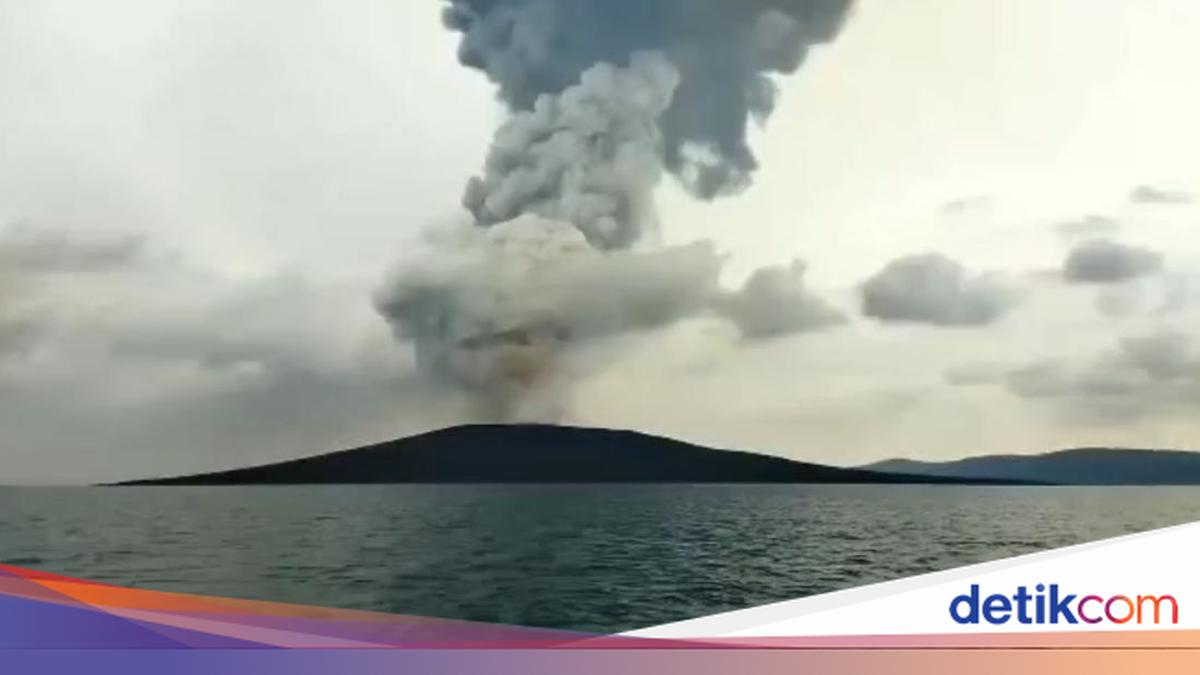
Claims have gone viral that sulphur dioxide (SO2) gas from Mount Anak Krakatau’s activity has spread as far as Central Java. BMKG and PVMBG have issued an explanation.
“The spread of SO2 gas is indeed real and extensive — that is a fact shown by satellite imagery. But the extent of the dispersal on an atmospheric map does not equate to the level of danger actually experienced by residents on the ground,” BMKG said via its official account @infoBMKG on Monday (7/9/2026).
According to BMKG, the red colouring on satellite maps of the atmospheric column cannot be used to determine whether the air being breathed is hazardous. BMKG said the proper benchmark is the official air quality figures issued by the government.
“To know whether the air we breathe today is truly dangerous or not, the right reference is the official government air quality figure, not the red colour on a satellite map of the atmospheric column,” it said.
BMKG explained the scientific process behind volcanic ash. According to the agency, after the gas has travelled hundreds of kilometres and spent many hours in the air, most of the SO2 is no longer in its pure gaseous form. The gas has reacted with oxygen and water vapour in the atmosphere, transforming into fine particles known as sulphate aerosols.
“Because it has become particulate, its nature changes — it is no longer acrid like fresh gas near the crater, but more akin to fine dust or haze mixed with volcanic ash,” it said.
BMKG said the SO2 currently reaching the surface and being experienced by residents is a mixture of volcanic ash and small particles resulting from the transformation of SO2 gas. Therefore, what residents are inhaling at present is not pure SO2 gas like that found around the volcano’s crater.
“That is why what predominantly reaches the surface and is felt by residents of Jabodetabek is volcanic ash mixed with a small proportion of particles from the transformed SO2 gas — not pure, concentrated SO2 gas like that found right around the crater,” it said.
BMKG stressed that if surface air quality remains at a good or moderate level, it is still safe for people to go about their activities. BMKG therefore urged the public to wear masks and protective goggles when carrying out outdoor activities.
“If surface air quality is still at a good or moderate level, that means the surface air is still safe for normal activities, even if there may be thick SO2 high up in the sky,” BMKG said.
“The advice for the public is to use masks and protective goggles to protect the respiratory tract and eyes from volcanic ash particles. Reduce outdoor activities, especially during ashfall or when air quality shows an unhealthy level,” it continued.
BMKG also asked residents to keep doors, windows and ventilation closed to prevent ash from entering rooms. Residents were also asked to clean ash that has settled on roofs, vehicles or yards by washing it away with water rather than dry sweeping, so that fine particles do not become airborne again and get inhaled.
“Regularly monitor official air quality figures, and do not rely solely on satellite imagery or screenshots circulating on social media. Follow official information from BMKG, PVMBG, BNPB, BPBD and local government, and do not spread unverified information from official sources,” it said.
PVMBG’s explanation
The head of the Centre for Volcanology and Geological Disaster Mitigation (PVMBG), Siti Sumilah Rita Susilawati, spoke out regarding the claim that SO2 gas had spread as a result of the Mount Anak Krakatau eruption. She confirmed that the eruption had produced SO2 emissions. However, the claim that the gas is dangerous cannot yet be verified based on imagery alone.
“The eruption of Mount Anak Krakatau did indeed emit SO2, and the emission was detected by satellite. However, the claim that SO2 gas from Anak Krakatau has reached the surface and is endangering the public cannot yet be confirmed based on that imagery alone. Surface air quality measurements are needed to verify it,” Rita said.
According to her, air quality measurements are required to confirm the truth of the matter. She urged the public not to panic as long as there are no respiratory complaints.
“The public need not panic. If there are no respiratory complaints, people can carry on their activities as usual whilst following official information from the Geological Agency, KLH/BPLH and local government,” Rita said.
Source: jawawa.id (https://jawawa.id/newsitem/so2-gas-spreading-from-mount-anak-krakatau-eruption-heres-what-bmkg-and-pvmbg-say-1788775163)
Originally published by detikcom (https://news.detik.com/berita/d-8652483/gas-so2-menyebar-imbas-erupsi-gunung-anak-krakatau-ini-kata-bmkg-dan-pvmbg), translated from Indonesian