
So Climate Finance Does Not Become Climate Debt
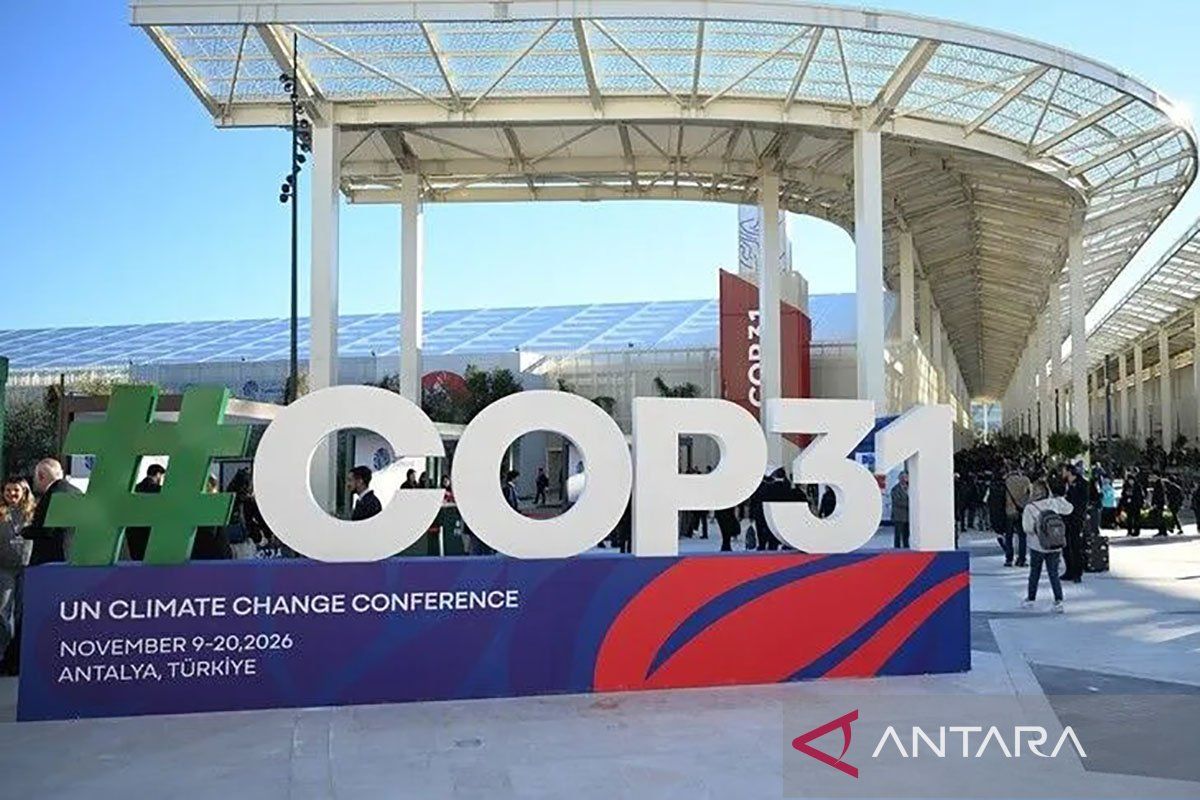
What must be decided in Antalya is whether countries that grew rich on coal will help finance the transition, or simply offer more loans.
Jakarta (ANTARA) – Imagine being told that your house could put the whole neighbourhood at risk of fire, and that its wiring must be replaced immediately. Then your neighbours, whose homes have long had the same faulty wiring, gladly offer you a loan at a reasonable interest rate.
You might agree that the wiring needs replacing. But you would also wonder why those who benefited most from the old system are offering credit rather than assistance.
Put simply, that is the question hanging over COP31, which opened in Antalya, Türkiye, on 9 November. The conference marks ten years since the Paris Agreement took effect. It is also being held without an official United States delegation: the country, historically the largest emitter, withdrew from the agreement earlier this year.
The United Nations Environment Programme (UNEP) has concluded that the 1.5°C target is now out of reach. Current policies point to warming of around 2.8°C by the end of this century, or about 2.6°C even if all the latest commitments are met.
Türkiye’s COP presidency has framed the conference around implementation rather than new promises. Of all the items on the official agenda, climate finance is expected to prompt the most debate.
That is understandable. Under the Paris Agreement, developed countries are “obliged to provide” financial resources to developing countries. For a decade, the debate centred on how much funding should be provided. The more important question now is what form it should take.
According to the OECD, developed countries provided and mobilised US$136.7 billion in climate finance in 2024, the highest figure on record. COP29 set a target of at least US$300 billion a year by 2035, while COP30 called for adaptation finance to be increased at least threefold.
Those figures are large, but they do not, on their own, show whether the funding is genuinely helpful.
Most of the funding comes as loans. In 2024, two-thirds of public climate finance was in the form of loans, while only about three in every ten dollars came as grants. For countries already facing heavy debt repayments, a loan to build a solar power plant or sea wall is not assistance but a new obligation.
A loan remains debt, even when it is recorded as climate finance. Borrowers bear repayment obligations, foreign-exchange risks and the political costs of raising tariffs, while the benefits of avoided emissions are shared by everyone. A global public good is being financed as though it were a private one.
Source: jawawa.id (https://jawawa.id/newsitem/so-climate-finance-does-not-become-climate-debt-1794304270)
Originally published by Antara (Indonesian) (https://www.antaranews.com/berita/5844059/agar-pendanaan-iklim-tidak-berubah-menjadi-utang-iklim), translated from Indonesian