
SNT, Talenta STEAMS, and National Progress
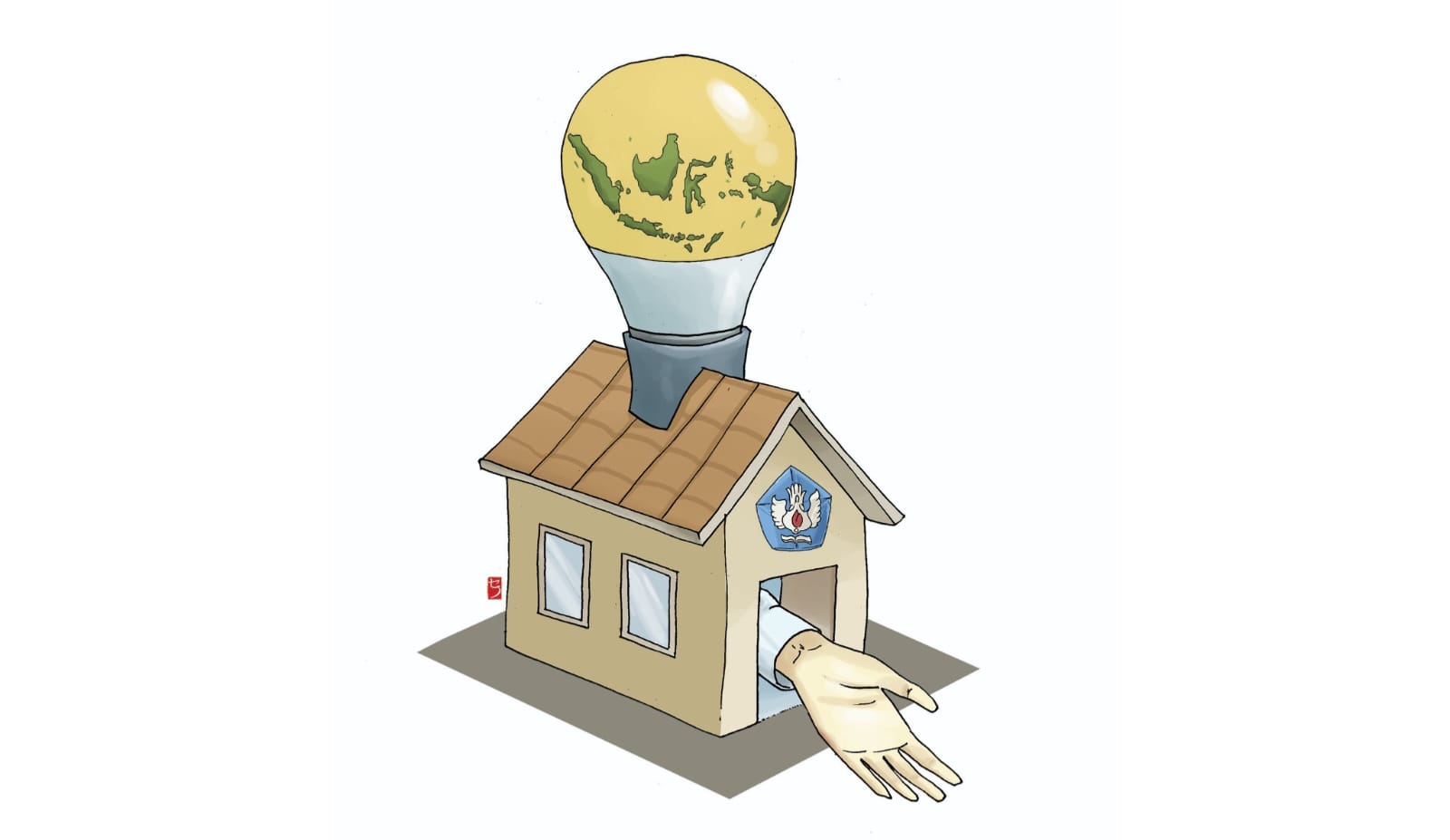
Indonesia does not lack talented children. What is unevenly distributed is the opportunity to discover, nurture, and connect that talent with the nation’s needs. According to Dapodik data as of 30 June 2025 and the 2025 Education Report, only 263 out of 7,288 sub-districts, roughly 4%, have junior and senior high schools with good performance. This inequality means that a child’s birthplace still largely determines the quality of their learning experience and their chances to develop their potential.
The National Integrated Schools (SNT) programme should be viewed as a corrective strategy to address this disparity. Presidential Instruction Number 10 of 2026 positions SNT as a programme to accelerate educational quality. However, the legitimacy of SNT lies not in modern buildings, complete laboratories, or elite labels. Its value is determined by its ability to deliver quality education in the regions, cultivate talent, and drive improvement in surrounding schools.
Excellence and inclusion are not mutually exclusive goals. Peters and Engerrand, in Gifted Child Quarterly (2016), assert that equity and excellence can coexist when talent identification is proactive, contextual, and reaches underrepresented groups. The framework by Subotnik and Olszewski-Kubilius (2019) also views talent as potential that grows through opportunity, deliberate practice, and psychosocial support.
The implication for SNT is clear. Student recruitment must combine achievement, potential, learning opportunity context, and socio-economic affirmation. A child from a school with limited facilities should not be disadvantaged simply because they have never participated in an olympiad or paid tutoring. Once accepted, a transition programme maps academic, social, and emotional readiness, resulting in a learning plan and a mentoring map. Inclusion means every student receives support to grow, not uniform treatment.
This principle is reflected in the SNT design, where the learning journey from Year 7 to Year 12 is viewed as a continuum. At the junior secondary level, students strengthen literacy, numeracy, character, and talent exploration. At the senior secondary level, they progress towards research, innovation, certification, leadership, and public contribution. Excellence is not merely selected at the entry point but built through diagnostic assessments, differentiated learning, mentors, facilities, and a portfolio of development.
The core framework is STEAMS: science, technology, engineering, arts, mathematics, and sports. STEAMS is not an additional subject but a way of organising learning to solve real-world problems. A systematic review by Thibaut et al. (2018) found that integrated STEAMS practices in secondary education connect disciplines through problem-based learning, inquiry, design, and collaboration. A meta-analysis by Chen and Yang (2019) also showed that project-based learning has a positive impact on academic achievement. Arts strengthen creativity, design, identity, and communication; sports cultivate health, teamwork, discipline, leadership, and resilience.
For human resource development, this approach is crucial because the future demands more than just conceptual mastery. The nation needs researchers, engineers, technologists, artists, and entrepreneurs who can work across disciplines. Students must learn to read evidence, test ideas, accept failure, improve designs, communicate, and consider social and ecological impacts. These competencies grow when learning is active, authentic, and connected to their lives.
A maritime theme can serve as an important vehicle. At the junior secondary level, integrated maritime STEAMS begins with exploration: observing tides, measuring salinity, mapping coastal waste, studying biodiversity, marine safety, maritime culture, and community livelihoods. Students can create simple measuring tools, digital maps, conservation campaigns, or water filter prototypes. The UNESCO-IOC Ocean Literacy for All (2017) guide links understanding of the ocean with responsible decision-making and action.
At the senior secondary level, exploration advances to analysis and innovation. Students can develop water quality sensors, fishpond monitoring systems, abrasion models, ocean energy designs, cold chain technology, or navigation and safety applications for fishers. Projects are undertaken in collaboration with universities, local governments, coastal communities, and businesses. Portfolio-based assessment records research questions, data, logbooks, design failures, prototype revisions, scientific communication, and benefits. The assessment focuses not only on the final product but also on the quality of the thinking process and contribution.
An agricultural theme can also be designed in stages. At the junior secondary level, the focus is on fostering a love for the environment and an entrepreneurial spirit through school gardens, soil and water observation, composting, cultivating local crops, processing produce, cost calculation, packaging design, and simple market testing. Students learn that agriculture is simultaneously an ecological, social, technological, and economic system.
At the senior secondary level, learning progresses to regional potential analysis, modern agriculture, and artificial intelligence technology. Students can use moisture sensors, drone or satellite imagery, automated irrigation systems, harvest modelling, and image-based plant disease recognition. Research by Wolfert et al. (2017) and Liakos et al. (2018) shows that big data, sensors, and machine learning expand the opportunities for precision agriculture. A review by Klerkx et al. (2019) reminds us that agricultural digitalisation also involves farmer skills, data ownership, privacy, ethics, and governance. Technology must therefore be studied alongside sustainability, local wisdom, and economic viability.
The impact of SNT must extend beyond its students.