
Snouck Hurgronje, the Colonial Spy in the Holy Land
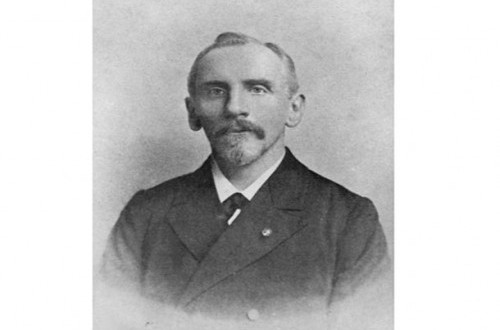
REPUBLIKA.CO.ID, JAKARTA – Perhaps, discussions about the Dutch colonisation of Indonesia in the 19th and 20th centuries would be incomplete without including the figure of Christiaan Snouck Hurgronje. His influence was significant in solidifying colonialism in the Motherland during that era. Indeed, his role is recognised as laying the groundwork for colonial policies in confronting the Islamic struggle in the colony—Dutch East Indies.
Aqib Suminto in Politics of Islam in the Dutch East Indies (1986) recounts that Christiaan was born on 8 February 1857. The family of the man from Oosterhout, Netherlands, was considered a Christian religious leader. One source mentions that before becoming devout Protestants, his extended family had Jewish blood that had assimilated since living in the Land of Windmills.
Christiaan’s father was a Christian pastor named JJ Snouck Hurgronje. According to Suminto, JJ Snouck was already married when he began an illicit relationship with Anna Maria, the daughter of his colleague, Pastor Ds Christiaan de Visser. Four children were born from this affair.
Among them was Christiaan Snouck Hurgronje as the fourth child. The scandal of the affair eventually came to light. JJ Snouck was dismissed from the Herformd Church in Zeeland on 3 May 1849. After his first wife died on 31 January 1855, JJ Snouck officially married Anna Maria.
Christiaan Snouck Hurgronje’s first name seems to have been inspired by his grandfather, Christiaan de Visser. This appears to acknowledge the reputation from his mother’s lineage. His great-grandfather—the father of his grandfather—was Ds J Scharp, a pastor and accomplished orator in Rotterdam.
In 1824, Scharp completed Korte schets over Mohammed en de Mohammedanen: Handleiding voor de kwekelingen van het Nederlandsche Zendelinggenootschap (‘A Brief Sketch of Muhammad and the Muhammadans: Guide for Trainee Missionaries of the Dutch Missionary Society’). Through his work, the author sought to unravel the “weaknesses” of Islam. The book became required reading for prospective Christian missionaries from the city.
As a child, Christiaan Snouck Hurgronje grew up as a curious boy. As a secondary school student (hogereburgerschool) in Breda, he learned to master Latin. Then, the 17-year-old youth enrolled as a student at Leiden University. For four years, he studied at the Faculty of Theology.
During his time at university, he developed an interest in modern views on understanding theological science. This tendency was inseparable from the influence of modernist thinkers of the time, such as Abraham Kuenen (1828-1891).
From Kuenen, Christiaan learned critical and rational analysis of the Old Testament and the Bible. Within certain limits, this method was quite controversial because it rejected some elements of Christian doctrine. For example, the rejection of Jesus’s position as the “son” of God or the concept of the Trinity. This school of thought was heavily influenced by liberalism as well as Darwinism.
This ideology viewed religion merely as an ethical consciousness arising from within humans. Europe (the West) and Christianity were also seen as the pinnacle of human cultural evolution. Consequently, Asian nations had to be “civilised” by the West.
Orientalists with such views branded Islam as a deviation from Jesus’s teachings. Therefore, they referred to Islam with the pejorative term: Mohammedanism, ‘the teachings of Muhammad.’
In April 1878, Christiaan graduated and earned the title of junior bachelor. He then decided not to pursue a career as a prospective pastor, but rather as an expert in Eastern sciences (Oriental).
From that point, he began studying Semitic philology, particularly under two renowned Dutch orientalists, Reinhard Dozy and MJ de Goeje. On de Goeje’s advice, he stayed in Strasbourg, France, to study Arabic and Aramaic from the Semitic cultural expert, Theodor Nöldeke (1836-1930).
In 1880, Christiaan successfully defended his dissertation, Het Mekkansche Feest (‘The Meccan Festival’). The 23-year-old youth graduated cum laude and earned the title of Doctor of Semitic Literature from Leiden University. After that, he became a lecturer at an educational institution specifically for prospective employees to be sent to the Dutch East Indies.
Becoming a Spy
Since the days of the Vereenigde Oostindische Compagnie (VOC/Company), Dutch colonisation in the Archipelago generally faced resistance from Muslims. Pilgrims were the driving force behind the jihad of Muslims. Throughout the 18th century, the Company implemented various regulations that hindered or even prevented Muslim leaders from going to the Holy Land.
Nevertheless, many managed to slip through. While abroad, Javanese hajj pilgrims received inspiration from several Jawi scholars residing in the Haramain. For example, Sheikh Abdus Samad al-Palimbani (1704-1789). This scholar wrote Fadha’il Jihad (‘The Virtues of Jihad’).
In it, he emphasised that Muslims are obliged to wage jihad against infidels who come to oppress. This book was enthusiastically received by Muslims in Indonesia. In Aceh, for instance, the sheikh’s work inspired Hikayat Prang Sabi, which ignited the spirit of struggle among the local people, scholars, and rulers in resisting the Dutch.