
Sniffing Dogs Light the Lantern of Conservation in Lampung
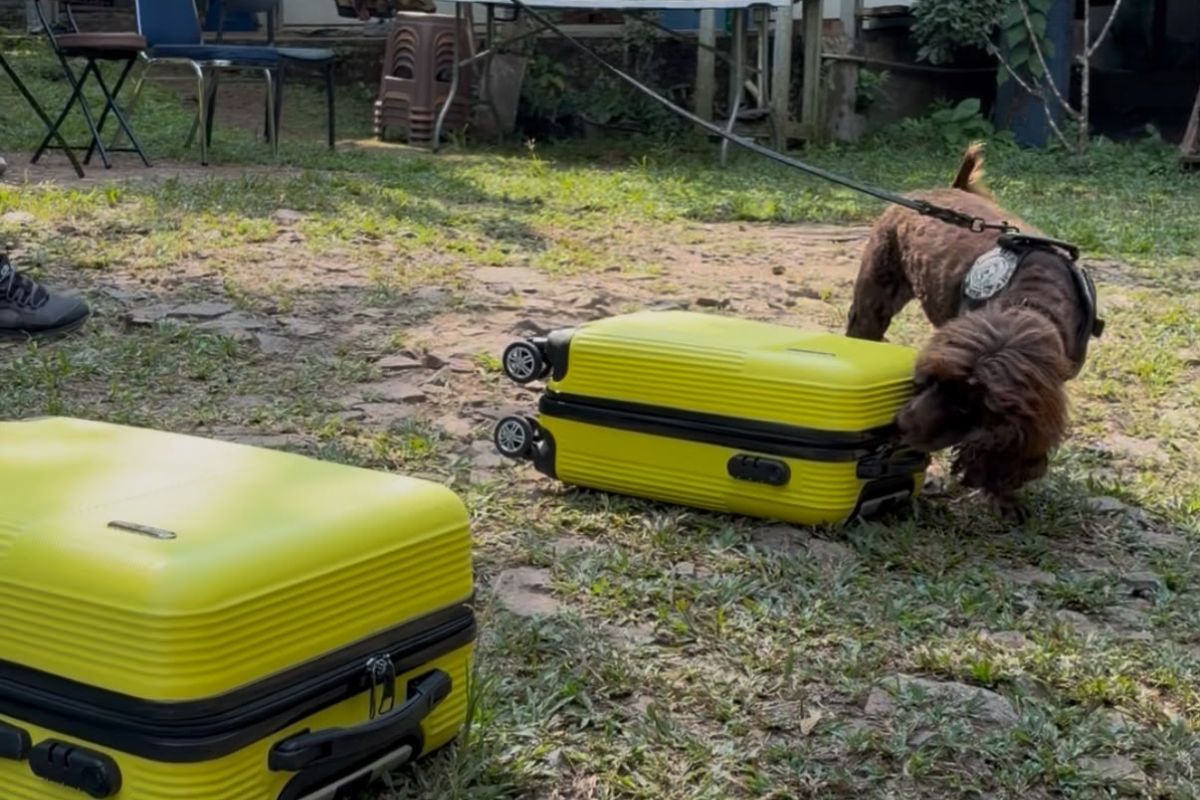
The midday sun beats down, reflecting heat onto the dusty asphalt of Bakauheni Port, Lampung. Amidst the rows of container trucks, intercity buses, and private vehicles, four steady paws move with a rhythmic pace, leaving tracks as orderly as railway tracks. Despite the scorching asphalt, the four sturdy legs of the sniffer dogs remain agile, navigating the narrow gaps between the massive wheels of passing vehicles.
The trackers sniff every corner, gazing sharply in all directions, occasionally barking when they detect something suspicious. This is the routine of these four-legged officers. Their compensation is not in currency, but in affection, nutritious feed, meat scraps, vitamins, and consistent healthcare. With their keen instincts and olfactory sensitivity, they serve as the frontline in the fight against illegal wildlife trade in Lampung Province.
There is a strategic reason for their deployment in Lampung. The province’s geographical position at the southern tip of Sumatra makes it one of Indonesia’s most vital transport hubs. Lampung borders the Sunda Strait to the south and the Java Sea to the east. The presence of Bakauheni Port as the primary link between Sumatra and Java, alongside Panjang Port in Bandar Lampung as an international port and container distribution centre, makes this region a critical artery for the movement of people and goods.
Behind the bustling logistics activities, Lampung still maintains a forest expanse of 925,608 hectares, accounting for 27.42 per cent of the province’s total area. This green zone, consisting of 319,386 hectares of protected forest and 408,586 hectares of conservation forest, serves as a habitat for diverse flora and fauna. However, this ecosystem is increasingly vulnerable to habitat fragmentation due to development pressures, threatening the survival of the species within.
Threats to wildlife in Lampung remain a stark reality. Recently, the conservation world was shocked by the slaughter and consumption of tapir (Tapirus indicus) in Mesuji Regency. As a protected and endangered species, this incident serves as a reminder that conservation challenges involve not only law enforcement but also public awareness.
Furthermore, Lampung’s position as the gateway to Sumatra makes it a preferred route for wildlife smuggling. Authorities have repeatedly intercepted shipments of eagles, monkeys, wild birds, and pangolin scales intended for transport via Bakauheni Port. Data from Lampung Quarantine records that 3,076 wildlife animals have been rescued from various smuggling attempts using diverse methods. Meanwhile, according to NGO Flight, over 14,000 birds were rescued from illegal trade throughout 2025. Most of these were being sent from Sumatra to Java via Bakauheni Port, a known hotspot for wild bird smuggling.
The success of authorities in thwarting these smuggling attempts has prompted perpetrators to continuously evolve their methods. While wildlife was previously hidden in freight vehicles, smuggling is now conducted via regular buses, tourist buses, private vehicles, expedition services, logistics packages, through document forgery, and even via modified packaging designed to bypass inspections.