
Smoke Still Billowing at Mandung Landfill in Tabanan Five Days After Fire
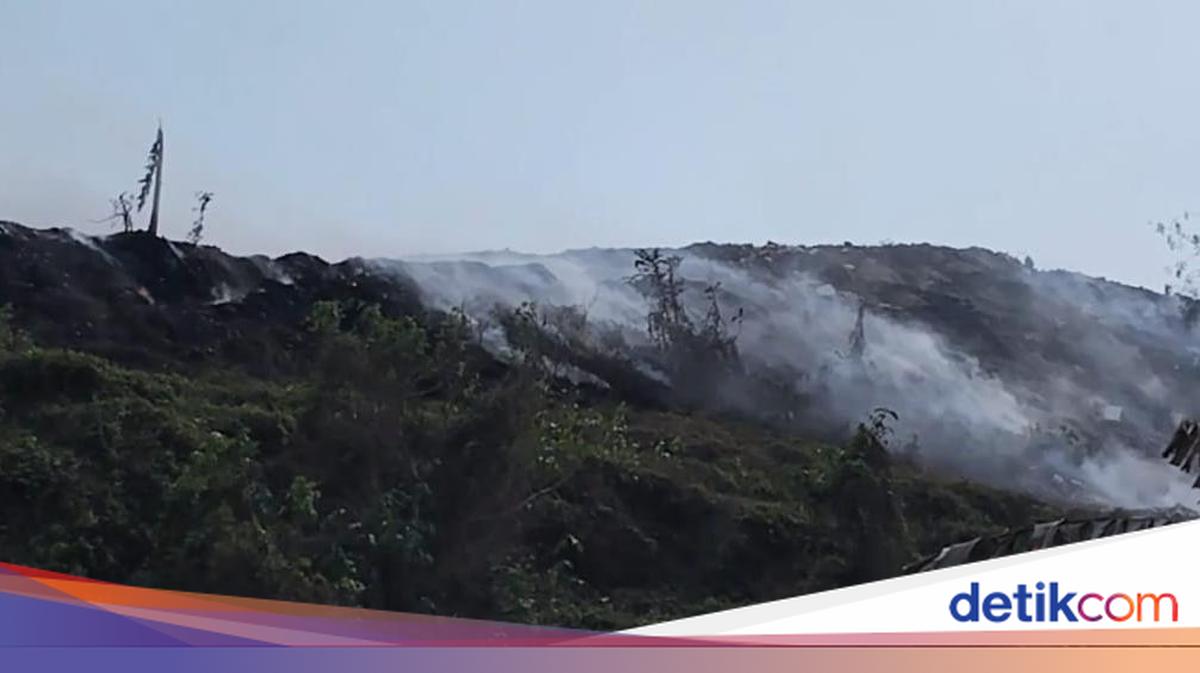
Smoke is still visible rising from the waste pile at the Mandung landfill in Sembung Gede village, Kerambitan district, Tabanan, five days after it caught fire. Crews continue to spray water and cover the area with soil to cool the rubbish and suppress the smoke.
Head of the Mandung landfill technical unit, I Wayan Atmaja, said the smoke remains quite thick as it emerges from the lower part of the waste pile because the heat has not yet fully reached the deeper layers of the mound.
“The flames are gone. What remains is smoke from the burnt areas coming out of the rubbish pile,” Atmaja said on Monday (31/8/2026).
According to him, the cooling process is still carried out routinely twice a day, in the morning and afternoon. Spraying is done to lower the temperature of the waste pile, although the water poured has not been able to reach the deepest part of the mound.
To support the operation, crews are using a tanker truck with a capacity of 3,000 litres.
“Water is first placed in a holding tank before being brought to the point at the top of the pile. Crews have also dug water catchment holes at the top to help with the spraying and cooling process,” he explained.
In addition to spraying, soil covering continues to be carried out on the area where the fire previously appeared. The measure is expected to reduce the amount of oxygen entering the pile while also preventing new hotspots from emerging.
Atmaja stressed that the current handling is focused more on reducing the smoke and ensuring routine activities at the landfill continue to operate. “Our focus now is reducing the emergence of smoke. On the other hand, daily tasks continue, such as composting and waste processing,” he said.
Previously, the prolonged dry season triggered a methane gas explosion on the southern side of the Mandung landfill. The condition caused hotspots and smoke to emerge from the waste pile. Heat trapped inside the rubbish mound is suspected to be one of the triggers for the fire.
After the hotspots appeared, crews increased spraying and soil covering to prevent the fire from reigniting or spreading to other parts of the pile.