
Smoke Crosses Borders, Capital Flows Without Limits
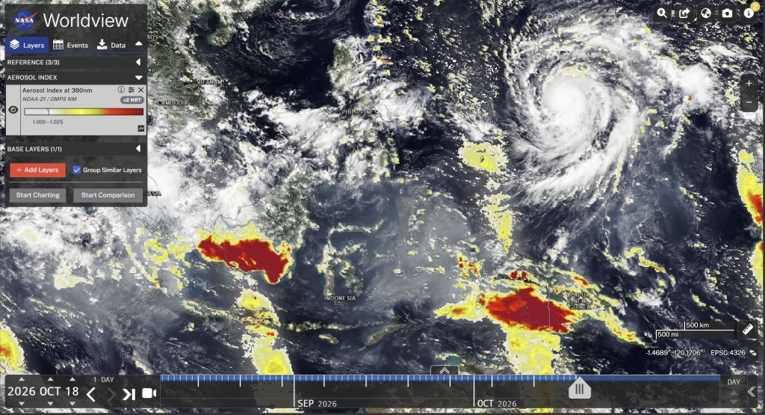
Cross-border haze from forest and land fires in Indonesia is not merely a domestic environmental problem. When the smoke travels across national borders, people in neighbouring countries, including Singapore, are also affected. The issue connects the two countries: Indonesia is responsible for controlling fires, while Singapore has an interest in protecting public health and air quality.
In 2014, Singapore enacted the Transboundary Haze Pollution Act (THPA), which allows action against entities whose conduct causes or contributes to haze pollution in Singapore, including when that conduct takes place outside the country. The Act also provides for civil liability and empowers the government to require relevant parties to take preventive measures.
One important feature of the THPA is its reach into corporate management relationships. Section 5 covers not only entities that cause pollution, but also entities that participate in the management of a company owning or controlling land outside Singapore, provided the relevant legal requirements are met. Cross-border corporate structures therefore do not automatically eliminate the possibility of accountability.
However, the Act is not grounds for assuming that every plantation company operating in Indonesia is responsible for haze in Singapore. Enforcement still requires proof of the relevant legal elements. Concessions, hotspots, the movement of smoke, managers’ conduct and relationships between businesses must all be examined against the evidence.
This is where the THPA matters. It shows that Singapore does not regard haze solely as a problem for Indonesia to resolve. Singapore has established a legal instrument to reach conduct outside its borders when its effects meet the requirements of Singapore law.
But having such a legal instrument is only one part of the issue. Its effectiveness also depends on the ability to identify those responsible, gather evidence, trace corporate structures and ensure that legal action leads to changes in behaviour.
Singapore as a Sustainable Finance Centre
Singapore is not only a country affected by haze. It is also a regional financial centre connecting companies with banks, institutional investors, asset managers, capital markets and other financial service providers.
This position makes Singapore relevant to discussions about financing for plantations, forestry and land use in Indonesia. Companies developing concessions, building processing facilities, purchasing raw materials or trading commodities need capital. That capital can come from various countries and flow through financing structures that are not always easy for the public to trace.
In 2019, a Forests & Finance investigation cited by The Peak magazine reported that 17 business groups linked to forest and peatland fires in Indonesia received at least US$19.2 billion in corporate loans and underwriting facilities between January 2015 and August 2019. Singapore-based financial institutions contributed about US$1.4 billion of that financing.
Those figures are historical findings relating to the business groups and period examined. They do not prove that all the financing was used to start fires, or that the Singaporean financial institutions named directly financed every concession-holding company subsequently scrutinised by regulators.
Even so, the findings show that forest fires cannot be understood solely by examining companies’ activities on the ground. The relationship between business operations and their sources of capital also needs to be examined.
Singapore, meanwhile, has developed policies to strengthen its sustainable-finance ecosystem. The Monetary Authority of Singapore (MAS) has issued environmental risk management guidelines for financial institutions, including banks and asset managers. The guidelines cover governance, strategy, risk management and disclosure of environmental risks. In March 2026, MAS also issued supplementary guidance on transition planning for financial institutions. These policies at least demonstrate that environmental risks are recognised as part of financial-sector risk management. Ecosystem damage can affect productivity, operational continuity, compliance costs, corporate reputation and borrowers’ ability to repay loans.
However, recognising that environmental damage poses a financial risk is different from ensuring that capital does not support activities that cause such damage.
The first approach primarily protects the resilience of financial institutions and their investments. The second requires scrutiny of the impact of the economic activities being financed, including the origins of raw materials, land-management practices, fire prevention and follow-up action in response to proven environmental violations.
The two approaches can complement one another. A company may be assessed as facing financial risks from fires without its contribution to environmental damage being adequately evaluated. Conversely, a company may continue to obtain financing when the ecological impact of its activities has not been fully reflected in credit-risk assessments.
For this reason, the credibility of sustainable finance cannot be measured solely by the number of green financial products or investments in low-carbon technology. Assessment must also consider how financial institutions deal with clients and investees facing risks of deforestation, peatland damage or forest and land fires.
Who Is Responsible When Capital Finances a Risky Business?
The issue becomes more complex when a concession-holding company is part of a wider business network. Companies in the same group may have interconnected shareholders, directors, suppliers, commercial relationships or sources of financing.
An article published by The Peak on 17 October 2026 raised this issue in connection with the National Environment Agency’s (NEA) issuance of Preventive Measures Notices to seven Indonesian companies on 16 October 2026. The notices concerned indications that smoke from fires on the companies’ concession land might be moving towards Singapore. NEA requested preventive and fire-control measures.
Two companies on the list, PT Bumi Mekar Hijau and PT SBA Wood Industries, were also discussed in a 2018 investigation by Auriga Nusantara into the ownership and management structures of wood suppliers described by Asia Pulp & Paper (APP) as independent. The investigation found significant operational links between a number of suppliers and the Sinar Mas business group.
Those historical findings are relevant as leads for further investigation, but do not in themselves establish current ownership structures or legal responsibility for the fires that concerned NEA in 2026.
This distinction matters when tracing capital flows. Establishing whether investment originating in Singapore is genuinely connected to companies suspected of involvement in fires requires verifiable information about the investor’s identity, the recipient of the funds, the type and timing of the transaction, the intended use of the money, and the companies’ ownership and control structures.
Without such information, a business group’s links to Singapore indicate a possible economic connection, not proof that a particular bank or investor financed arson.
Nevertheless, financial institutions need not wait for a court ruling before conducting environmental risk assessments of prospective borrowers or companies in their portfolios. Due diligence can cover fire records, compliance with environmental obligations, disclosure of ownership, supplier oversight and the implementation of corrective measures.
If serious risks are identified, financial institutions can demand improvements, impose tighter financing conditions, increase monitoring or take other steps in accordance with their contracts and applicable rules. Such measures can prevent capital from continuing to flow without adequate scrutiny of the environmental impact of the financed activities.
Testing the Consistency of Singapore’s Policies
Singapore’s challenge is not only to invoke the THPA when haze reaches its territory. The next challenge is to link environmental enforcement policy with oversight of environmental risks in its financial system.
These two areas serve different functions. The THPA provides a legal basis for addressing conduct that causes or contributes to haze pollution in Singapore, subject to the statutory conditions and evidentiary mechanisms. Sustainable-finance policies, meanwhile, guide financial institutions in identifying and managing environmental risks in their business activities.
It would be wrong to assign legal responsibility for fires directly to every bank or investor with a connection to a business group. But it would also be wrong to treat investment links as irrelevant when tracing how high-risk activities obtain capital.
Policy consistency can be assessed through more concrete questions. Do financial institutions examine companies’ environmental records before providing financing? Do information about fires and deforestation affect investment decisions? Are companies that repeatedly fail to control fires required to improve their operational practices? Does monitoring cover suppliers and related entities, rather than only the company that directly signs the financing agreement?
These questions can be answered through due-diligence policies, sustainability reports, risk disclosures, transaction data and concrete action towards problematic clients or investees.
For Indonesia, transparency over concession holders, beneficial owners, company directors, suppliers and sources of finance is also important. Traceable data would enable the government, civil society, investors and financial institutions to link fire incidents to relevant business structures without making allegations based merely on proximity or affiliation.
Sustainable Finance Must Include Responsibility for Capital
Singapore has established two policy instruments relevant to the haze problem: a law that reaches cross-border pollution and a framework for environmental risk management in the financial sector. The question is how consistently these instruments are applied to business networks operating across national borders.
Success in addressing haze should not be measured solely by the ability to extinguish fires or issue notices to companies suspected of being connected to them. It should also take account of the economic factors that allow high-risk activities to continue, including access to credit, investment and trade finance.
In this context, Singapore can strengthen transparency around environmental risks in financing, encourage due diligence on companies exposed to deforestation risks, and ensure that financial institutions’ sustainability commitments are reflected in their business decisions. Scrutiny must be evidence-based and proportionate, and must respect the distinction between indications, administrative findings and wrongdoing proven in law.
For Indonesia, tracing capital flows can complement enforcement against those who start fires and other parties liable under national law. But such tracing must be based on corporate documents, ownership data, financing transactions and verifiable evidence from the field.
Ultimately, haze shows that the effects of economic activity do not always stop at national borders, while capital can move through networks far more complex than concession boundaries on a map. Sustainable-finance commitments should therefore be tested not only by investments labelled green, but also by transparency and accountability for the business activities receiving capital support.