
Smartphones Nearing Obsolescence as Successors Proliferate
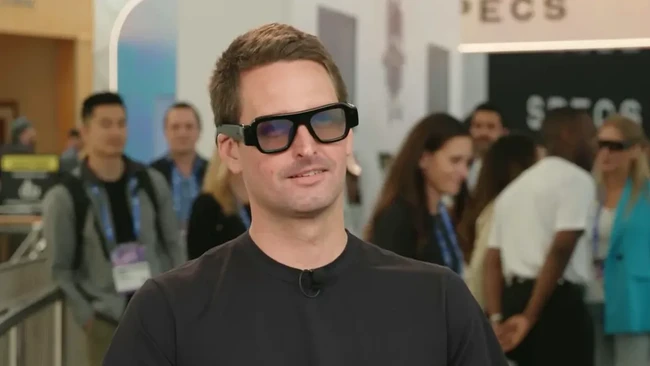
Nearly 20 years since the first iPhone was launched, many people are beginning to tire of constantly looking down at phone screens. From neck pain to the sense of missing real moments, weariness with handheld devices is increasingly palpable. Major technology companies are now competing to introduce smart glasses and augmented reality (AR) devices predicted to become the primary successors to smartphones in the future.
Most recently, Snap Inc. launched Specs. Priced at US$2,195, or approximately Rp34 million, the device will begin circulating in the United States, United Kingdom, and French markets by the end of this year.
“It has been almost 20 years since the iPhone launch, and now people are ready to move on to a different way of computing,” said Evan Spiegel, CEO and founder of Snap, in an exclusive interview with CNBC International. “Specs is a new way to use technology together in real experiences—we look forward through clear lenses, not staring at a blurry screen in our hands.”
Unlike Snap’s first product, Spectacles, which merely functioned as a US$130 camera and lacked market appeal, Specs is designed as a complete spatial computer. Lighter than the previous developer-oriented version, the device features a wider display, battery life of up to nearly four hours, and Bluetooth connectivity. Developers can also create artificial intelligence (AI)-based features integrated with tools from Anthropic, OpenAI, and Cursor. Spiegel even claims it is the most advanced, most context-aware, and most accessible device yet.
Snap is not alone in moving in this direction. Competition is intensifying as major names like Meta, Google, Samsung, and Apple also develop similar products, each with their own approaches and strategies.
Meta has already advanced significantly through a collaboration with EssilorLuxottica, owner of the Ray-Ban eyewear brand. The Ray-Ban Meta series is now the market leader in smart glasses, with sales exceeding 7 million pairs by mid-2026 and a market share of over 70 percent in this category. Its latest products, Ray-Ban Meta Generation 2 and the Optics variant, feature a design that looks exactly like regular glasses, support prescription lenses, and are equipped with Meta AI based on the Llama 4 model. Users can take photos, record 3K resolution video, conduct live broadcasts, and even translate languages in real time—all simply with the voice command “Hey Meta.” Its price is far more affordable, starting from US$499, making it the closest option to the mass market at present.
Although it once harboured great ambitions in the virtual reality (VR) realm, Meta is now scaling back those ambitions and shifting full focus to smart glasses and AR, as they are considered more suitable for daily wear and more easily accepted by the public.
Google and Samsung are following suit. Together, they recently introduced their smart glasses project at Google I/O 2026, collaborating with renowned fashion brands Warby Parker and Gentle Monster. The product relies on Google Gemini AI technology and the Android XR operating system, available in two types: an audio-only version and a version equipped with a small display on the glasses lens. Designed to be very lightweight and stylish, these glasses function as a complement to mobile phones, allowing users to ask for directions, translate text on streets or restaurant menus, listen to music, and manage messages without holding a gadget. The first version is planned for release this autumn, with a primary focus on comfort and an appearance that looks natural for daily wear, rather than resembling heavy tech equipment.
Apple, the company most expected to deliver a new breakthrough, has instead recently changed strategy. Vision Pro, a bulky headset priced at US$3,499 that was hoped to become the next iPhone, turned out to be a commercial failure. It was too expensive, too heavy, and unsuitable for continuous wear. Apple is reportedly halting further development and disbanding its development team, redirecting resources to a new project: lightweight smart glasses codenamed N50. This new device is planned for release in late 2026 or early 2027, functions connected to the iPhone, is designed like regular glasses, and lacks a large display like Vision Pro. This confirms that even Apple now believes the future lies not in heavy, enclosed devices, but in glasses that are lightweight and comfortable for everyday use.
Despite the significant opportunity, challenges remain. The price of Specs, exceeding Rp34 million, is a major barrier, especially amid inflation that is pressuring consumer purchasing power. Market analyst Jitesh Ubrani from IDC assesses that now is not the best time to launch a premium product. “Snap’s main consumers are young people, who generally cannot afford such an expensive item,” he said.
Spiegel himself remains confident. He sees a shift in public behaviour as people become aware of the negative impacts of staring at screens for too long. “In the past, children could only play alone on screens; now with Specs they can play chase, learn about dinosaurs, or build toys together—all while seeing the real world,” he said.