
Smartphones in Hand, Safety at Level Crossings
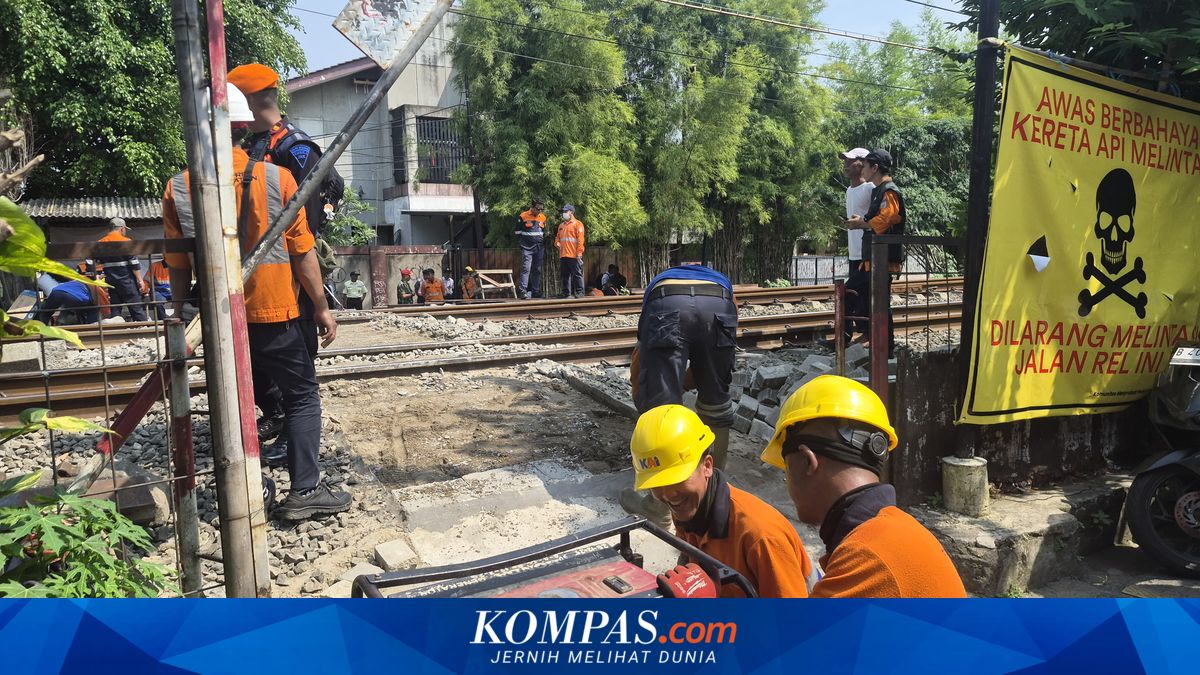
Level crossings are consistently the weakest link in modern transport systems. On one side, trains move swiftly along fixed tracks with absolute priority. On the other, road vehicles operate dynamically, often congested and undisciplined. When these two streams meet without adequate protection or information, accidents are merely a matter of time. Such scenes are all too familiar in Indonesia. In many cities and regencies, motorcyclists routinely breach barriers, cross tracks without stopping, or rely solely on instinct to check for oncoming trains. Many crossings lack attendants, automatic barriers, or even warning lights. The situation grows more perilous during heavy traffic when vehicle noise drowns out train whistles, and drivers are distracted by smartphones or rushing to work. Most incidents follow the same pattern: road users only become aware of approaching trains too late. Some only notice when warning lights activate, others spot the train when it’s too close to stop safely, while some attempt to cross anyway, believing the train is still far off. All stem from a fundamental issue: insufficient timely information reaching road users.
Yet, Indonesians today live in an era where nearly everyone carries a sophisticated communication device. Smartphones are no longer just for communication; they are navigation tools, information hubs, and early warning systems for emergencies. Technologies used for ordering food, finding the fastest routes, or monitoring weather can also save lives at railway crossings. This has spurred the idea of a smartphone-based train arrival early warning system. This concept isn’t meant to replace existing barriers, attendants, or signalling systems, but to add a new layer of protection: delivering direct information to road users before they reach the crossing.
Indonesia has over 6,000 level crossings, thousands of which lack full supervision. Some are informal crossings built by communities for quicker local access. Many are situated on busy lines in Java and Sumatra, where passenger and freight trains operate frequently. The core issue at level crossings is straightforward: trains have significant momentum and long braking distances. When a driver spots a vehicle on the tracks, it’s often too late to stop completely. Current safety solutions have largely focused on physical infrastructure—government-built flyovers, underpasses, automatic barriers, signal lights, and stationed attendants. These measures are vital and must remain a priority, but construction is costly and time-consuming. Not all crossings can be upgraded immediately, making digital approaches worth considering. If full physical protection isn’t feasible everywhere, at least information-based safeguards can be provided.
The system’s principle is simple. Every train’s journey is monitored via the Operation Control Centre (OCC), where operators track train positions, routes, speeds, and estimated arrival times at specific points. This data is currently used for internal operational needs like signalling and train control. So why not also utilise it for road user safety? The concept, known globally as a Connected Level Crossing Warning System, works through three key components: Detection, Communication, and User Alerts. The first step is detecting train arrivals. When a train enters a specific track section before the crossing, sensors such as track circuits or axle counters identify its presence.
Source: jawawa.id (https://jawawa.id/newsitem/smartphones-in-hand-safety-at-level-crossings-1779891446)
Originally published by Kompas (https://nasional.kompas.com/read/2026/05/27/13300031/ponsel-di-tangan-selamat-di-perlintasan-?utm_source=ABC&utm_medium=rss), translated from Indonesian