
Smartphone and Tablet Sales Slump, Leaving Retailers Struggling
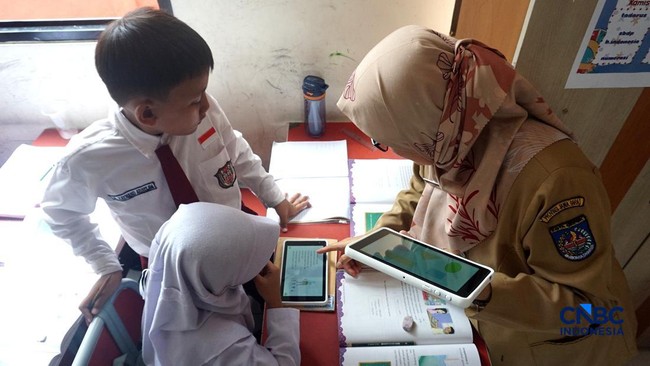
Jakarta, CNBC Indonesia — A global shortage of memory chips, which has pushed up consumer electronics prices, has hit the global smartphone market. Research firm Counterpoint reported that worldwide smartphone shipments fell 20% year on year in the third quarter (Q3) of 2026, reaching their lowest level for a Q3 since 2012.
The global tablet market has also been affected. According to a recent report by research firm Omdia, worldwide tablet shipments plunged 23% year on year in Q3 2026 to just 32 million units.
This marked the lowest shipment level in nearly three years. The Middle East, China and Western Europe were among the hardest-hit regions, recording the steepest declines.
“After falling 10% in the previous quarter, the tablet market contracted by double digits again in Q3,” Omdia Research Manager Himani Mukka said, according to the firm’s official website on Monday (9 November 2026).
She added that component supply constraints had pushed tablet product lines further down manufacturers’ strategic priority lists for 2026–2027.
“With supply expected to tighten further next year, a significant recovery in the tablet market appears unlikely before 2028,” she added.
Apple remains king as Lenovo springs a surprise
Although the overall market has slumped sharply, the rankings of the world’s five largest tablet makers showed some notable shifts:
Apple (1st): The Cupertino-based technology giant retained its market lead, despite shipments plunging 28% year on year. Its market share fell to 36%, from 38.2% in the same period last year, as its decline outpaced the industry average.
Samsung (2nd): The South Korean giant held on to second place, shipping 5.4 million units, down 22% year on year, and securing a 16.9% market share. Component shortages were a major obstacle to shipments of its new products.
Lenovo (3rd): Lenovo was the only manufacturer among the top five to record growth. Shipments surged 12% year on year to 4.1 million units, lifting its market share to 12.7% from 8.7% a year earlier. Growth was driven by sales of slate tablets—those without detachable keyboards—in nearly every global region.
Xiaomi (4th): Xiaomi shipped 2.3 million units, down 11% year on year. Its market share edged up to 7.3%, supported by solid performance in Latin America.
Huawei (5th): Huawei rounded out the top five with shipments of 1.8 million units. It recorded the steepest contraction among the market leaders, plunging 43% year on year, although it managed limited growth in Central and Eastern Europe (CEE) and Asia-Pacific (APAC).
New product launches fail to lift consumer demand
The second half of 2026 had seen major product-line updates by leading manufacturers. Samsung released its flagship Galaxy Tab S12 series, Apple launched an OLED-screen iPad mini, and Xiaomi introduced the Pad 9 series. Other brands, including Huawei, HONOR, OnePlus and realme, also aggressively launched new models.
However, these launches have not been enough to stimulate consumer demand, which has been hit by economic conditions and a sluggish market.
“The extended supply-chain crisis is also limiting manufacturers’ room to introduce significant specification upgrades. As a result, the differences between new models and their predecessors are becoming increasingly marginal. Consumers are choosing to delay purchases until there is a genuinely substantial technological leap,” Mukka said.
Source: jawawa.id (https://jawawa.id/newsitem/smartphone-and-tablet-sales-slump-leaving-retailers-struggling-1794225036)
Originally published by CNBC Indonesia (https://www.cnbcindonesia.com/tech/20261109131904-37-783550/hp-dan-tablet-tidak-laku-pedagang-merana-jualan-makin-susah), translated from Indonesian